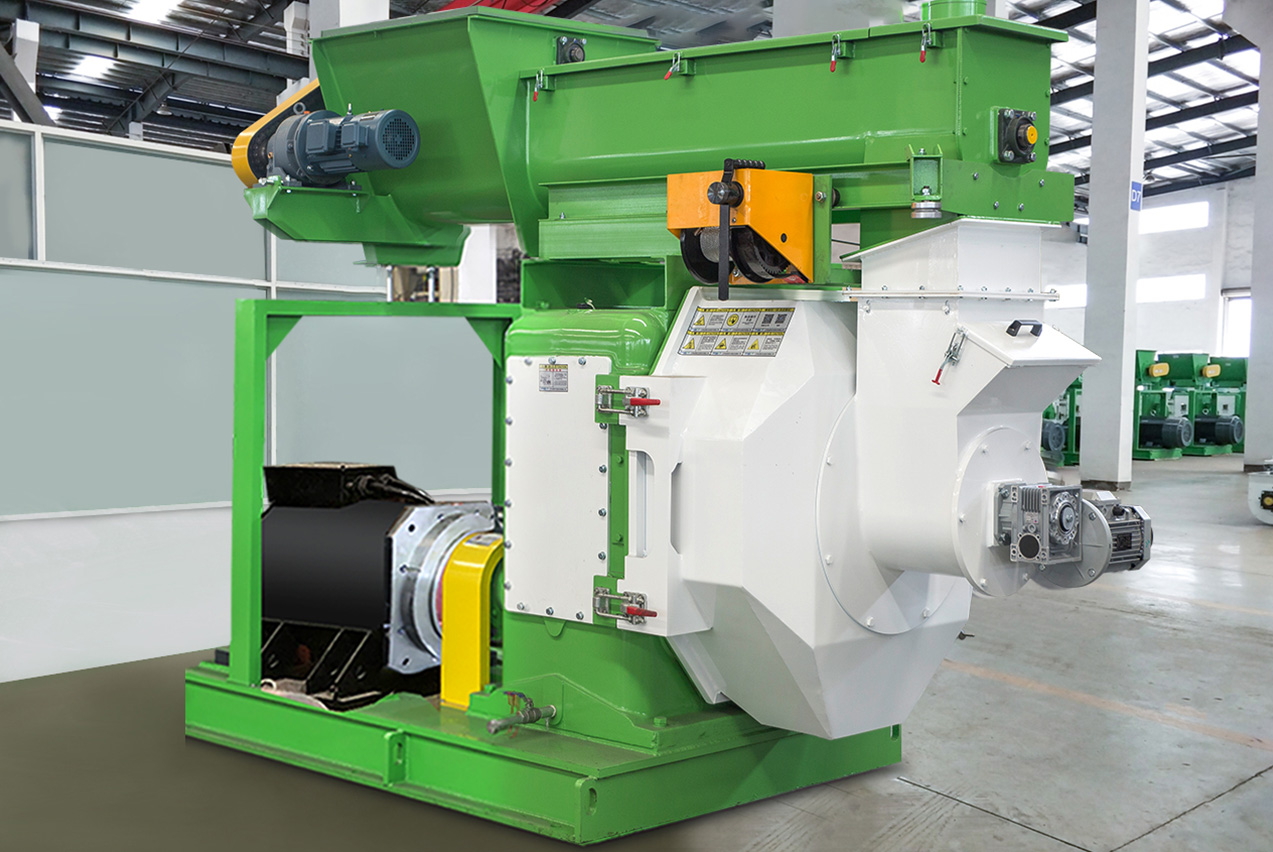
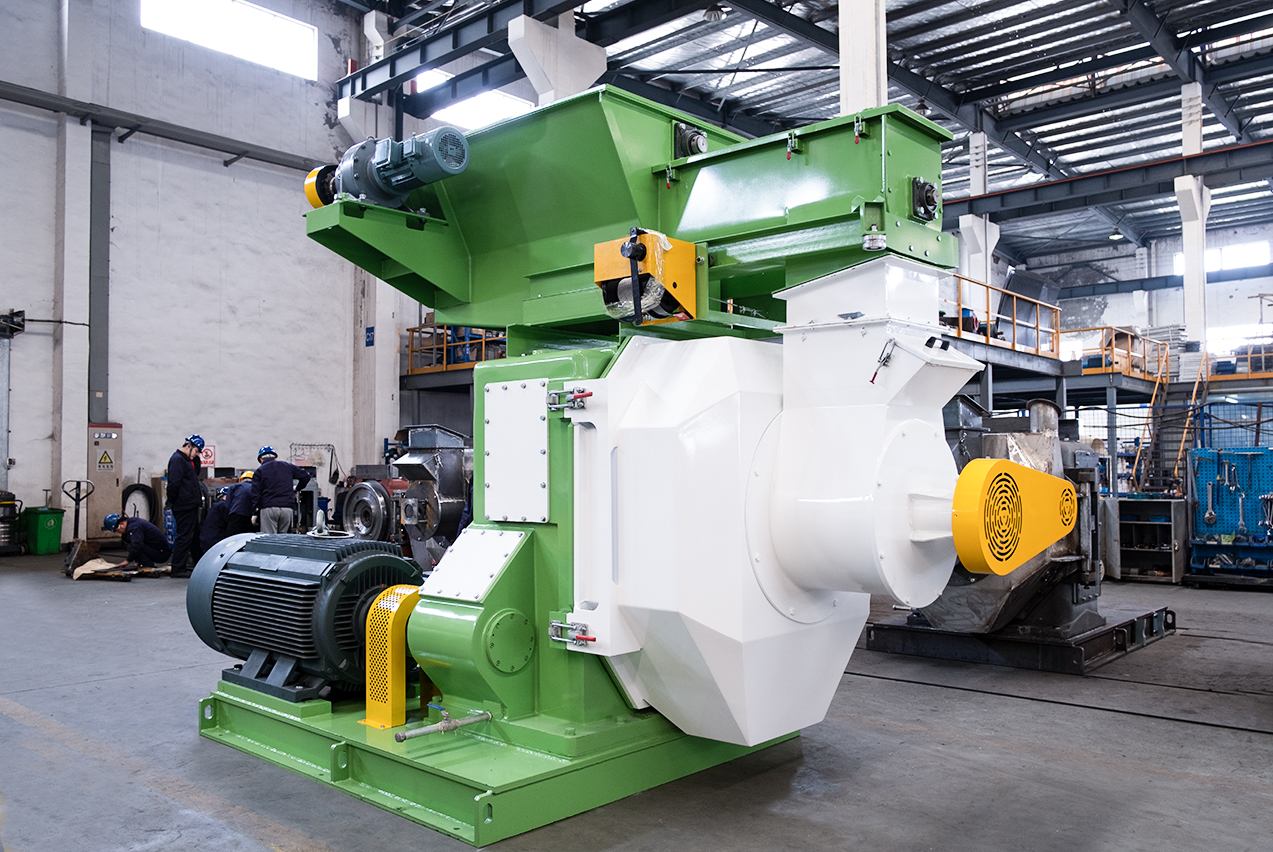
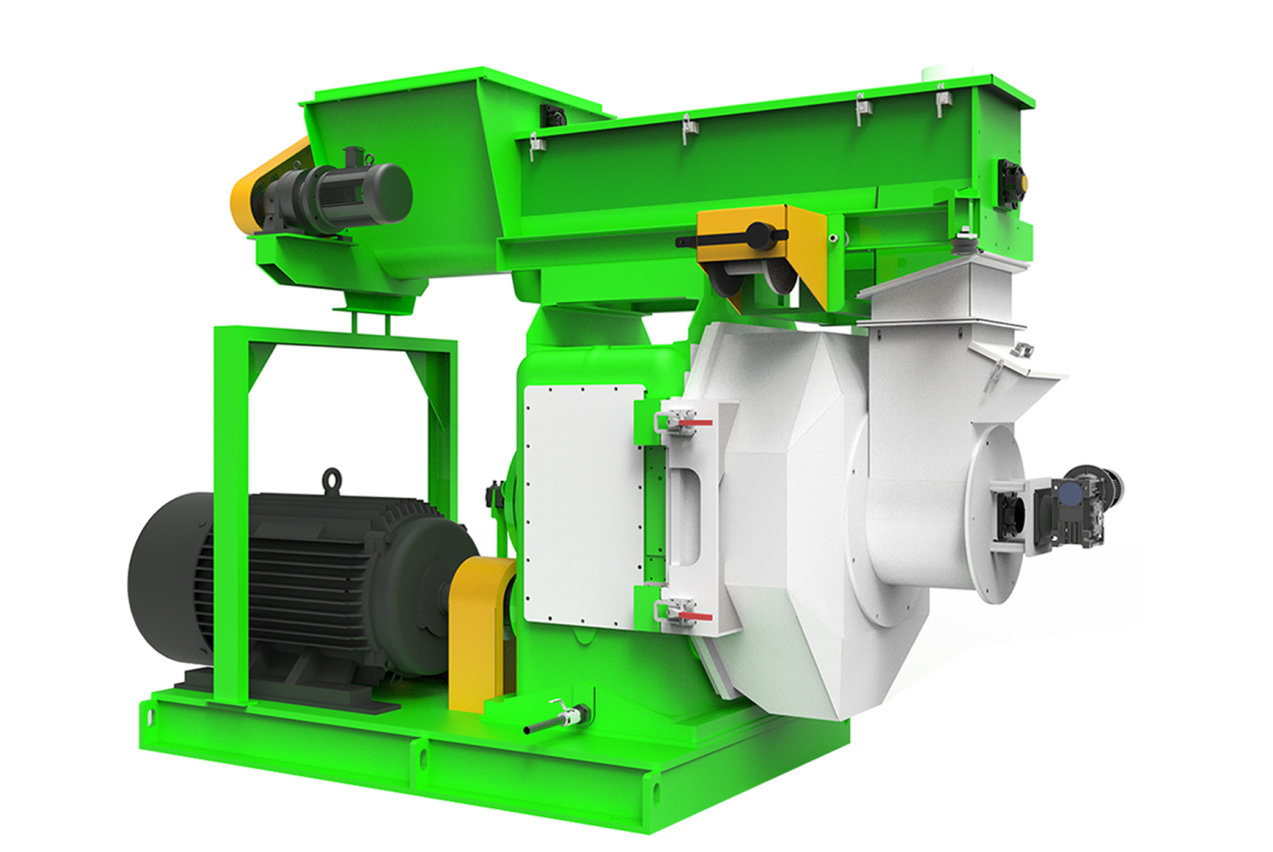
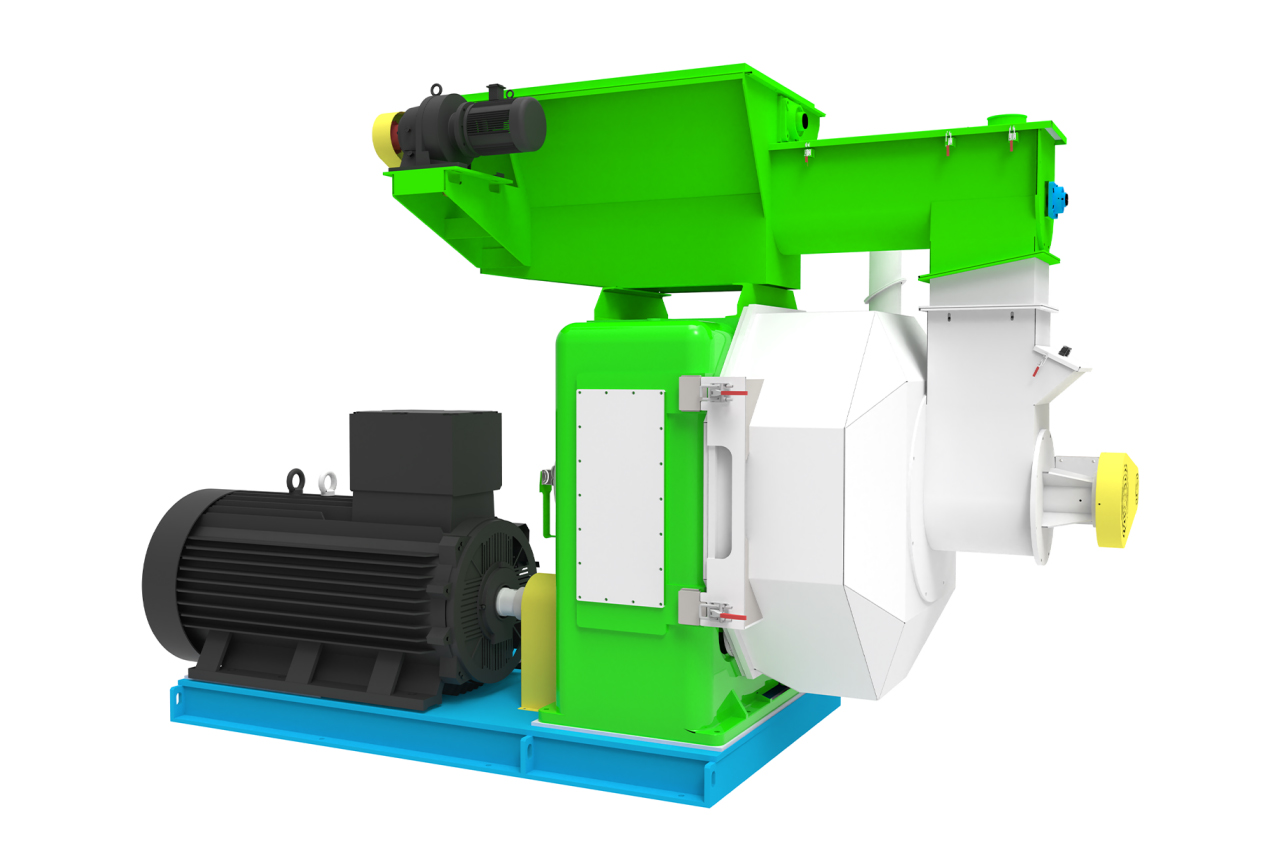
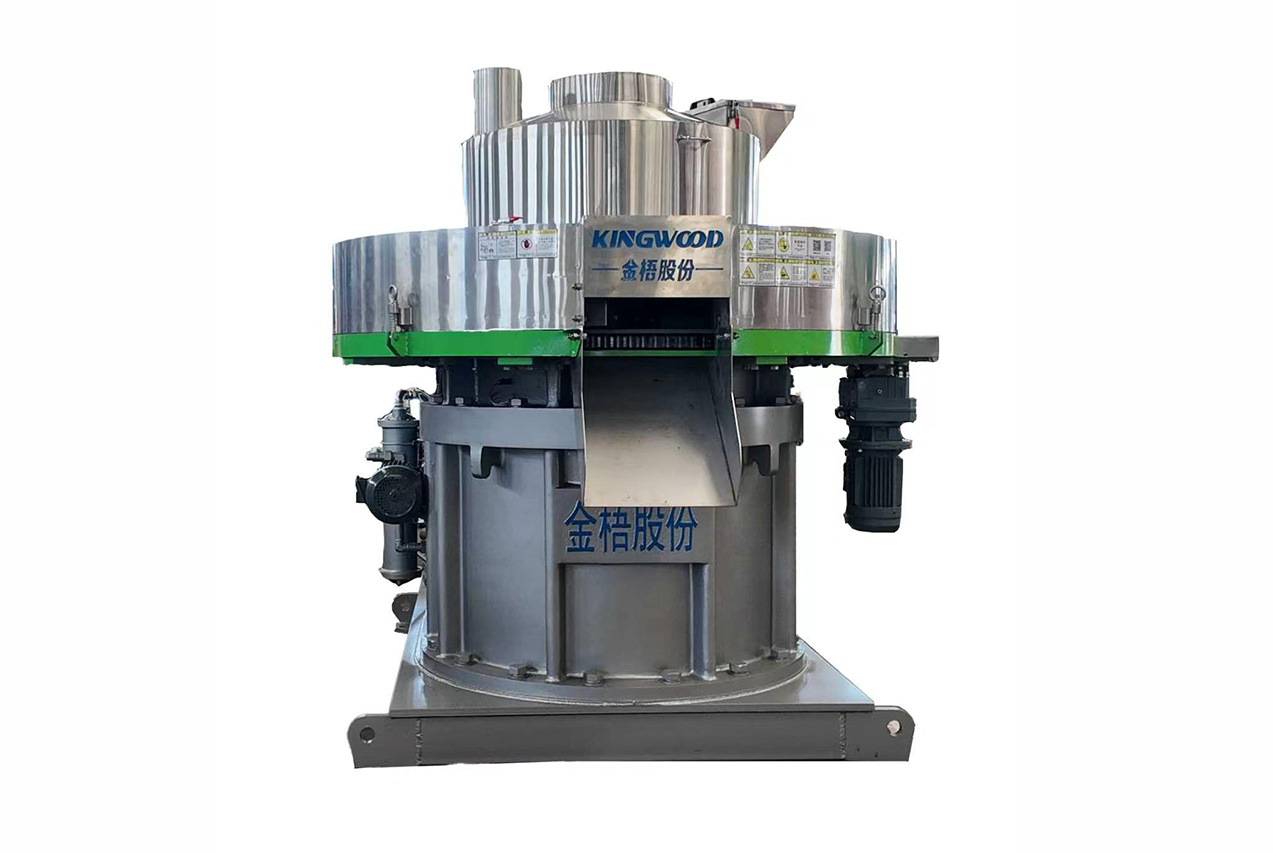
Every biomass pelleting system ultimately depends on one component to shape, compress, and discharge the finished pellet: the pellet mill ring die. If you are sourcing equipment from Kingwood industrial ring die pellet mill models or any other manufacturer, understanding how the die functions mechanically will help you ask better questions and avoid expensive specification mismatches.
A flat die is a flat plate; rollers press material down through holes drilled into the plate. The geometry is simple but limits throughput because the effective die surface area is small relative to the machine's footprint.
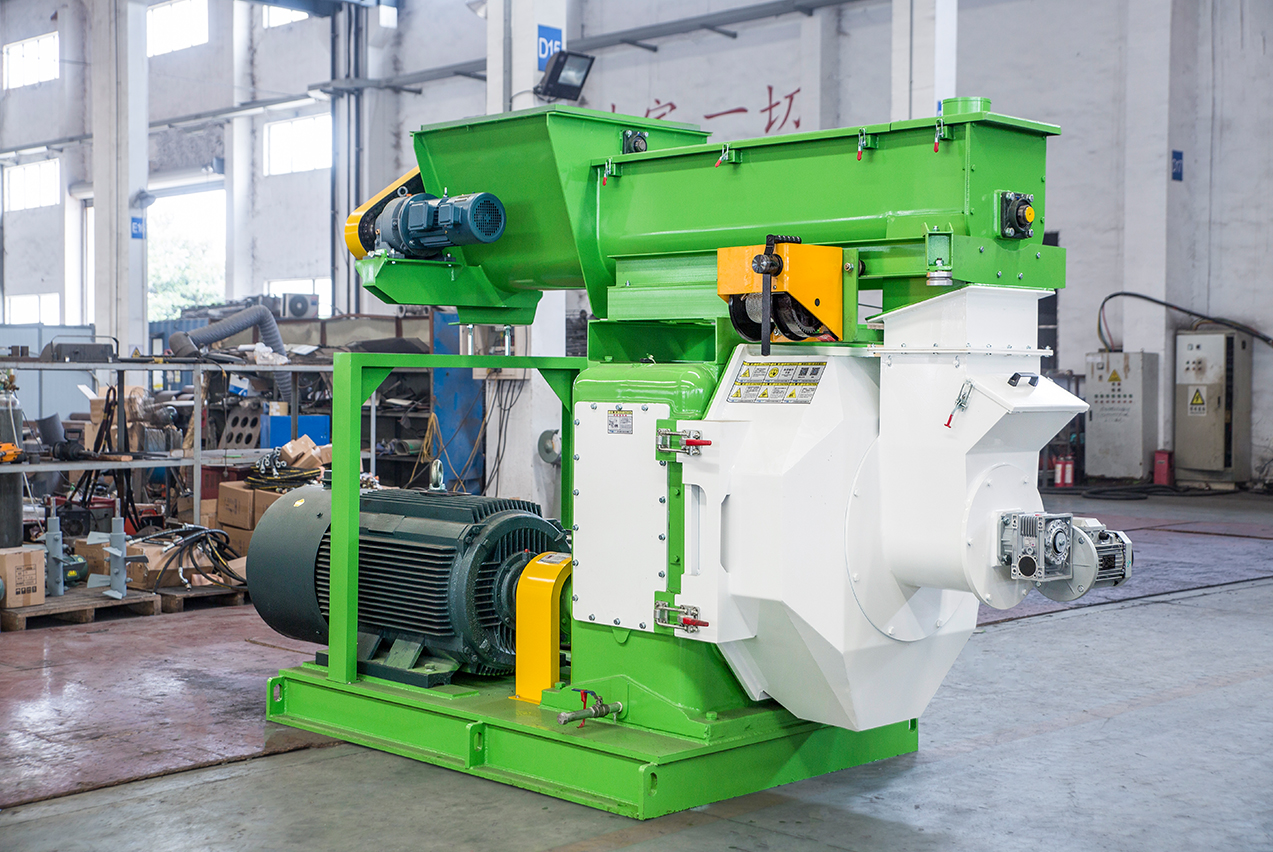
A ring die is a cylindrical steel band with holes drilled radially through its wall. The die rotates around a fixed central shaft that carries two or more rollers. As the die rotates, it carries biomass through the nip zone between the die's inner surface and the rollers. The rollers do not drive themselves — they spin passively because the rotating die pushes material under them. This geometry exposes far more die surface area per revolution, which is why throughput scales efficiently with ring die diameter.
Material passes through three zones during each revolution:
According to IEA Bioenergy Task 40 (2023), biomass pelleting averages 50–70 kWh of electrical energy per tonne of finished pellet, and die design alone accounts for up to 30% of that variance. An under-specified die forces rollers to work harder, drawing more current per tonne and shortening both die and bearing life simultaneously.
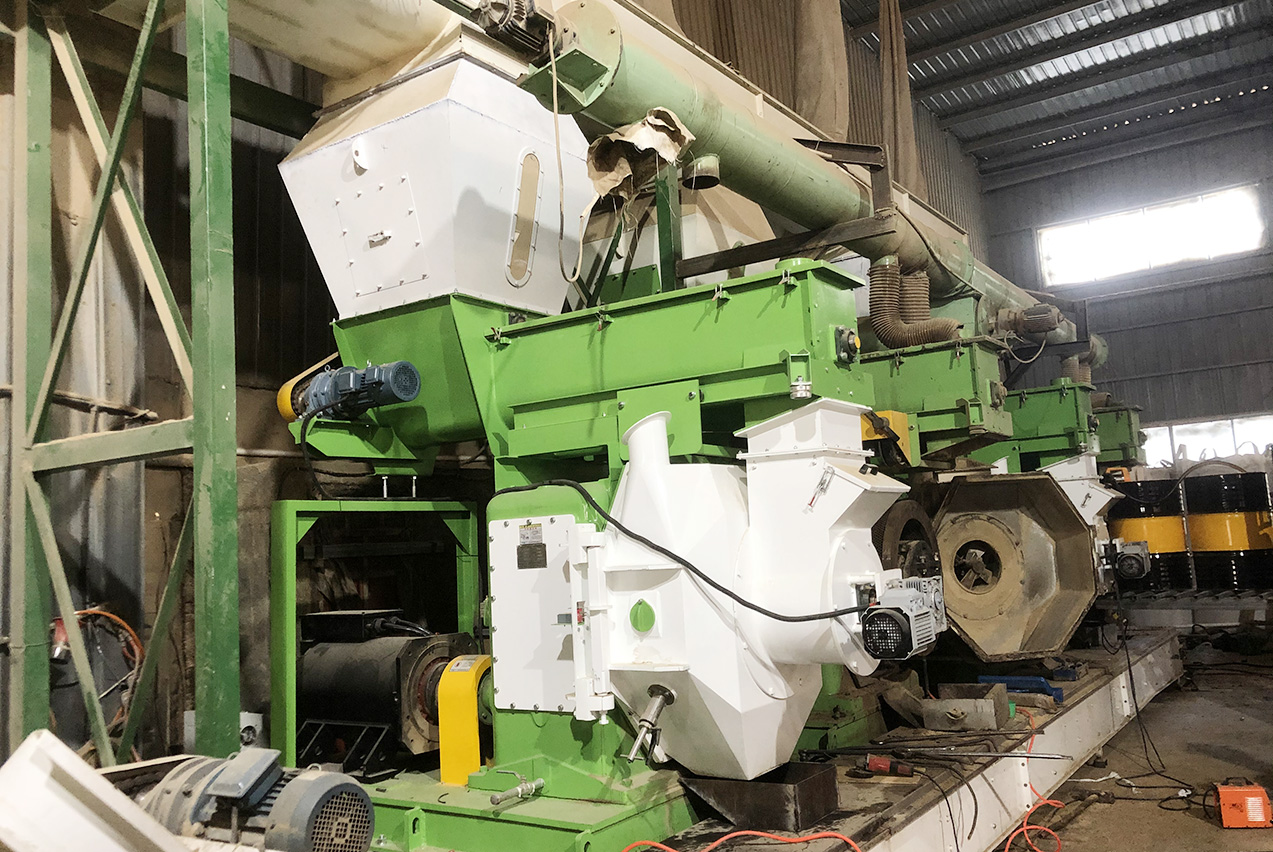
Choosing a die is not a single decision — it is four interdependent decisions made simultaneously: L/D ratio, hole diameter, steel grade, and compression ratio. Getting one wrong affects all the others.
L/D is the ratio of the effective hole length (the compressed passage through the die wall) to the hole diameter. A die with 8 mm holes and 40 mm effective length has an L/D of 5:1.
Matching L/D to feedstock reduces specific energy consumption compared to running a mismatched die and compensating with conditioner steam or slower feed rates.
| Hole Diameter | Typical Pellet Use | Key Markets |
|---|---|---|
| 6 mm | ENplus residential stove fuel, bagged retail | Europe, Japan, South Korea |
| 8 mm | Industrial boiler fuel, power generation | Southeast Asia, Middle East |
| 10 mm | Low-density agricultural biomass, some feed applications | India, East Africa |
Most commercial ring dies use alloy tool steel — typically grades equivalent to X46Cr13 or higher chromium-vanadium alloys — heat treated to surface hardness in the range of 58–62 HRC. Cheaper dies use mild steel or inconsistent alloy batches; these may show visible wear early on abrasive feedstocks.
Stainless steel ring dies are available for operators processing corrosive agricultural materials (high-moisture rice husk, fermented biomass), but they carry a 30–50% price premium and are unnecessary for clean sawdust applications.
Compression ratio (related to but distinct from L/D) describes the degree of volume reduction the material undergoes. Most industrial ring dies operate in the 4:1 to 7:1 range.
At Kingwood's production standard, dies are calibrated to deliver: - PDI (Pellet Durability Index) ≥ 97.5% on dry sawdust at 10–14% moisture content - Bulk density > 600 kg/m³, which meets ENplus-A1 and ISO 17225-2 requirements for Grade A wood pellets
Statista 2024 data shows global wood pellet production reached 40 million tonnes annually. At this scale, even a 1% variation in die wear rate across the industry translates to thousands of unplanned replacement events per year — making steel grade and manufacturing precision commercially significant, not just technical footnotes.
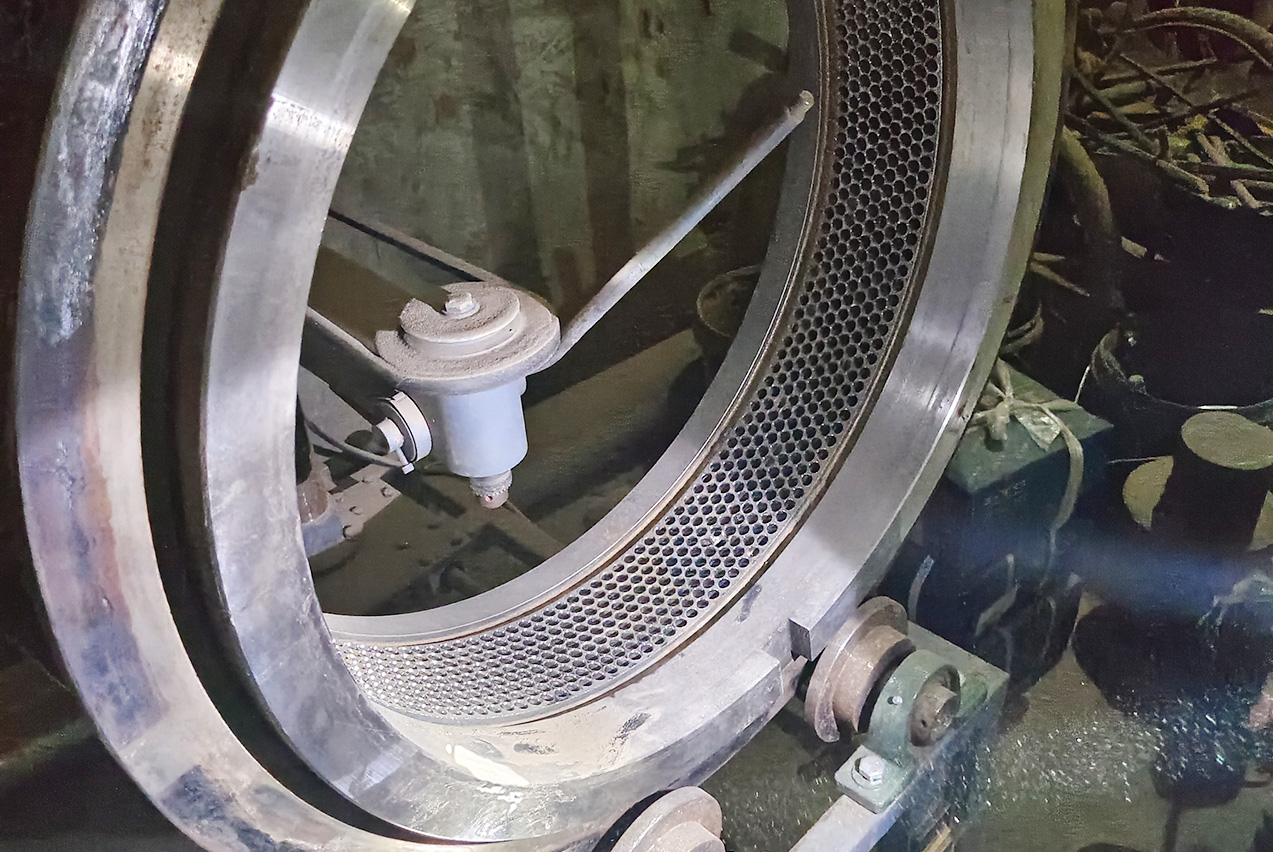
The decision between ring die and flat die is primarily a volume decision, not a quality decision. Both can produce acceptable pellets; the economics diverge quickly above a certain throughput threshold.
Kingwood's engineering practice across 2,000 production line projects planned and designed consistently confirms: flat die for sub-500 kg/h operations; ring die for everything above that level. Below 500 kg/h, the lower capital cost and simpler maintenance of flat die presses make them the rational choice for small farms, cooperatives, or pilot operations.
Above 500 kg/h, ring dies are superior on every economic metric:
| Metric | Flat Die (< 500 kg/h) | Ring Die (> 500 kg/h) |
|---|---|---|
| Throughput per installed kW | 40–60 kg/h per kW | 80–120 kg/h per kW |
| Die surface contact area | Low (single flat plate) | High (full cylinder circumference) |
| Typical 12-month die replacement cost | 1–2 dies | 2–4 dies (but per-tonne cost lower) |
| Suitable capacity per machine | ~500 kg/h | 1–5 t/h per unit; 10–24 t/h plants run several units |
For a facility targeting 3–5 t/h — a common entry point for wood pellet exporters in Vietnam and Indonesia — a single JWZL-688D unit achieves 3–3.5 t/h at 200 kW motor power. Running a flat die at equivalent output would require multiple machines, higher total motor draw, and more operator attention.
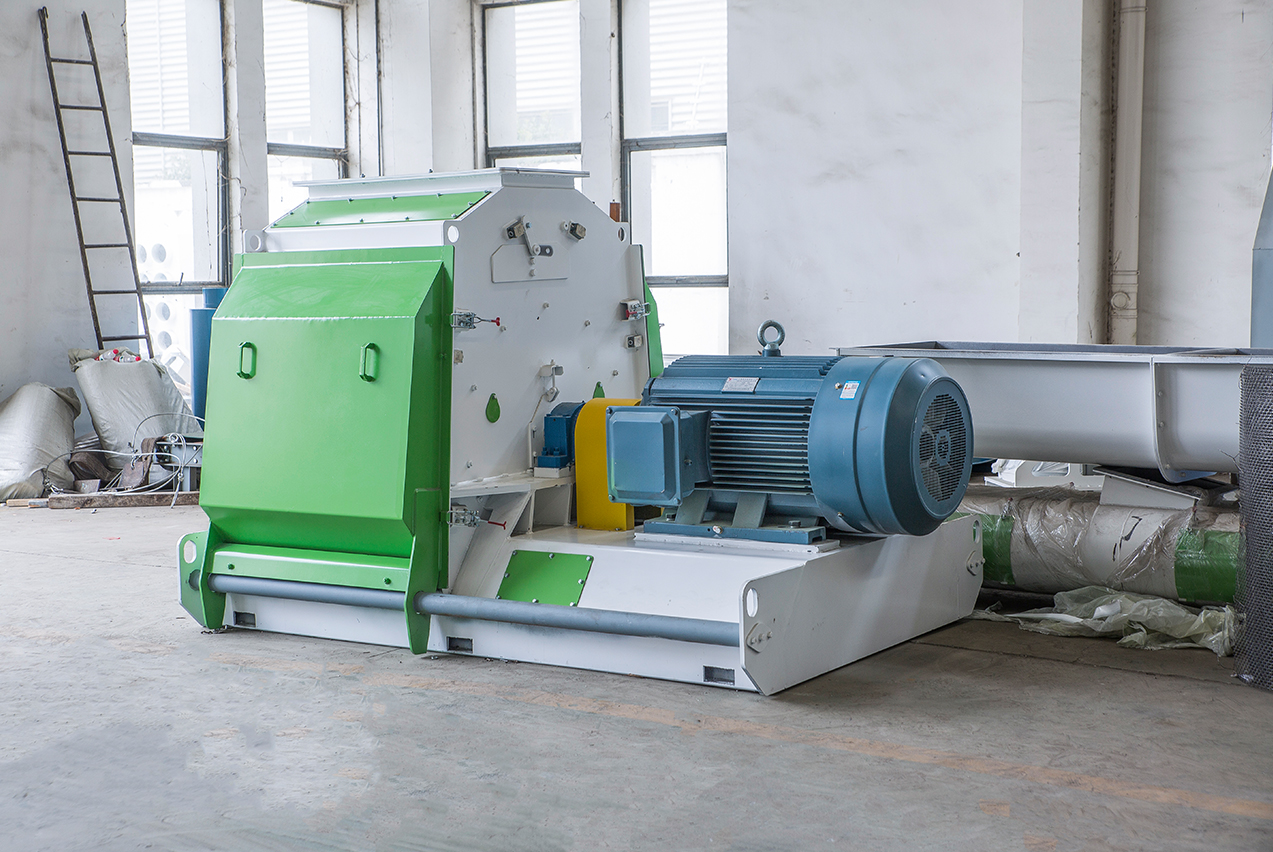
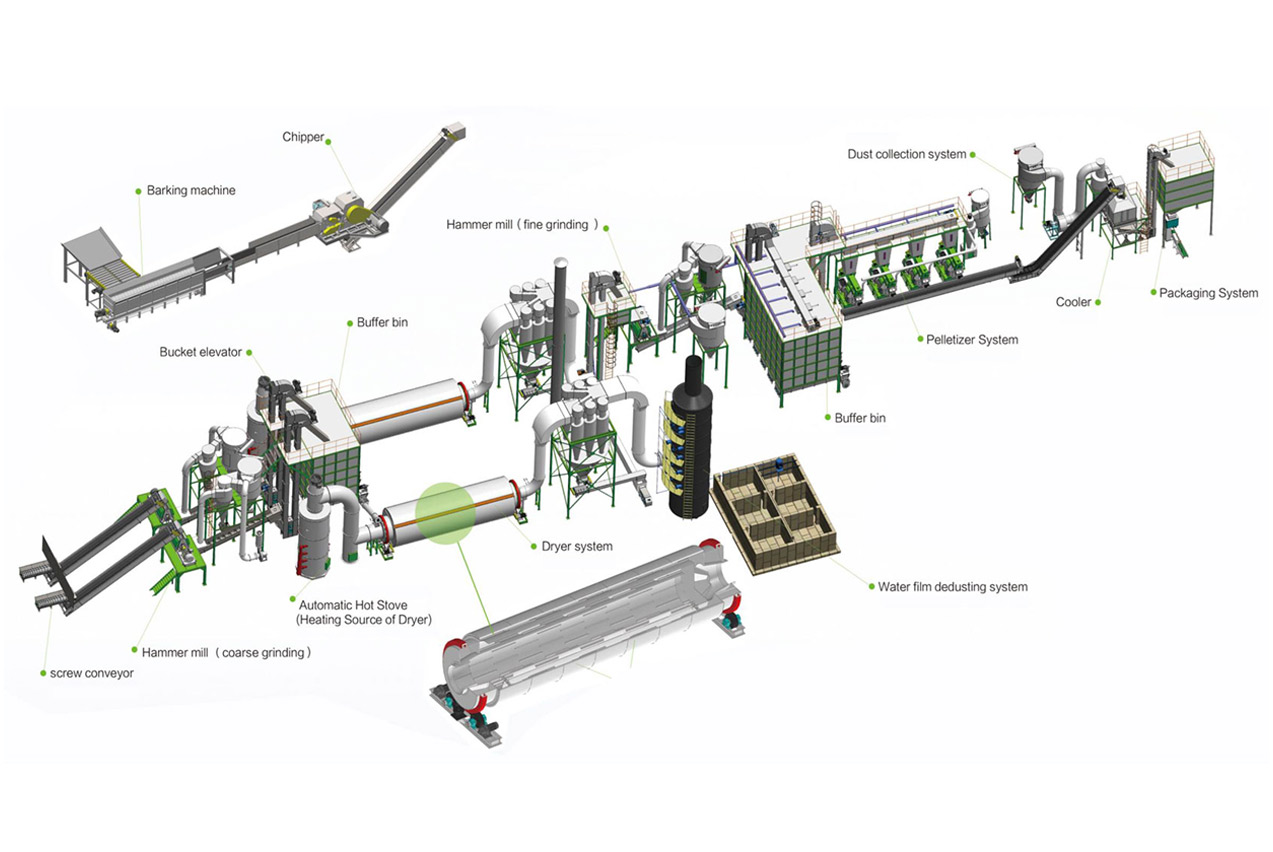
See complete biomass pellet production line configurations for how ring die units integrate with dryers, hammer mills, and cooling systems in a full production plant.
Bloomberg NEF Bioenergy Outlook 2024 projects Southeast Asian biomass pellet capacity to grow 18% year-on-year through 2027. That growth trajectory favors industrial-scale ring die installations because buyers in Japan, South Korea, and Europe increasingly require ISO-certified pellets at volumes that flat die systems cannot economically achieve.
Two manufacturing steps separate a long-running die from one that fails early: CNC hole drilling and vacuum heat treatment. Both affect daily operating costs more than the die's purchase price.
Conventional drilling leaves micro-burrs on hole walls and produces dimensional variation of ±0.1–0.2 mm between holes. On a die with 400 holes, that variation creates uneven pressure distribution — some holes carry more load, heat faster, and wear preferentially while others run underloaded.
Kingwood uses fully automatic CNC ring die drilling with single-pass control, producing hole smoothness and dimensional consistency that reduces pellet release resistance. Lower release resistance means: - Lower amperage draw per tonne (directly reducing electricity cost) - Less heat buildup inside the die wall - More uniform pellet length and density across the full die face
The Ra (surface roughness) value of the drilled hole matters: a hole with Ra ≤ 0.8 µm releases pellets significantly more freely than one at Ra 3.2 µm. We have observed in our production testing that high surface roughness in the extrusion zone accounts for 5–8% excess energy draw even at identical L/D and compression settings.
Standard atmospheric heat treatment can cause surface oxidation, decarburization (carbon loss from the steel surface), and uneven hardness gradients through the die wall. Vacuum heat treatment eliminates the oxygen-rich environment, preserving surface carbon content and producing more consistent hardness — typically within ±1 HRC across the die circumference.
This matters for cracking resistance. Ring dies fail in two modes: gradual hole wear and sudden cracking. Cracking is almost always caused by hardness gradients where a hard surface zone sits above a softer subsurface zone; under cyclic compression load, the transition zone becomes a crack initiation site.
Die life depends first on feedstock abrasiveness: clean, properly dried sawdust is the gentlest; mixed hardwood residues wear faster; rice husk and palm kernel shell (high silica) and agricultural straw wear fastest. A vacuum heat-treated alloy die outlasts a mild-steel die on every feedstock, and the gap widens as abrasiveness rises. Kingwood does not publish fixed hour figures because moisture, fines content and die L/D shift the result by a wide margin — ask for a wear-rate estimate against your feedstock sample.
McKinsey Industrial Equipment Report 2023 estimates that unplanned die replacement events cost pellet plant operators an average of USD 8,000–15,000 per incident in downtime and parts. At a facility running three shifts, a single unplanned die failure can wipe out two to four weeks of margin on a mid-scale 5 t/h line.
IEA Bioenergy 2023 operational benchmarks indicate that optimized preventive maintenance protocols extend ring die life by 25–40% compared to reactive-only approaches.
Feedstock properties in tropical Asia differ significantly from the pine sawdust that most European die specifications were originally calibrated against. Buyers in Vietnam, Indonesia, India, and similar markets need die specs verified against their actual raw material — not against a Northern European softwood baseline.
Both rubber wood and acacia are dense tropical hardwoods with moisture content that can range from 40–60% fresh to 10–14% after proper drying. Their high density and moderate lignin content respond well to: - L/D ratio: 5:1 to 6.5:1 for 8 mm holes - Compression ratio: 5:1 to 6:1 - Steel grade: chromium-vanadium alloy tool steel, minimum 58 HRC
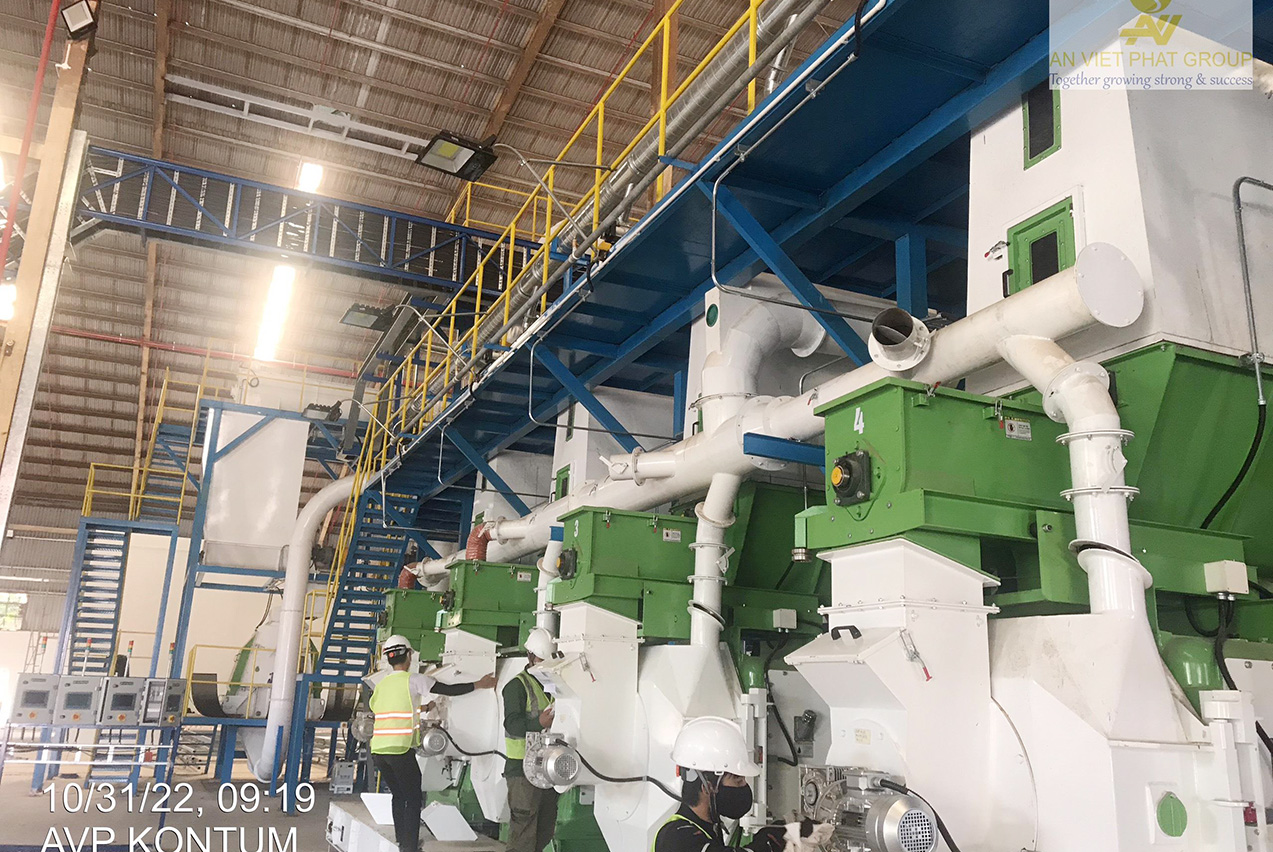
Kingwood's Vietnam 24 t/h wood chip pellet production line for AVP Group — Asia's largest power company and a leading sustainable biomass supplier — uses dies calibrated specifically for Vietnamese plantation wood feedstocks and operates at PDI above 97.5%.
The Indonesia 30 t/h deployment using JWZL-860 machines demonstrates that tropical hardwood die parameters scale cleanly from 5 t/h pilot operations to 30 t/h commercial lines when L/D and compression ratio are correctly specified from the start.
These are abrasive feedstocks. Rice husk contains 15–20% silica by dry weight — effectively fine sandpaper circulating through your die. Palm shell has high bulk density but irregular particle geometry.
For rice husk: - Wider L/D: 3:1 to 4:1 (shorter dwell time reduces abrasive heat buildup) - Larger hole diameter: 8–10 mm - Corrosion-resistant alloy steel (rice husk moisture often carries acidic compounds) - Expect 40–50% shorter die life compared to clean sawdust operations
For palm shell: similar to hardwood specs (L/D 5:1 to 6:1) but expect accelerated outer die wall wear due to particle hardness.
No die specification compensates for incorrect moisture. Material entering the ring die above 16–18% moisture produces soft, poorly bonded pellets that crumble before reaching the cooler. Material below 8% can cause excessive friction, die temperature spikes above 120°C, and carbonization inside the holes.
The optimal window is 10–14% moisture at the die inlet, confirmed by inline or grab-sample moisture meters before the pellet mill feed auger.
FAO Forest Products Annual Market Review 2024 reports that Southeast Asia generated over 85 million m³ of wood processing residues in 2023. That volume — spread across rubber, acacia, and mixed tropical species — represents the primary feedstock pool driving ring die demand in the region and explains why die specification for tropical hardwoods is a commercially consequential decision, not an academic one.
Browse real-world pellet mill deployment case studies to see how Kingwood has specified dies for different feedstock types across 30+ countries.
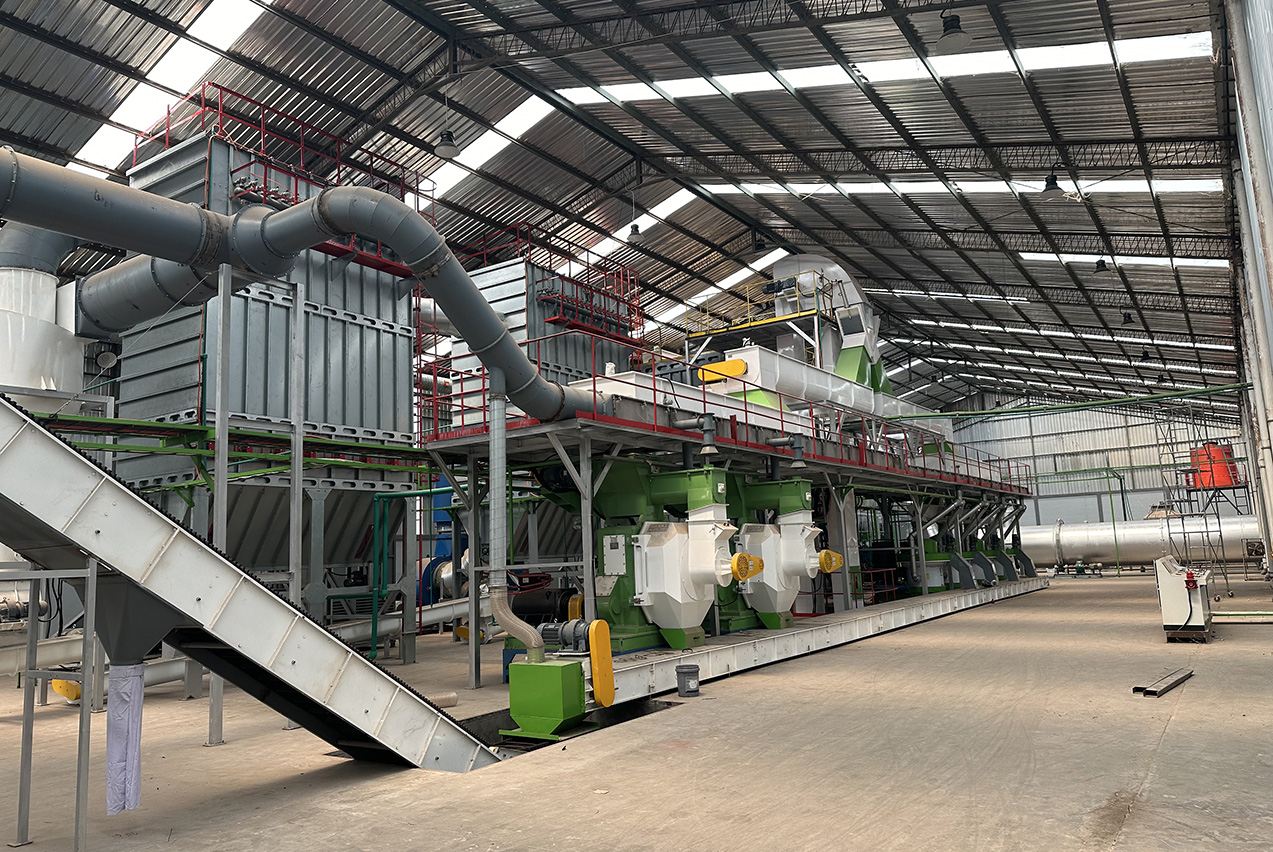
A ring die does not fail suddenly in most cases — it signals problems several shifts before a forced shutdown. Operators who know these signals can schedule replacements during planned downtime rather than emergency stoppages.
Output rate decline: If your 5 t/h line drops to 3.5 t/h at identical feed rate and moisture, the die holes are worn. Worn holes have larger effective diameters, reducing compression and allowing material to pass without forming dense pellets.
Pellet crumbling and elevated fines: PDI falling below 95% or powder percentage rising above 10% (Kingwood spec ≤ 10%) indicates compression loss. Check moisture first — if moisture is correct, the die is worn.
Elevated main motor amperage: Counter-intuitively, a severely worn die can draw more amperage than a new one because irregular hole geometry creates non-uniform resistance. Watch your motor current trends on a shift-by-shift basis.
Visual inspection: Holes showing a bell-mouth profile (wider at entry than mid-wall) or visible scoring on the inner die wall surface are reliable end-of-life indicators.
Under normal operating conditions (clean sawdust, controlled moisture): - Every 8-hour shift: visual check of pellet fines percentage; current log review - Weekly: inner die wall inspection with a flashlight; roller clearance check - Every 500 hours: full die removal, hole gauge check on 20% of holes, inner wall thickness measurement
The roller bearings in a ring die pellet mill run under high radial load in a dusty, hot environment. Insufficient lubrication is the most common cause of premature roller bearing failure. Lubricate on the interval given in the machine manual, using high-temperature grease.
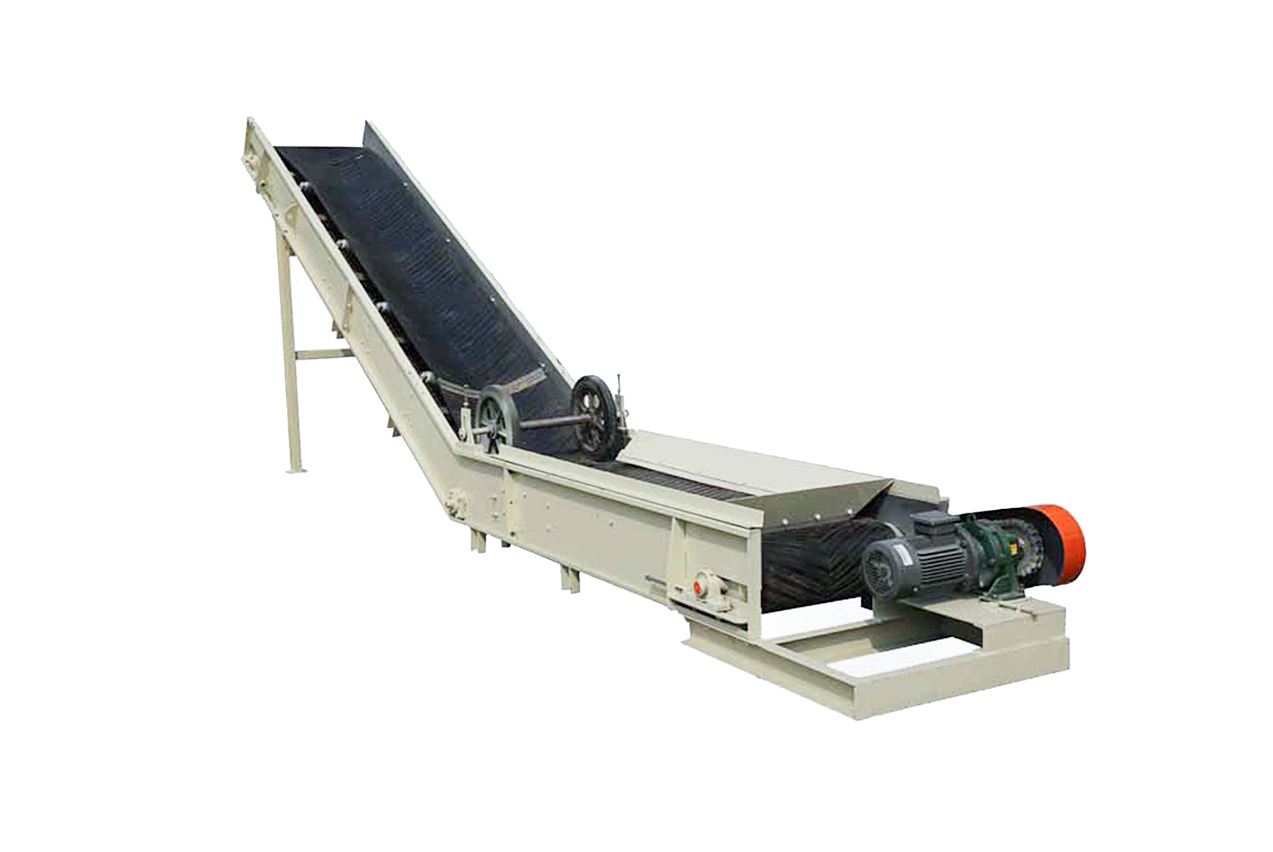
Pellet mill auxiliary equipment for full-line integration — including automated lubrication systems — can eliminate manual lubrication errors, which in our service experience account for the majority of preventable bearing failures in customer plants.
IEA Bioenergy 2023 operational benchmarks confirm that optimized maintenance protocols extend ring die life by 25–40% versus reactive-only approaches. At USD 8,000–15,000 per unplanned replacement event (McKinsey, 2023), even one avoided emergency shutdown pays for a full year of preventive maintenance labor.
Before placing an order, request the following documentation from any supplier:
Kingwood holds ISO 9001, ISO 14001, and CE certifications, and has been recognized as a Jiangsu Provincial High-Tech Enterprise and a "Top 10 Brand in Biomass Molding Equipment."
A supplier's project history is a direct proxy for die performance data. Kingwood's 2,000 production line projects planned and designed across 30+ countries — including the Vietnam 12 t/h deployment that achieved payback in 23 months — represent a substantial accumulated dataset on how their dies perform under real operating conditions across multiple feedstocks, climates, and operator skill levels.
World Bank SME Competitiveness Survey 2024 found that 67% of B2B machinery buyers in emerging markets rank spare-parts availability and after-sales response as equal to or greater priority than initial equipment price. For buyers sourcing from a Chinese manufacturer, the decision often comes down to how quickly the supplier's engineers respond and whether spare dies are stocked for immediate shipment.
Kingwood's Three-Standardization Framework — Integrated supply chain, Dust-Free processing, and Automated operation — has a direct bearing on die service life. Dust contamination is a primary accelerator of die wear; abrasive fine particles that bypass the hammer mill screening step increase surface wear by 20–30% per IEA operational estimates. Kingwood's enclosed processing and dust removal systems reduce this contamination at the source, extending die service intervals across all feedstock types.
Contractually specify: - Maximum lead time for replacement dies (standard vs. custom spec) - On-site engineer availability for commissioning and first maintenance cycle - Inventory of critical wear parts (dies, rollers, roller shells) to be held locally or in a regional hub
For buyers in Southeast Asia, Kingwood maintains a global operation and maintenance service network across 30+ countries, with engineers experienced in the logistical challenges of shipping oversized die components to markets like Indonesia and Vietnam where port clearance timelines vary.
Learn more about Kingwood after-sales and spare-parts services to understand what lifecycle support coverage is available for your region.
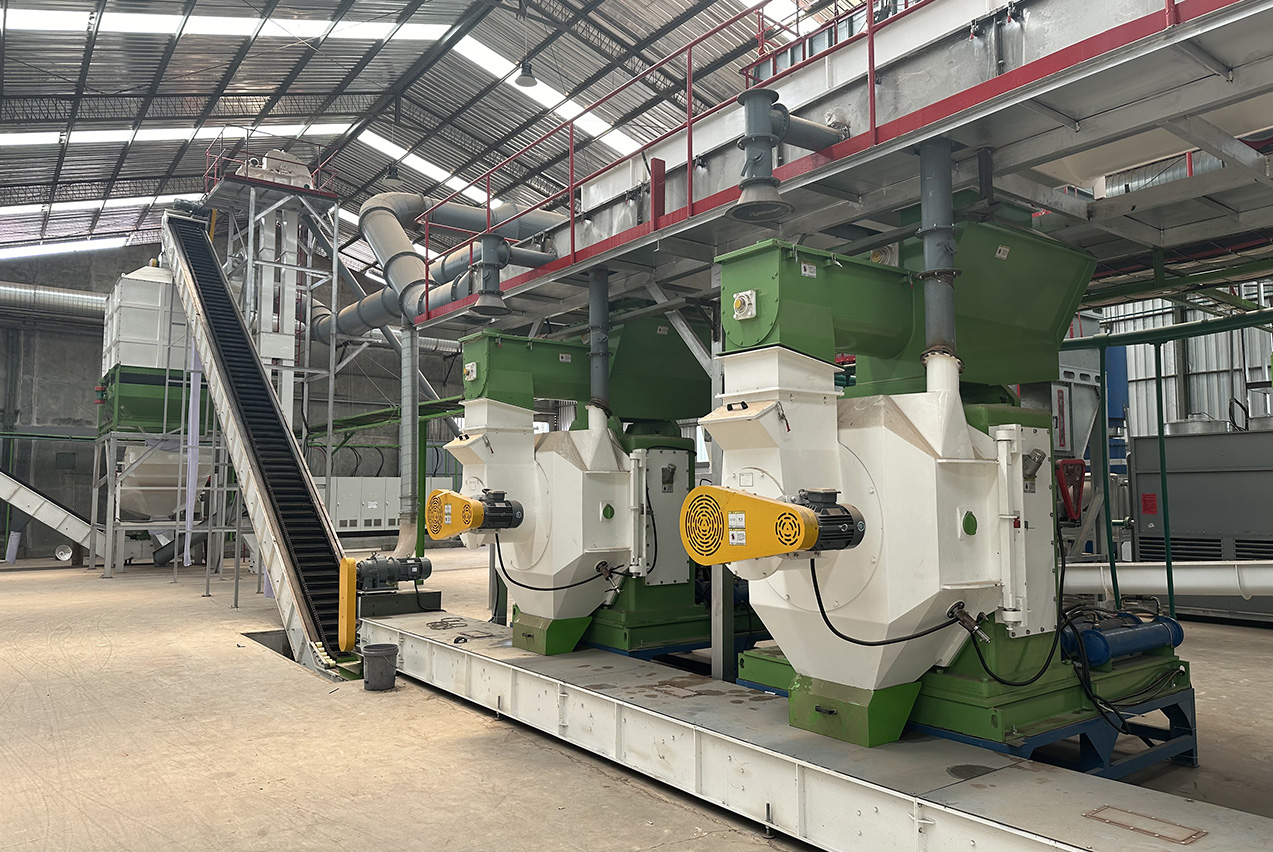
Kingwood machines its own ring dies and roller shells for the JWZL series — see the ring die and roller shell pages for materials, hole patterns and how to order a replacement.
For dense tropical hardwoods such as acacia and rubber wood, an L/D compression ratio between 5:1 and 7:1 is generally recommended to achieve a pellet density above 600 kg/m³. Kingwood's Vietnam 24 t/h plant uses dies calibrated for these feedstocks, delivering PDI above 97.5%. Feedstock moisture must be controlled to 10–14% before pelleting to prevent die blockage.
Die service life depends heavily on feedstock abrasiveness, moisture control, and lubrication discipline. For clean sawdust at correct moisture, well-manufactured CNC-drilled dies last far longer than on abrasive feedstocks like rice husk or palm shell. Kingwood's vacuum heat-treated ring dies are engineered for extended service life at the leading level in China's industry.
A 6 mm die produces a smaller, denser pellet suited for residential stoves and ENplus-grade fuel where pellet diameter is standardized at 6 mm. An 8 mm die is preferred for industrial boiler fuel where higher throughput per revolution matters more than strict diameter grading. Choosing the wrong hole size for your end market can result in rejected shipments or off-spec calorific values.
Most manufacturers, including Kingwood, recommend separate ring die configurations for wood-based and agricultural feedstocks because straw has significantly different lignin content, bulk density, and abrasive mineral load. Using a wood-optimized die on straw typically causes rapid hole wear and elevated fines above the 10% powder threshold. Straw-specific dies use wider L/D ratios and corrosion-resistant steel grades to compensate.
Replacement ring die pricing varies by diameter size and steel specification, but Kingwood's global spare-parts network across 30+ countries means most international buyers can receive standard dies within 2–4 weeks. Kingwood maintains stock for its JWZL-688, JWZL-688D, JWZL-860, and JWZL-1068 models. Buyers should negotiate a minimum spare-parts inventory clause in their supply contract to prevent costly production downtime.

Wood Biomass Machinery Manufacturer


 English
 日本語
日本語
 한국어
한국어