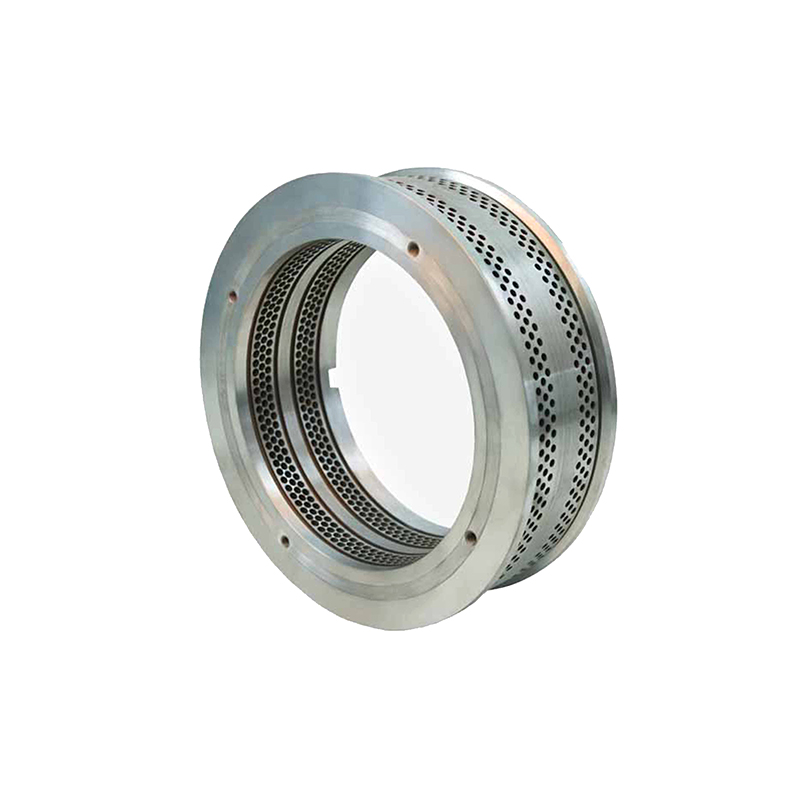
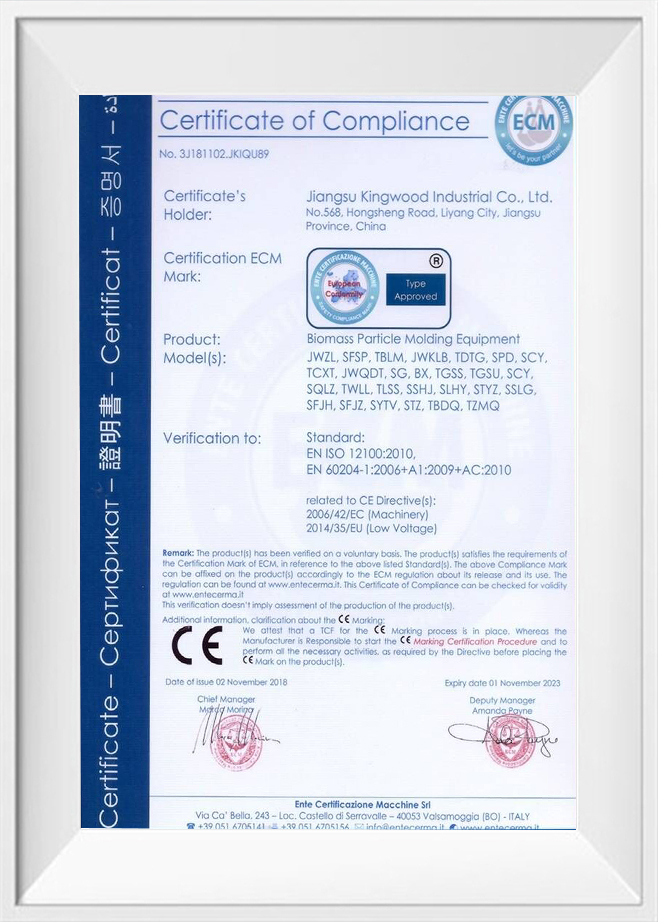
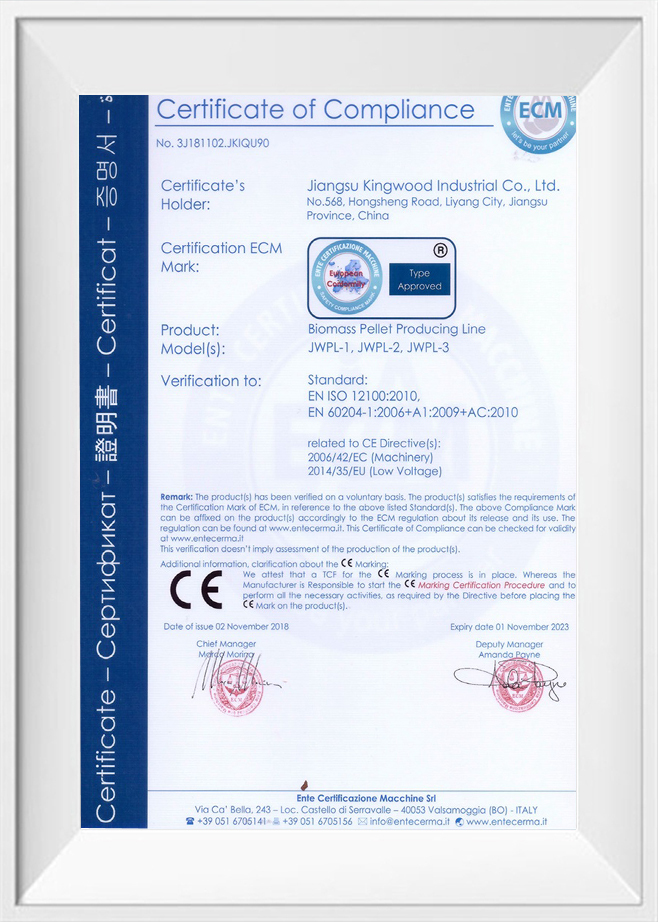
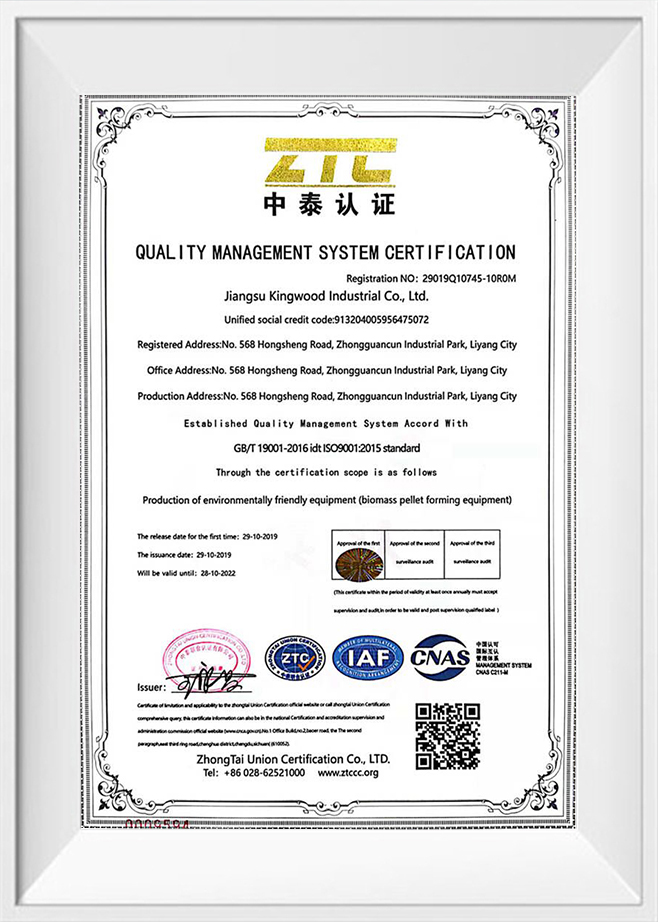
We provide a complete processing chain of Biomass machinery parts. Our Biomass machinery parts are complete in style, not only Pellet Mill parts, but also a variety of hammer mill, chipper, crusher parts. High quality, long-term provision of customized services for granulator accessories. Our Pellet Mill parts have been widely praised in the industry.
Ring Die Selection, Compression Ratio and Wear Life
The ring die is the part that decides whether your pellets hold together. It is a hardened alloy steel ring with precision‑drilled holes; internal press rollers force biomass through those holes under pressure and frictional heat, extruding pellets that external cutters trim to length as the ring rotates.
Two specifications determine whether a die suits your line: hole diameter and compression ratio. Getting either wrong is expensive.
Compression ratio — the specification most buyers get wrong
Compression ratio is die length divided by hole diameter.
| Ratio | Suits | Failure mode if mismatched |
| 1:4 – 1:5 | Softer biomass — sawdust, bark | Too low for hard feedstock → under-densified pellets that crumble |
| 1:6 – 1:8 | Harder feedstock — compressed wood chip, pure wood pellets | Too high for abrasive feedstock → excessive die wear and heat build-up |
Hole diameters are typically 6, 8 or 10 mm. The pellet diameter your buyer specifies fixes this; the compression ratio is where the process engineering actually happens.
Ring die wear life
Industrial ring die lifespan runs 800–1,500 operating hours, and feedstock abrasivity decides where you land:
‑ Rice husk and other high‑silica feedstock: 500–800 hours. Silica content cuts die life roughly in half.
‑ Softer wood feedstock: 1,200–1,500+ hours.
‑ Wrong compression ratio for the feedstock shortens life independently of material — a 1:8 die running abrasive material wears from heat as much as from abrasion.
The roller shells that run against the die wear at a comparable rate (600–1,200 hours). Most operators replace die and shells together at the same maintenance window; replacing only one leaves mismatched surfaces that cost pellet quality.
How Kingwood manufactures ring dies
Dies are drilled on fully automatic CNC machines, which is what delivers uniform compression ratio across the whole die surface rather than only at the sample points. Material is hardened alloy steel rated for industrial continuous duty, with heat treatment and surface hardening calibrated to balance wear resistance against brittleness — a die hardened purely for wear resistance cracks under roller load.
Changing a ring die
Ring die replacement is field‑serviceable. Trained operators complete a changeout in a 4–8 hour maintenance window including cool‑down, removal, installation and alignment — no factory return required. Operator training on Kingwood‑deployed lines covers die changeout as a standard skill.
Ordering ring dies from the manufacturer
| Shipping | Direct from the factory in Liyang, Jiangsu |
| Distributors / agents | None. You are buying from the manufacturer. |
| Minimum order quantity | None.*A single ring die is a valid order. |
| What we need to quote | Machine model (or a nameplate photo), hole diameter, and your feedstock |
Kingwood manufactures dies for all JWZL vertical and JZWH horizontal series pellet mills, and compatible dies for pellet mills built by other Chinese manufacturers where compatibility is verified against the machine model. Compatibility is confirmed before we quote — not after the parts arrive.
For die material, hole diameter and compression ratio explained in plain terms, see our guide to pellet mill ring die specifications.

Supply Biomass Machinery Ring-Die Company


 English
 日本語
日本語
 한국어
한국어