Home / Categories / Wood Pellet Mill / 2.2-3 ton/h Biomass Wood Pellet Mill JWZL-688

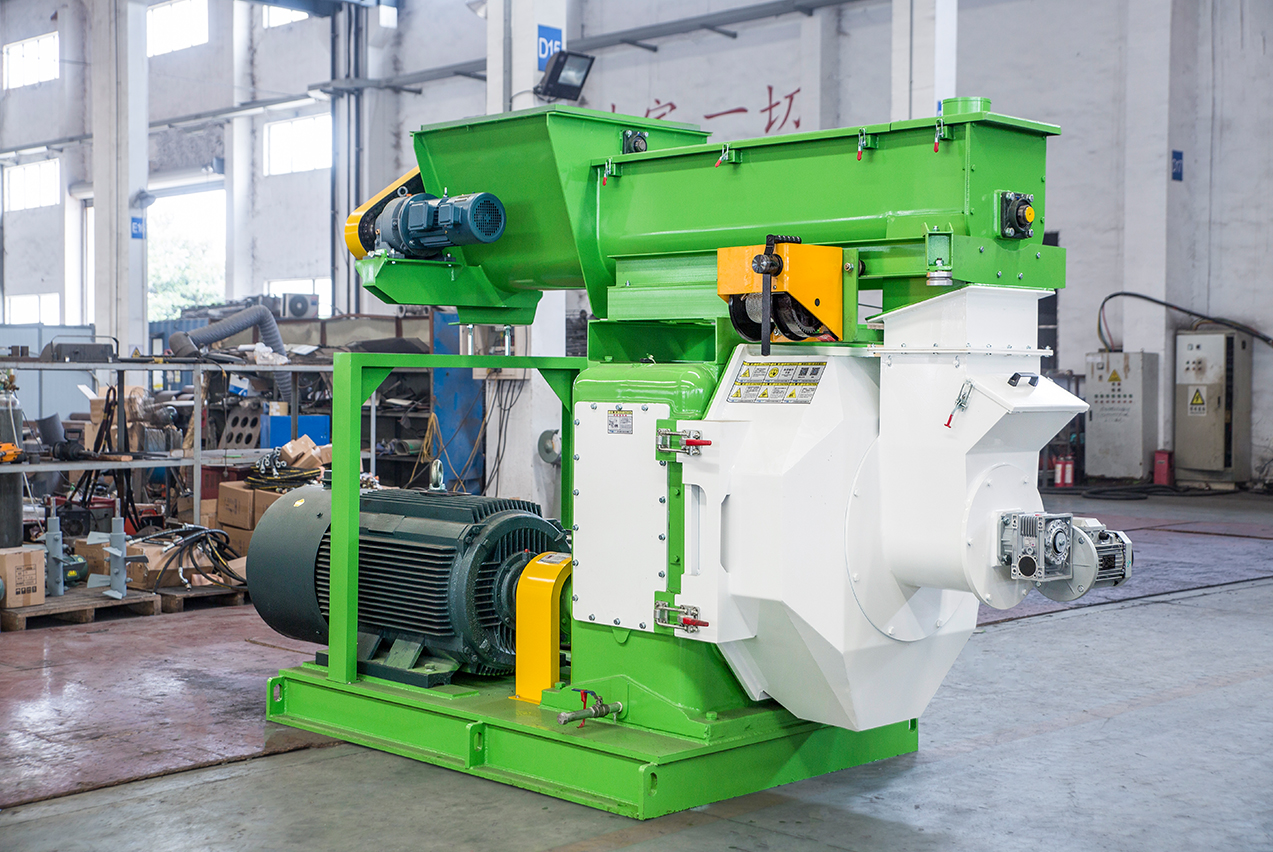
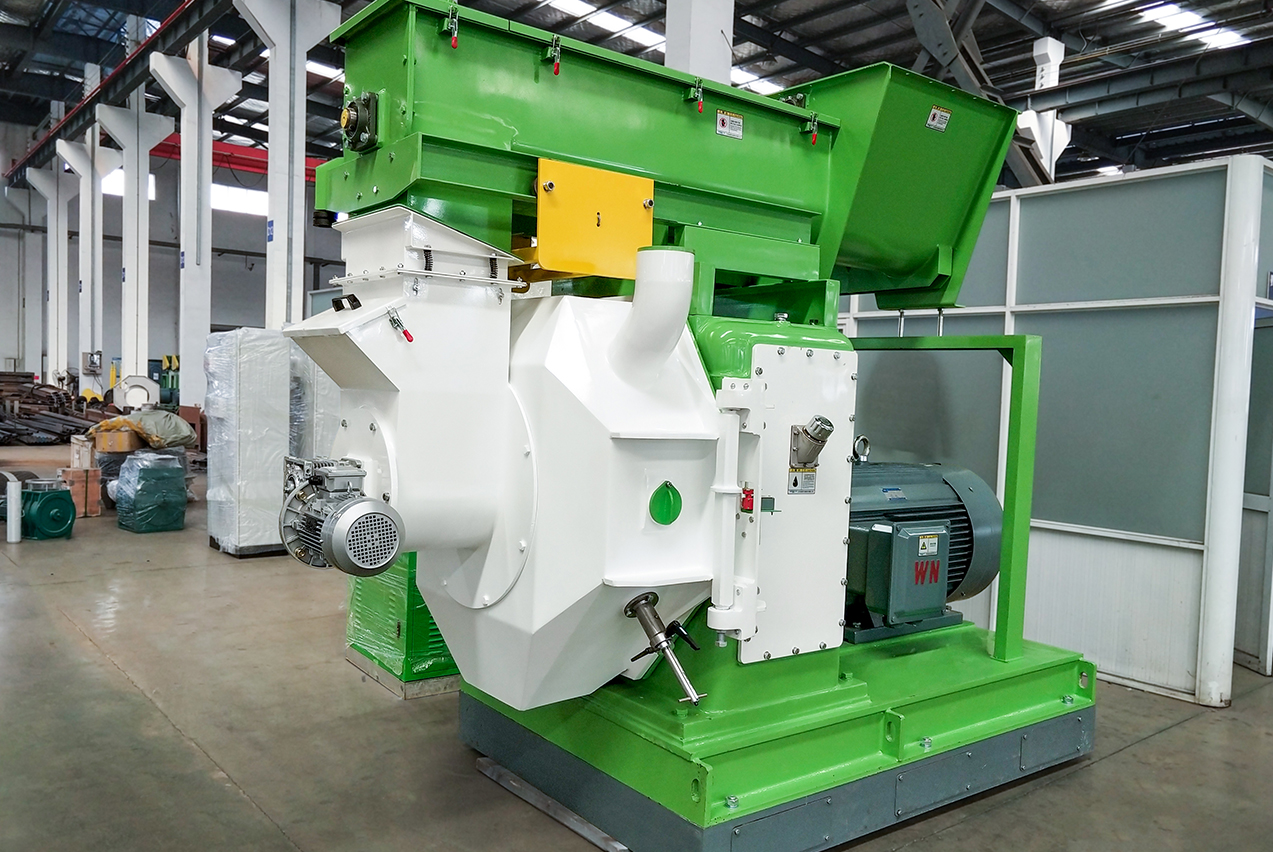
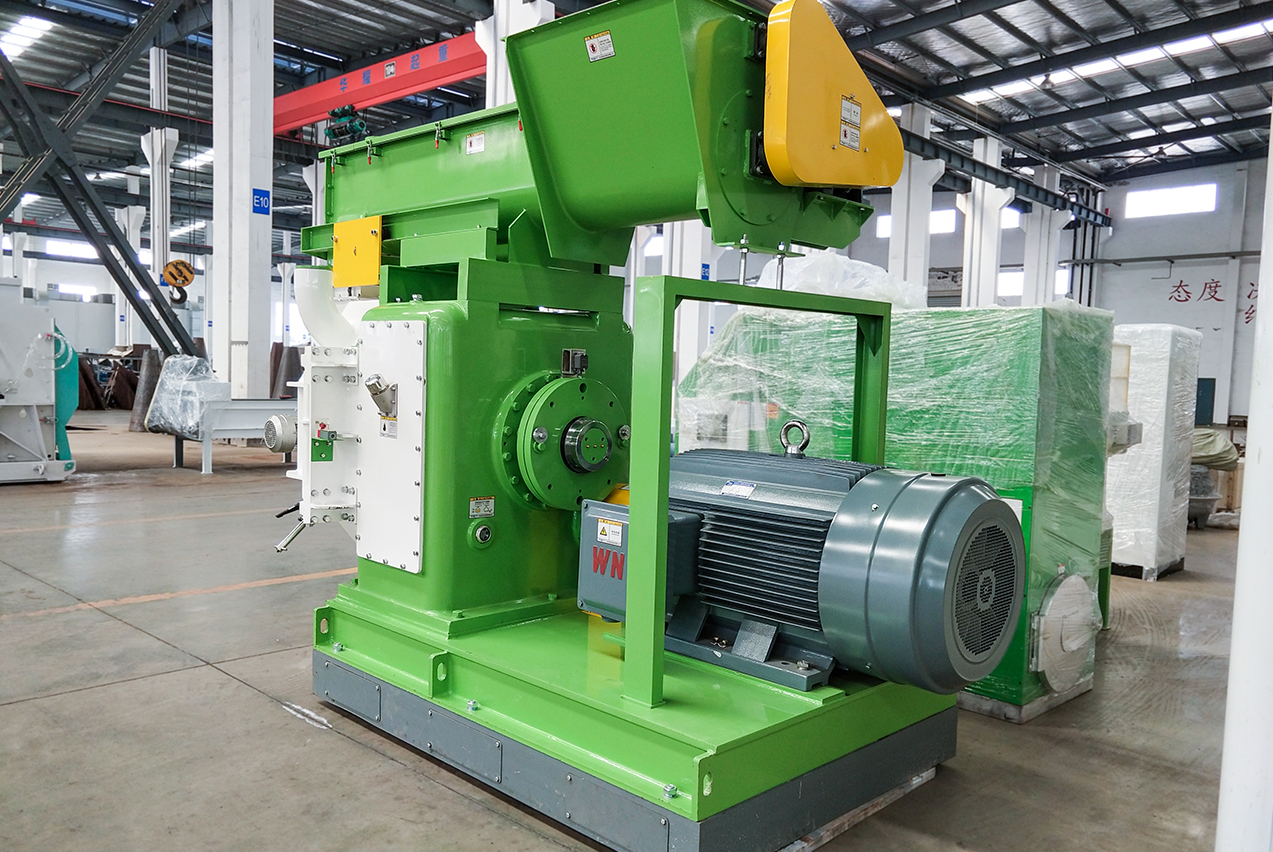
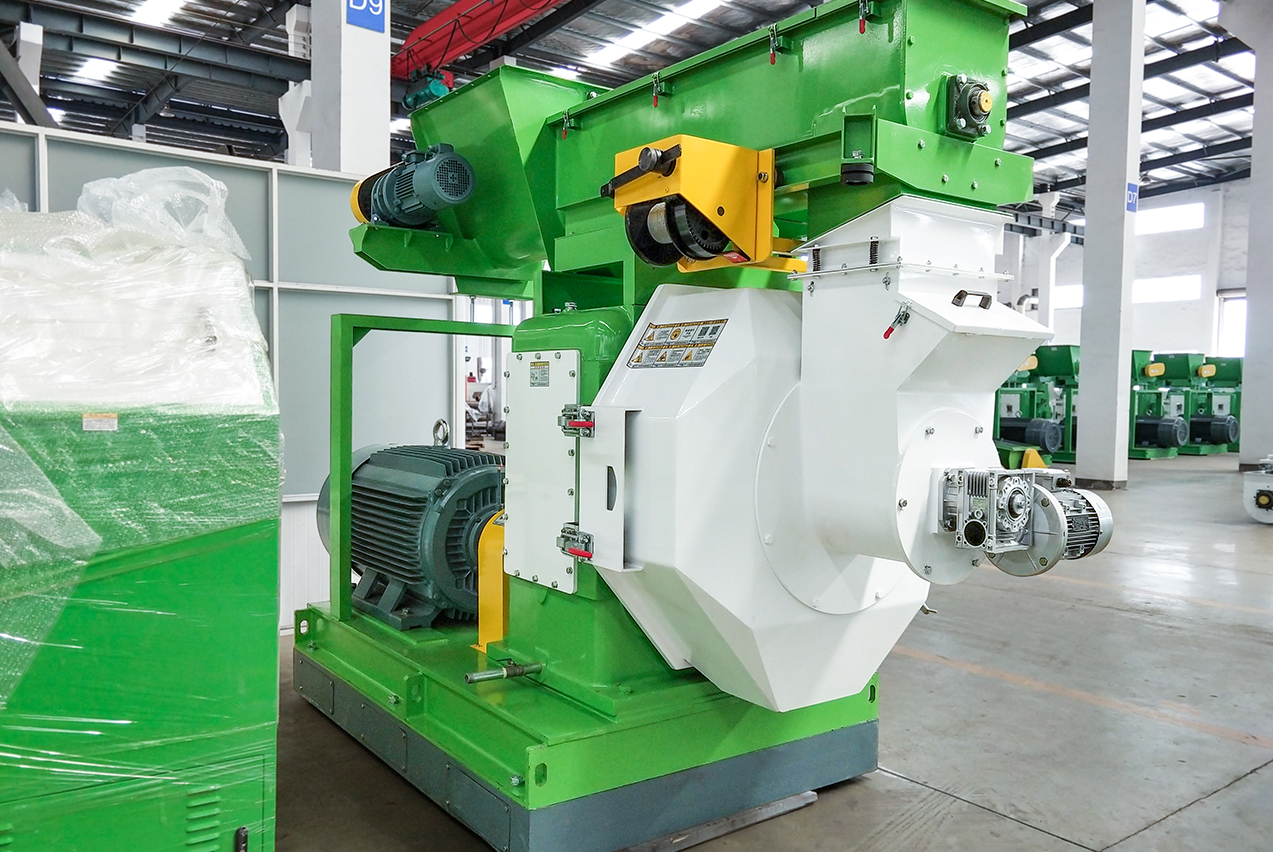
2.2-3 ton/h Biomass Wood Pellet Mill JWZL-688

What is a ring die pellet mill?
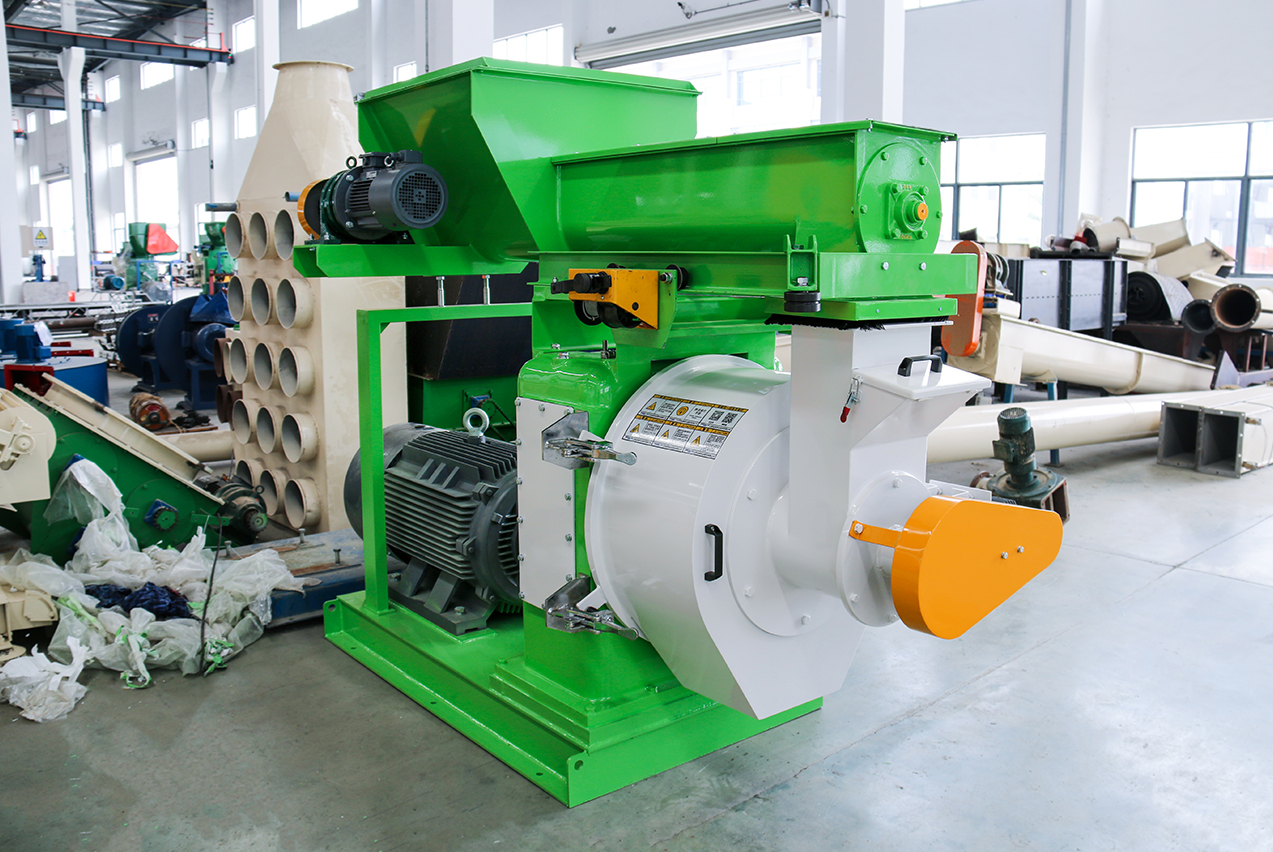
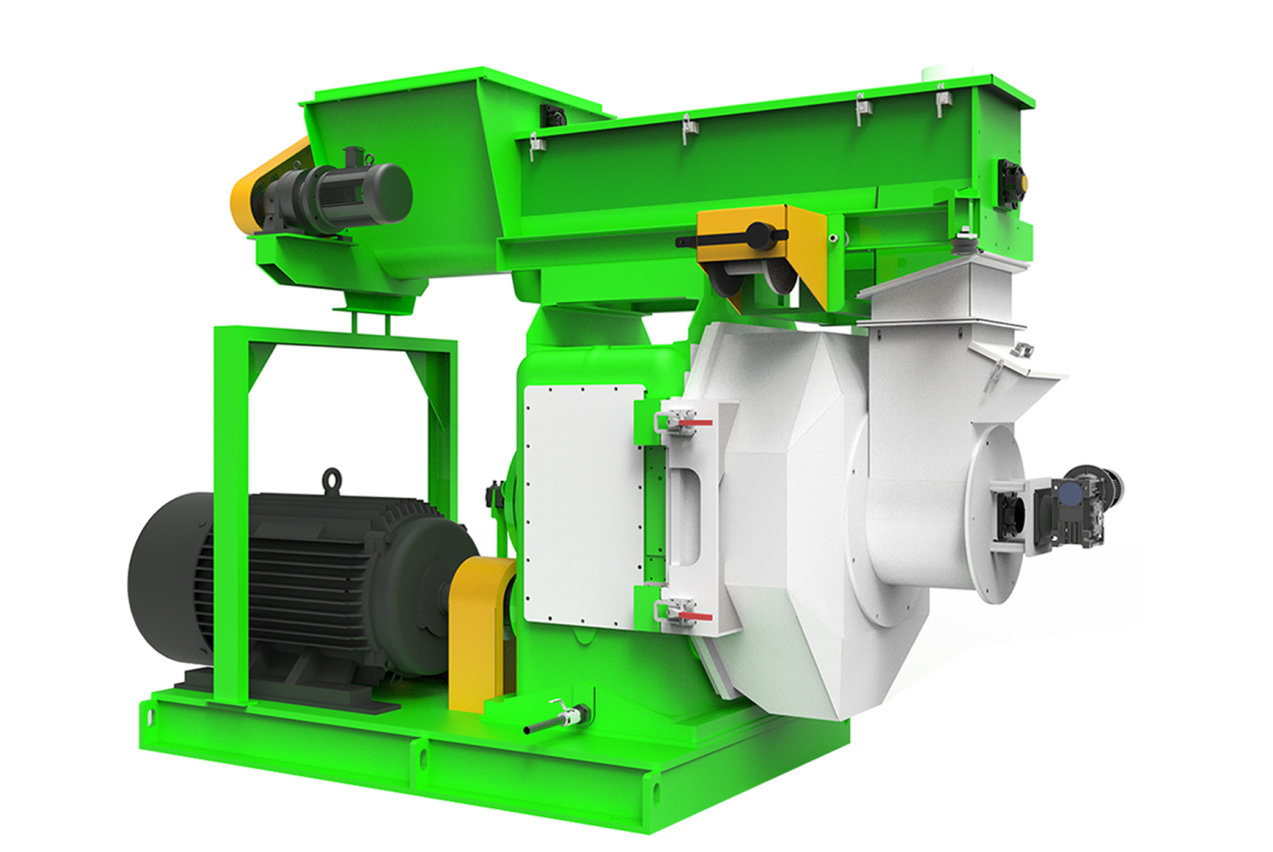
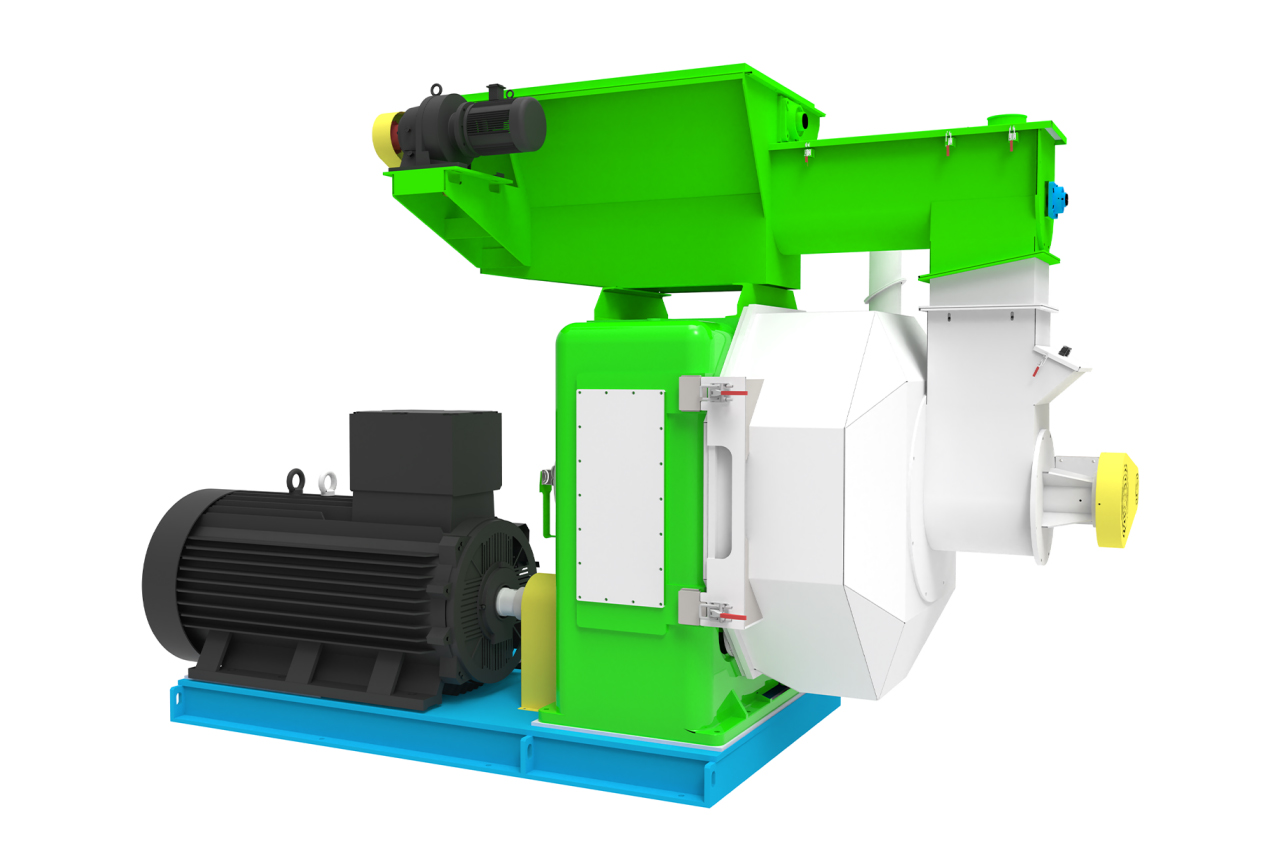
A ring die pellet mill is a pelletizing machine that compresses biomass material (wood, sawdust, agricultural residue) through holes in a rotating ring-shaped die using internal pressure rollers. Compared to flat die designs, ring die mills deliver higher throughput (2–30 t/h industrial range), longer die life, and better pellet uniformity, making them the standard for industrial wood pellet production lines. The Kingwood JWZL-688 vertical ring die pellet mill delivers 2–3 t/h biomass pellet output with automated PLC control and wet-feed feedstock compatibility.

Operation

The powdered wood chips, straw, bark, and other materials in the pre-pelleted bin are transferred into the inclined trough by the feeding winch. The material enters the pressing chamber through the forced feeder and is fed by the feeding scraper into the two pressing zones in the ring die. Influenced by the high-speed rotation of the ring mold, the material is conveyed between the ring mold and the pressure roller. Under the strong extrusion of the ring mold and the pressure roller, the material is gradually compacted and shaped in the mold holes. As the extrusion between the die rollers is continuous, the shaped material is continuously discharged from the die holes in the form of columns and then cut by the cutter into granules of the required length to enter the next.

2.2-3 ton/h Biomass Wood Pellet Mill JWZL-688
JWZL-688

Brief of JWZL-688

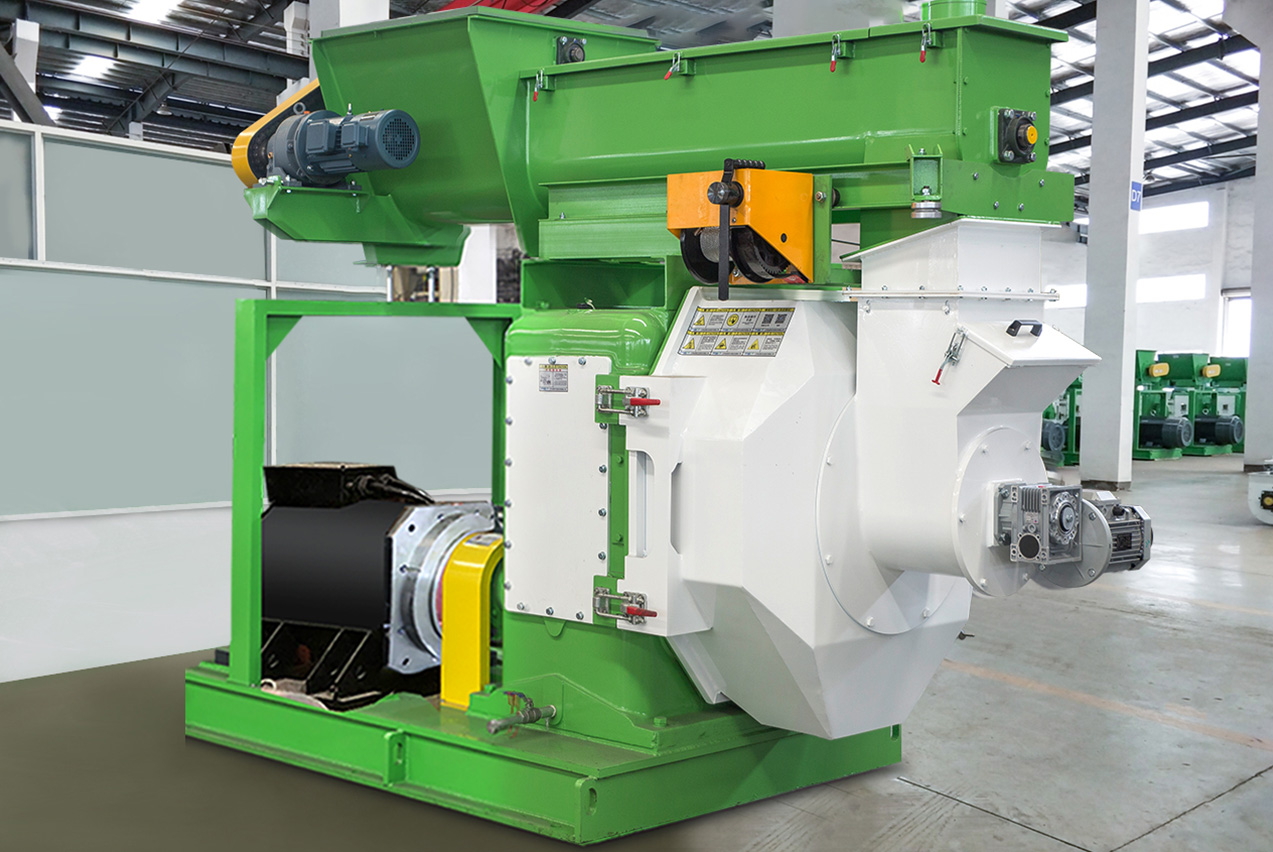
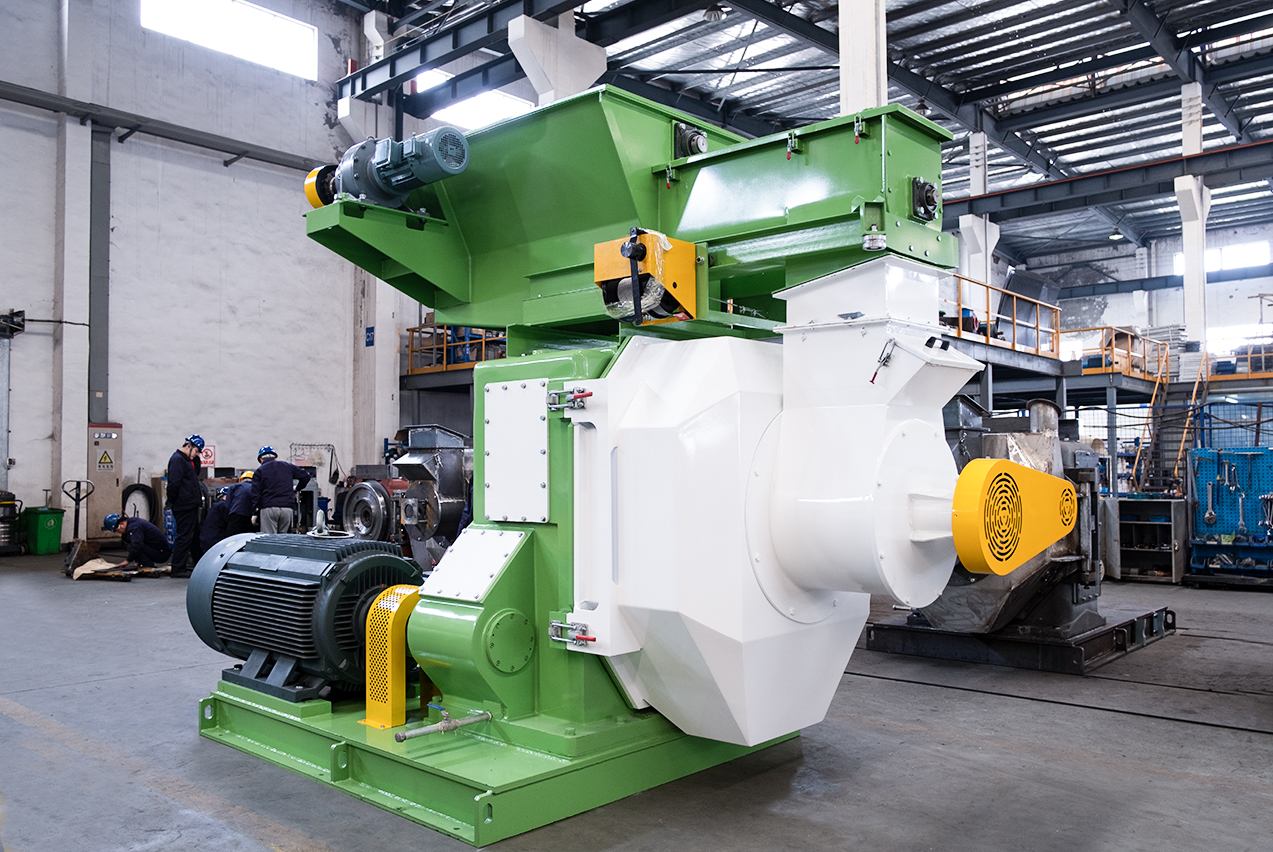
● The Pellet mill is the most key equipment during the entire production process. This machine determines the output of the whole process, and the JWZL-688 pellet mill is one of the most efficient and stable machines. JWZL-688 pellet mill has built a high reputation for Kingwood for its smooth operation and the high value it creates for its customers.

● The technical means used in the JWZL-688 are:
(a) reinforced frequency-controlled feeding;
(b) forced feeding;
(c) hoop-type ring mold;
(d) all imported bearings and oil seals in the transmission box;
(e) off-board thin oil lubrication and cooling circulation system (optional), which integrates cooling, filtering and oil cut-off alarm, to forcibly lubricate the main bearings;
(f) serpentine spring coupling with large compensation capacity to transmit power, etc.

Advantage of JWZL-688

● The main drive adopts a high-precision gear drive, and the ring die adopts the quick-release clamping type. The overall efficiency is about 20% higher than the relative belt drive type.
● The transmission part of the whole machine uses high-quality imported bearings and oil seals to ensure efficient, stable, and low-noise transmission.
● JWZL-688 contains a more advanced level of serpentine spring coupling, with a novel structure, compact, safe, low failure, and other properties.
● JWZL-688 equips with a non-stop refueling system and an air-cooling system, which provides high efficiency, low energy consumption, smooth operation, and stable and reliable granule quality.

Parameter:
Specification

JWZL-688

Output capacity

2.2-3.0t/h

Main Motor Power 

200kw

Feeding Auger Motor Power 

3kw

Forced Feeding 

2.2kw

Pellet Percentage

≥90%

Powder Percentage

≤10%

Raw material

Wood, sawdust, straw, husk, MSW (moisture ≤15%) 

2.2-3 ton/h Biomass Wood Pellet Mill JWZL-688 Manufacturers


Customized Wood Pellet Machine Manufacturers


Before the advent of Ring Die Wood Pellet Mill, many Industrial Wood Pellet Maker appeared to solve the problems in our production. Instead, the Ring Die Wood Pellet Mill has allowed us to produce more high-quality pellets while saving costs and making a great contribution to the Industrial Wood Pellet Maker market.
 
We promise that all Wood Pellet Machine Suppliers are obsessed with this Ring Die Wood Pellet Mill, which has become one of the best-selling machines in our market. This new Wood Pellet Press Machine is designed according to our customers' needs and is constantly updated with technology to meet market demand.

Industry Knowledge

Q: What feedstock can a ring die pellet mill process?
 A: Wood chips, sawdust, agricultural straw, rice husk, palm kernel shell, and MSW — provided moisture is reduced to ≤15% before pelletizing. The Kingwood JWZL-688 accepts mixed biomass feedstock from a wet-feed production line that handles drying inline.

Q: What is the typical lifespan of a ring die?
 A: 800–1,500 operating hours under industrial conditions, depending on feedstock abrasiveness and operator practice. Hardened-steel ring dies on Kingwood JWZL series mills are designed for hot-run continuous duty.

Q: Ring die vs flat die — which produces better pellets?
A: Ring die mills produce more uniform pellets at higher throughput, making them the industrial standard above 1 t/h. Flat die designs remain common for sub-1 t/h farm or hobby use due to lower equipment cost.

Q: What pellet diameter does the JWZL-688 produce?
A: 6 mm, 8 mm, or 10 mm — die holes are interchangeable to match downstream off-take requirements (residential heating typically 6 mm; industrial boilers 8 mm; export markets variable).

Q: How is the JWZL-688 different from horizontal pellet mills?
A: Vertical-axis ring die design (JWZL series) reduces footprint and bearing load compared to horizontal axis designs (JZWH series). Both throughputs overlap at 2–5 t/h; vertical preferred for plant layouts with floor-space constraints.

Oliver Ge
Tel:
+86 13120914095
Sandra Li
Tel:
+86 19951375637
Becky Jin
Tel:
+86 18862297026
Henry Yuan
Tel:
+86 18205276156
×