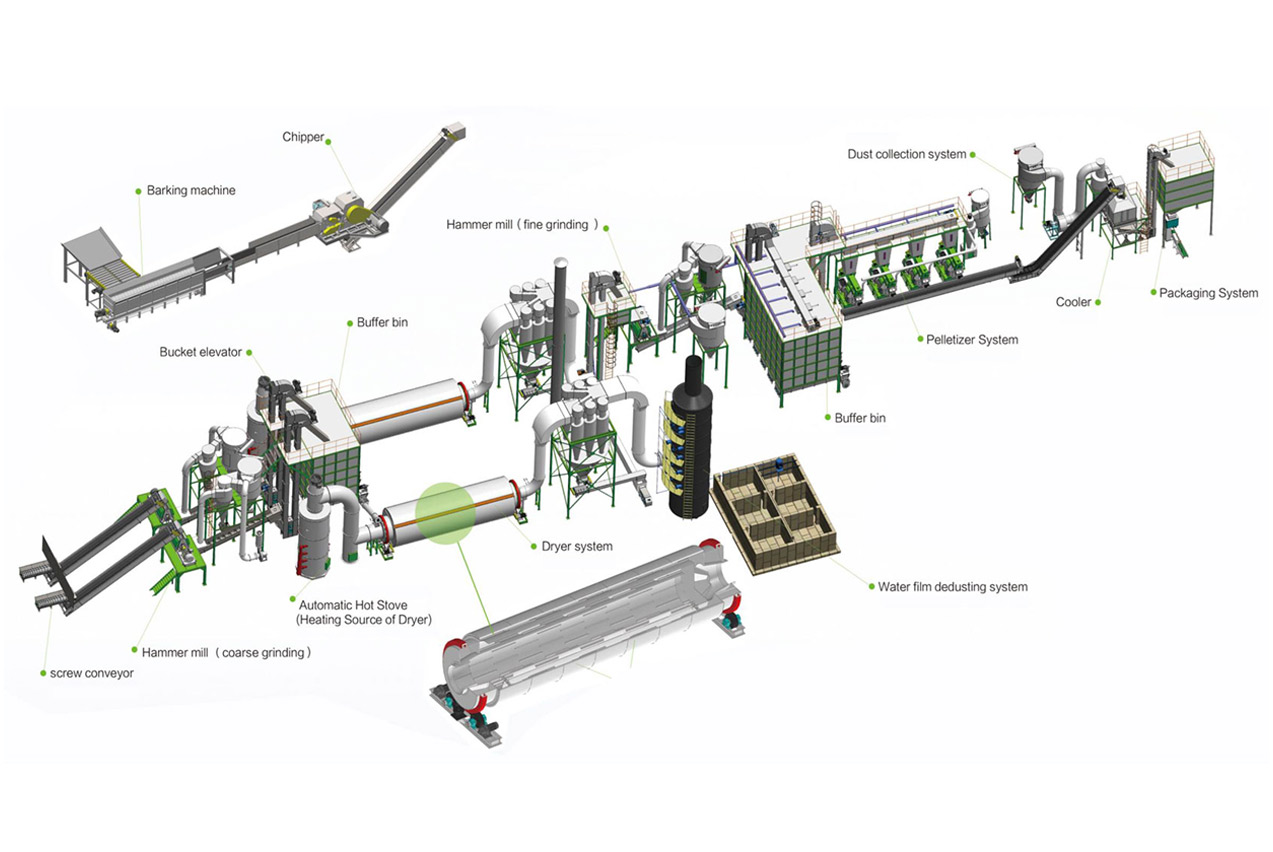
A Kingwood complete wood pellet production line transforms raw biomass — logs, sawdust, wood chips, agricultural residues — into dense, dry, uniform cylindrical pellets that industrial boilers, power stations, and heating systems can burn efficiently. The end product is not simply "compressed wood." It is a standardized fuel with a defined calorific value, moisture ceiling, and mechanical durability index (PDI) that buyers in Japan, South Korea, the EU, and Southeast Asian markets purchase against technical specifications.
Raw wood cannot be fed directly into a pellet mill for two structural reasons. First, particle size must be controlled: a ring die mill requires particles below 3–5 mm to form consistent pellets. Second, moisture content must sit within 10–14% — excess moisture prevents the lignin binders in wood fiber from fusing under die pressure, producing soft pellets that crumble during transport.
Global wood pellet demand reached approximately 40 million tonnes in 2023 per the IEA 2023 Bioenergy Report, with the EU accounting for roughly 55% of global consumption. Asia — particularly Japan, South Korea, and Vietnam — represents the fastest-growing demand region. This market trajectory makes line specification decisions consequential: a line built to 6 t/h today may need to expand to 12 t/h within three years.
Each stage in a production line both processes material and sets the quality ceiling for every stage that follows it.
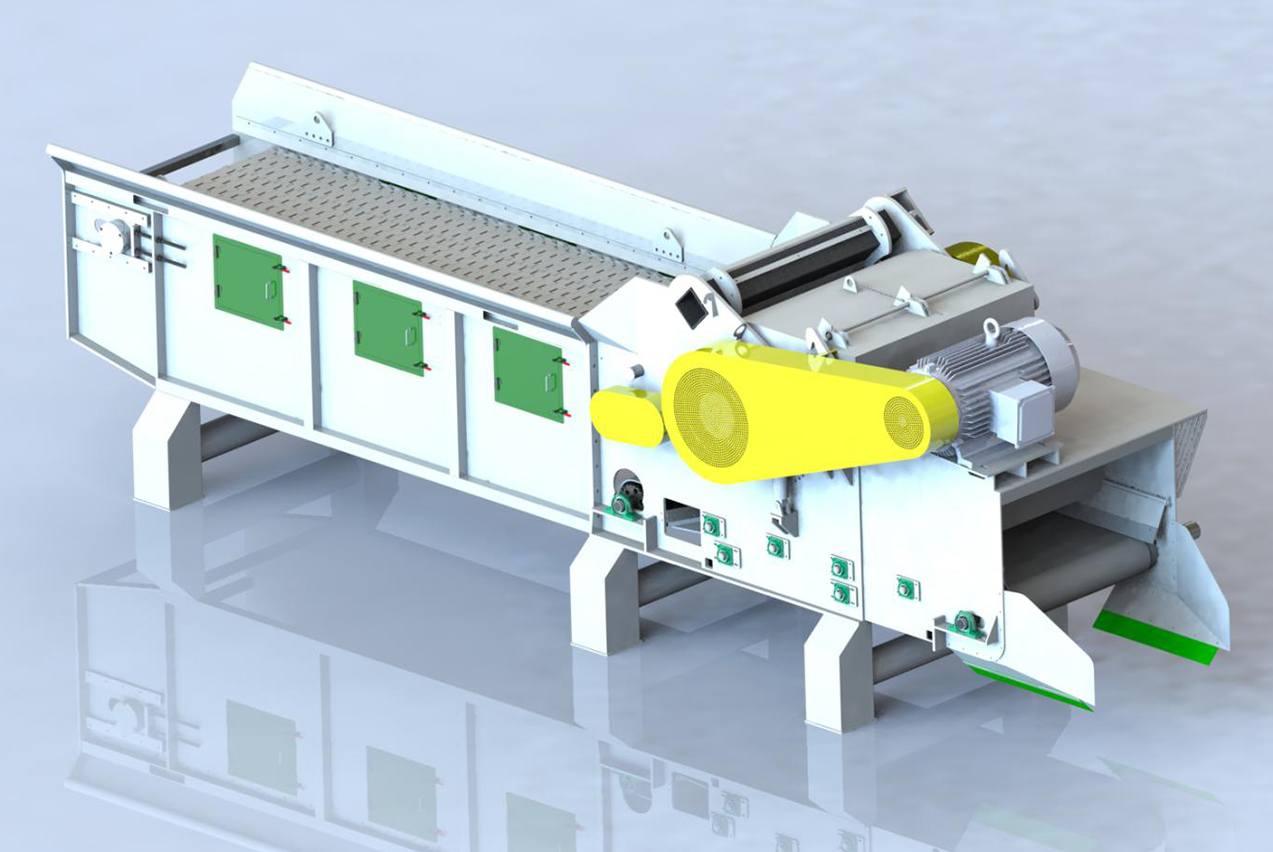
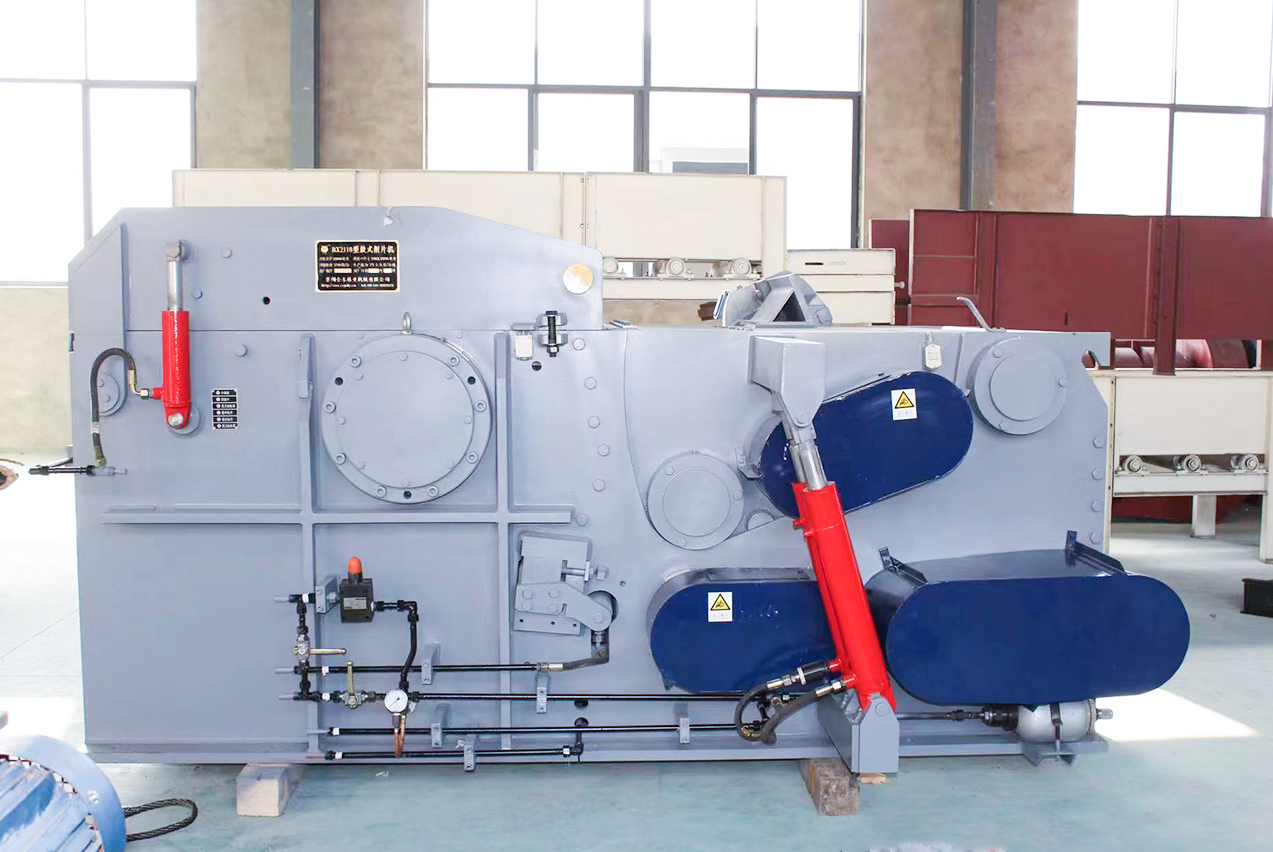
Large feedstocks (logs, slabs, demolition offcuts) are reduced to 30–50 mm chips by a drum or disc chipper. Kingwood's BX-series drum chippers handle branch wood and waste timber at the front of the line. Skipping this step when feeding oversized material into a hammer mill dramatically shortens hammer life and creates uneven particle distribution downstream.
Chips pass through a biomass wood hammer mill to reach 5–10 mm particle size. This stage uses interchangeable screens — typical screen apertures are 6 mm, 8 mm, and 10 mm — allowing operators to adjust output particle size based on pellet die specification. Hammer blade wear is the primary maintenance cost here; buyers should budget for blade replacement every 300–600 operating hours depending on feedstock hardness.
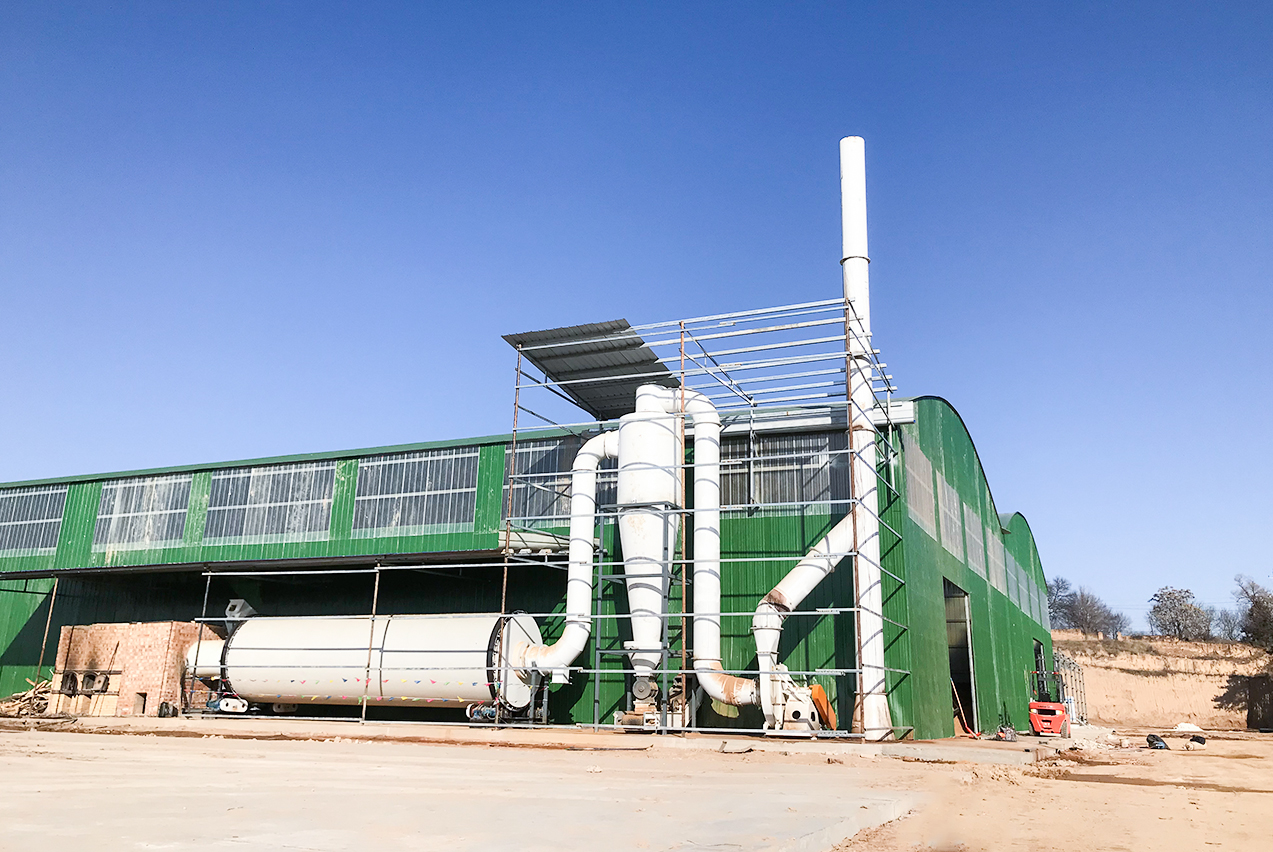
Crushed material at 30–55% moisture is fed into a rotary drum dryer and brought down to 10–14% moisture. This is the highest-energy stage and the one most commonly undersized. Pellets produced at moisture above 15% achieve PDI below 90%, compared to ≥97.5% PDI achievable at 10–14% moisture per the EN ISO 17225-2 standard (2021 revision).

Dried material passes through a secondary hammer mill or ring mill to achieve final particle size of 3 mm or finer. This stage is often combined with Stage 2 on smaller lines (under 3 t/h) but must be separated on larger lines to avoid moisture re-absorption during prolonged grinding.
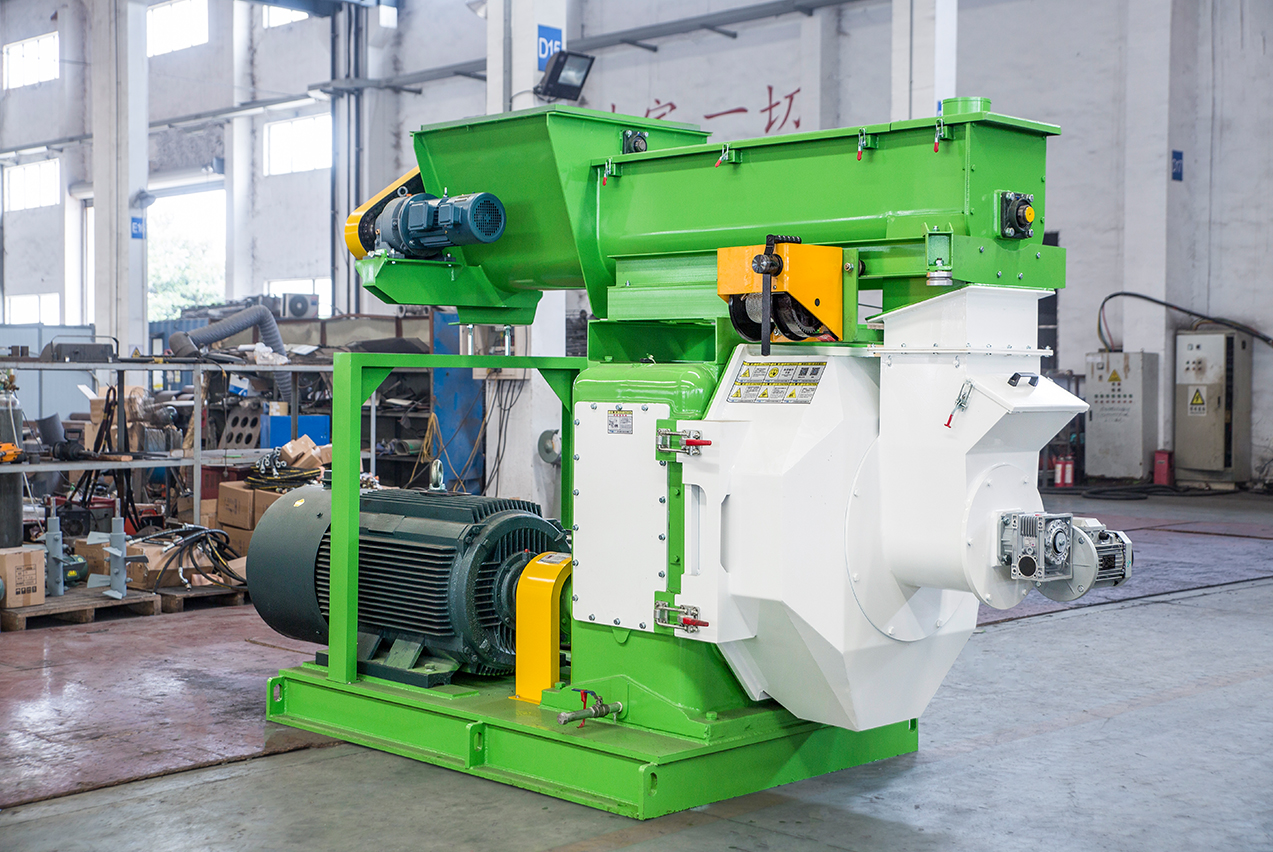
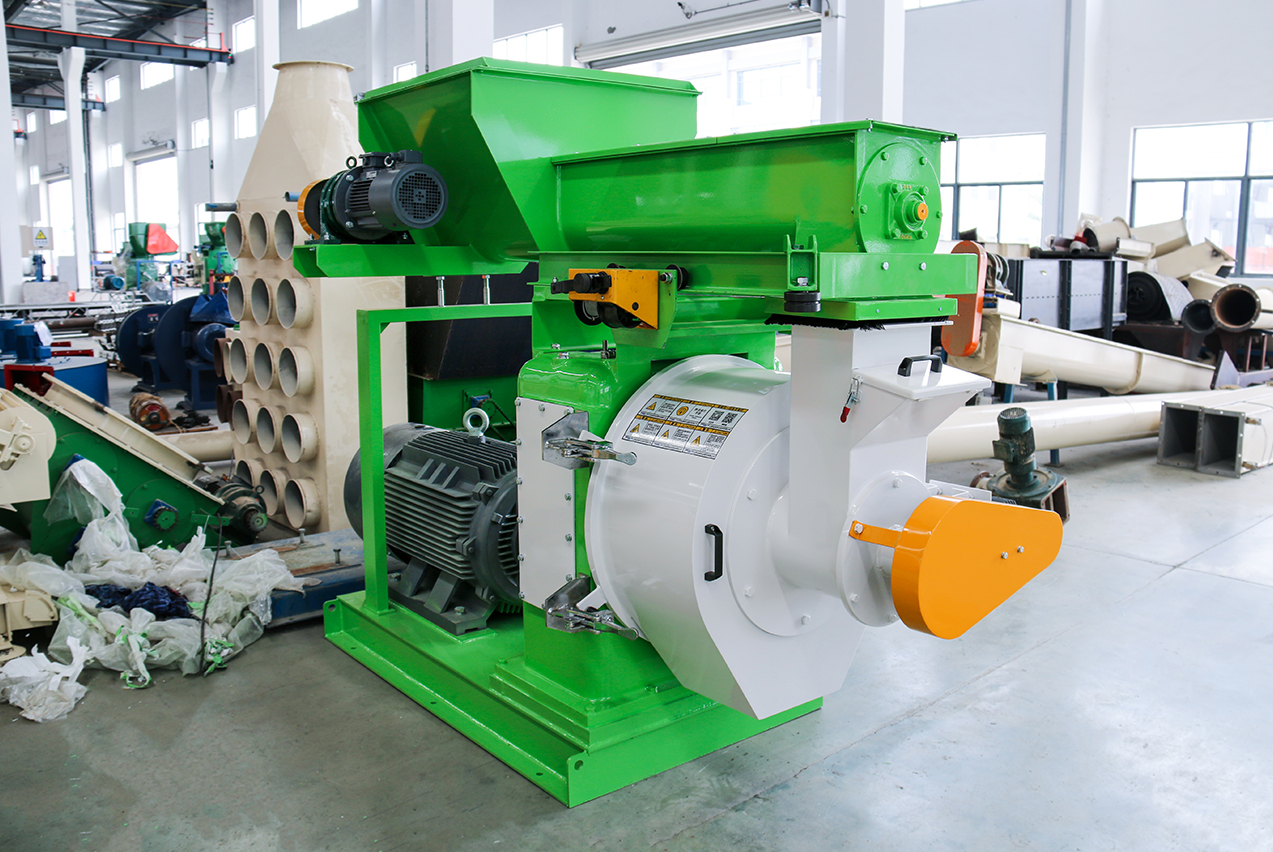
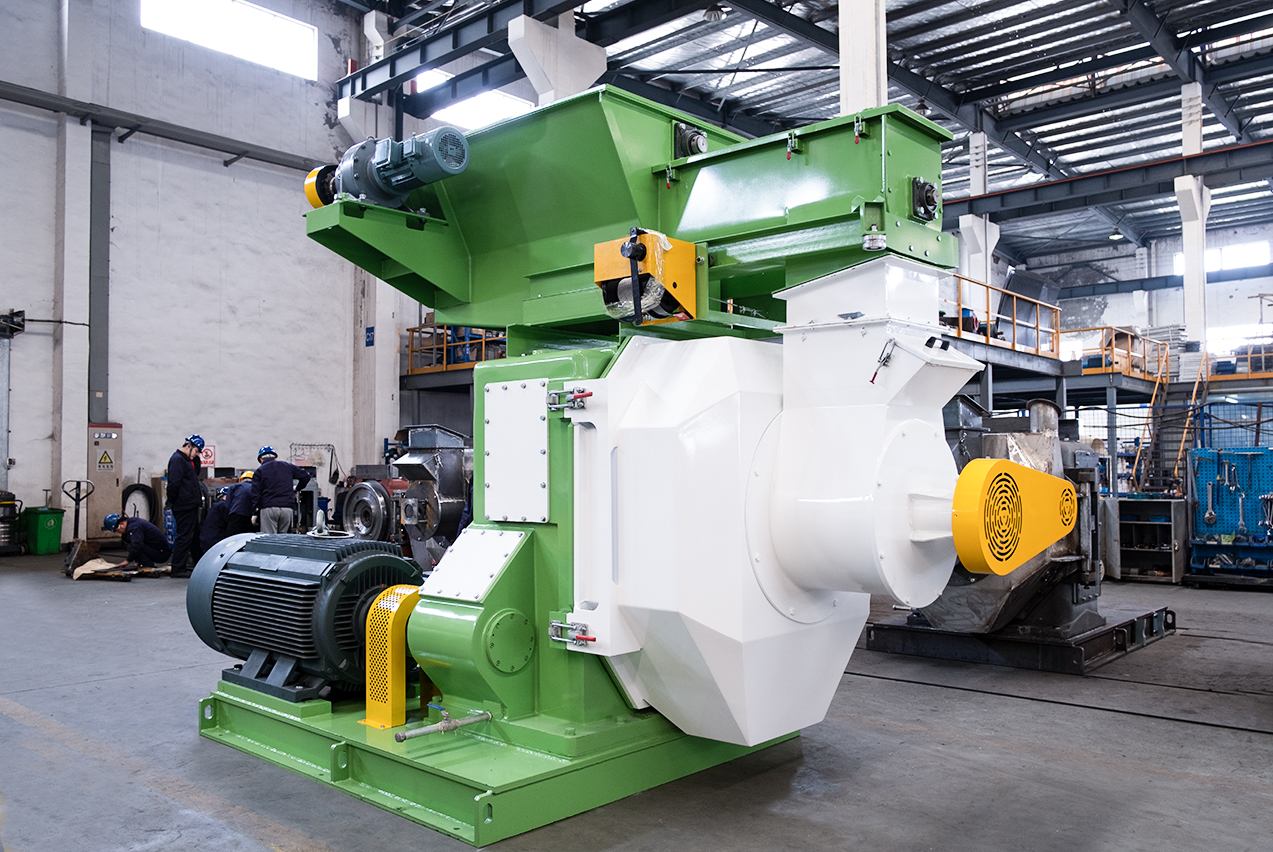
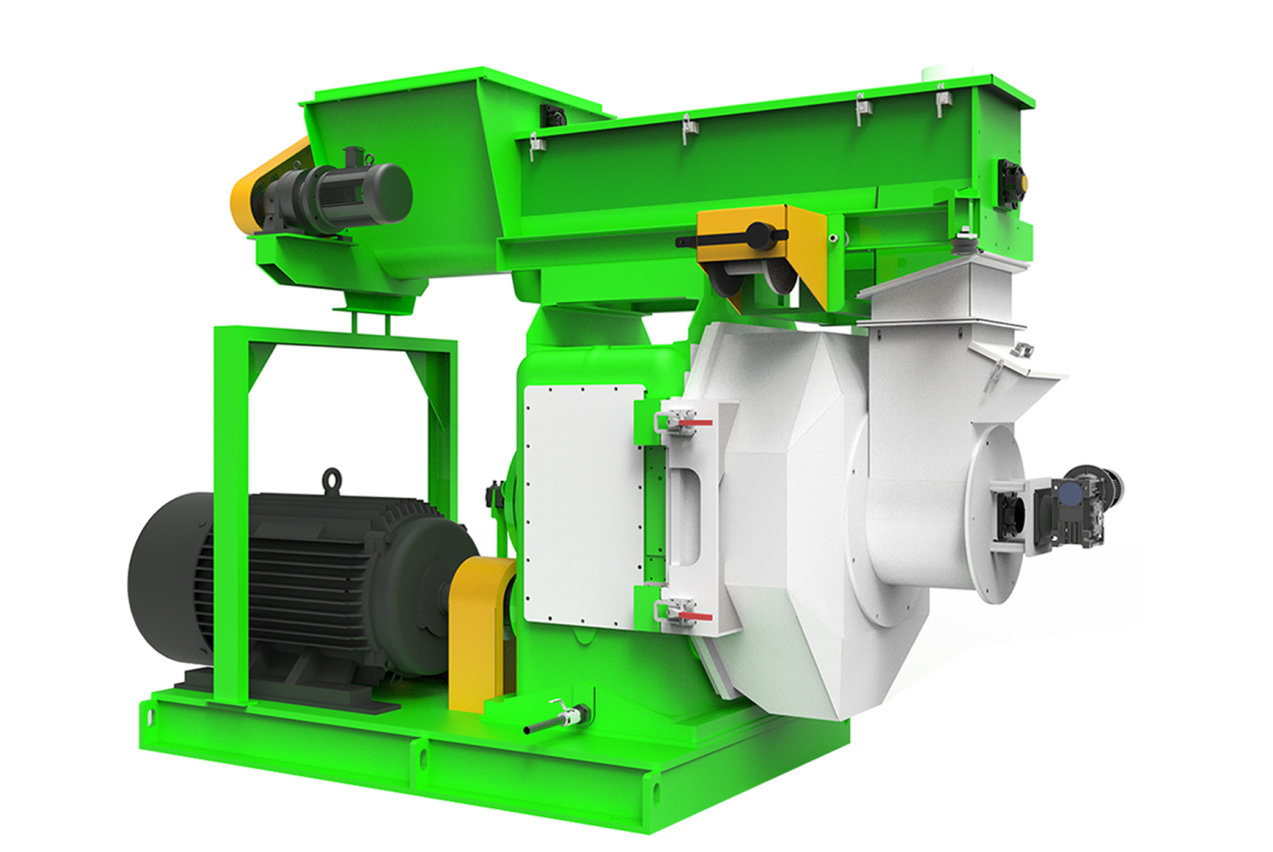
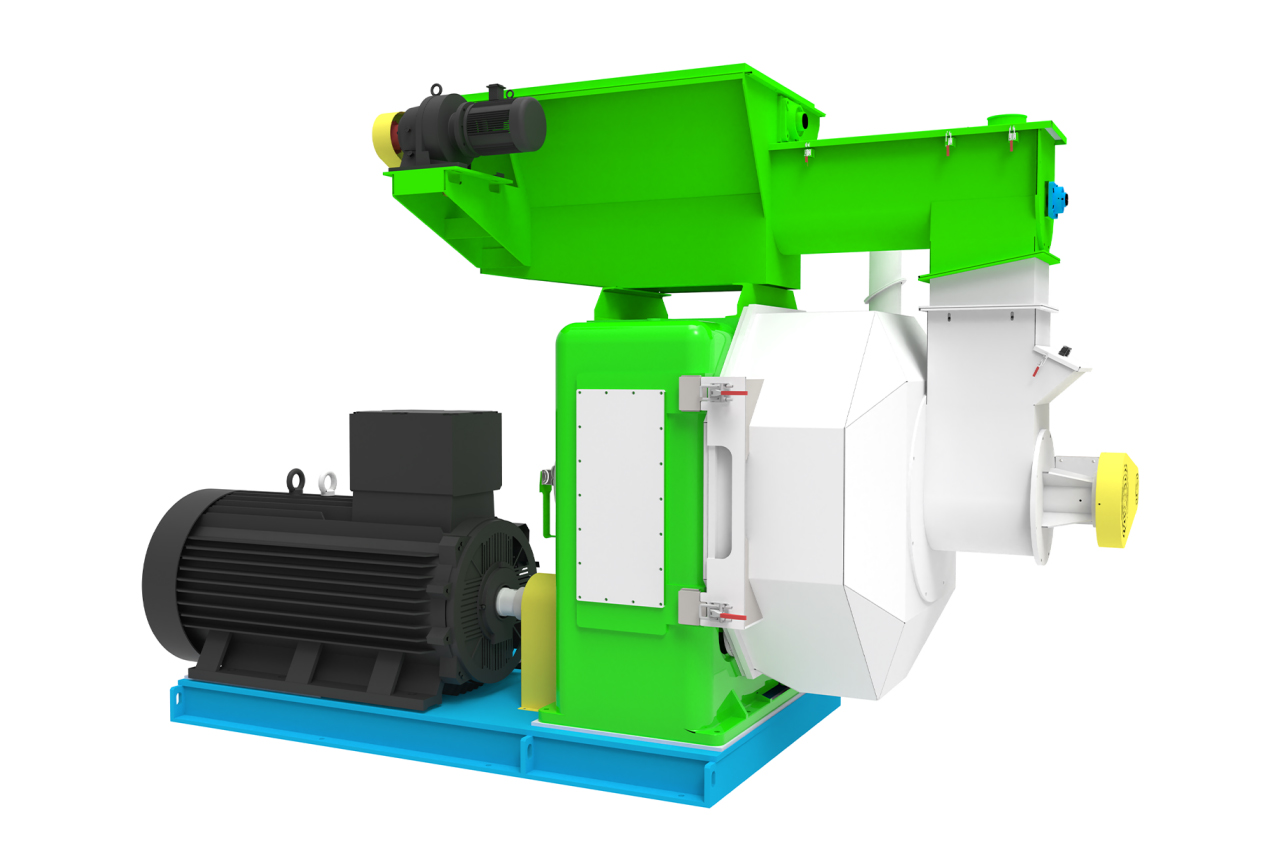
The prepared material enters the pellet mill — ring die or flat die — where rollers press it through die holes at 80–120 MPa, generating sufficient heat from friction to activate lignin binders. Output pellets are typically 6 mm or 8 mm diameter and exit the die at 70–90°C.
Hot pellets must be cooled to within 3–5°C of ambient temperature to harden fully before bagging. A counterflow cooler achieves this in 10–15 minutes. A vibratory screener removes fines below specification. Pellets then move to bulk storage or automated bagging at 15 kg, 25 kg, or 1-tonne big-bag format.
The 500 kg/h threshold is a practical dividing line used throughout the industry. Below it, flat die mills offer lower capital cost and simpler maintenance. Above it, ring die mills deliver better energy efficiency per tonne produced and more consistent pellet quality at scale.
Ring die mills account for over 85% of industrial-scale biomass pellet capacity globally per the Statista Biomass Equipment Market Report 2024. The design reason is mechanical: in a ring die configuration, the die rotates while the rollers spin on contact, distributing wear more evenly across the die surface. This allows continuous production runs of 16–24 hours without quality degradation.
| Criterion | Ring Die Mill | Flat Die Mill |
|---|---|---|
| Practical capacity range | 500 kg/h – 12+ t/h per unit | 50–500 kg/h |
| Energy consumption per tonne | Typically 50–70 kWh/t | Typically 60–90 kWh/t |
| Suitable feedstocks | Sawdust, wood chips, straw, palm shell, bamboo | Sawdust, soft agricultural residues |
| Die wear pattern | Distributed, longer die life | Concentrated at roller contact zone |
| Maintenance complexity | Higher (gear, bearing system) | Lower |
| Capital cost | Higher | Lower |
| Best application | Industrial-scale continuous production | Small farm, pilot, or R&D lines |
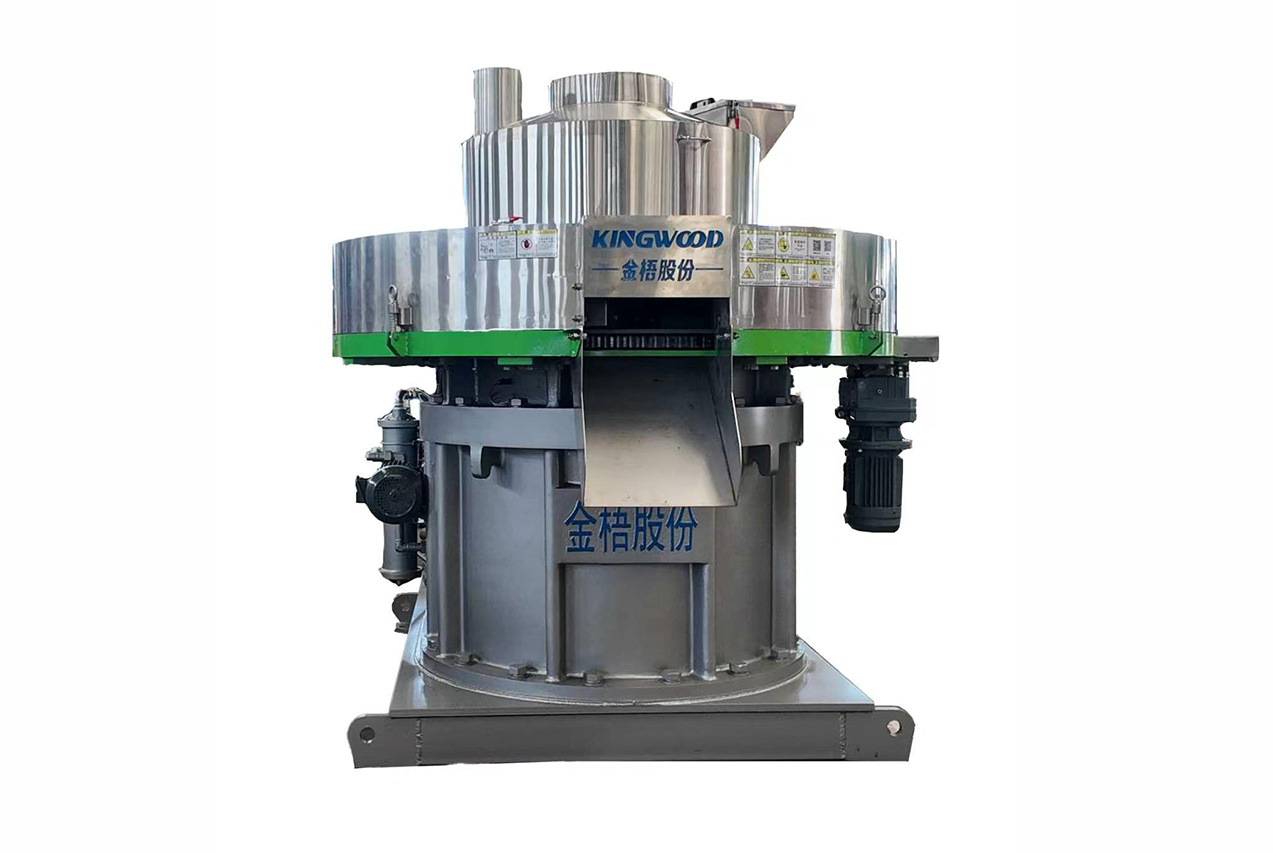
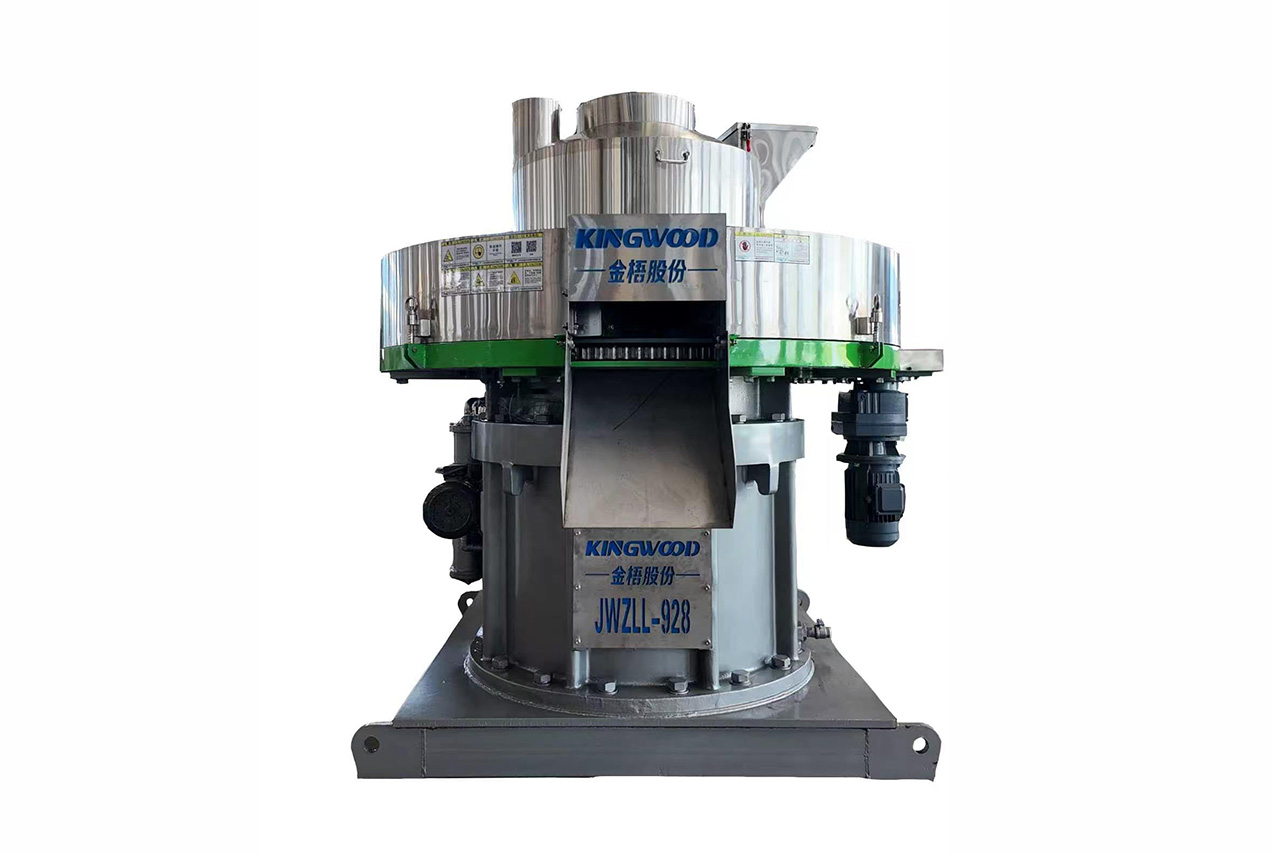
Kingwood's industrial ring die pellet mill range covers 1.5 t/h (JWZL-420) through 4.5 t/h (JZWH-860) per single unit. A 2023 project in Jingmen City, Hubei, used four JWZL-688 units in parallel to achieve 10 t/h aggregate capacity at 1,980 kW total power — a configuration that avoids single-point failure risk on a high-utilization line.

Inadequate drying is cited as the cause of approximately 30% of pellet quality failures in Asian biomass plants per the Wood Pellet Association of Canada (WPAC) Technical Bulletin 2023. The pattern we see repeatedly: a buyer budgets carefully for the pellet mill but underestimates dryer capacity, then runs the mill at 60% load to compensate for wet feedstock. This halves effective output while doubling energy cost per tonne.
| Feedstock Type | Typical Inlet Moisture | Target Outlet Moisture |
|---|---|---|
| Green wood chips | 45–55% | 10–12% |
| Sawdust from sawmill | 25–35% | 10–14% |
| Rice husk | 12–18% | 10–12% |
| Palm shell | 20–30% | 10–13% |
| Agricultural straw | 15–25% | 10–14% |
The dryer must be sized to handle peak inlet moisture, not average moisture. Feedstock moisture varies seasonally — green chips in wet season can arrive at 55%+ — and a dryer sized only for average conditions will bottleneck the entire line during three to four months of the year.
Kingwood's rotary drum dryers (SG-series) use a triple-pass or single-pass drum configuration where hot flue gases contact material at 150–350°C inlet temperature. The drum's rotation and internal flights ensure even exposure. Output moisture is controlled by adjusting drum rotation speed, gas temperature, and material feed rate. See full biomass drum dryer specifications for capacity ratings by drum diameter.
Heat source options for the dryer include: biomass combustion (burning fines and dust from the production line itself), natural gas burner, diesel burner, or waste heat recovery from an adjacent boiler. Using production-line fines as dryer fuel is the most cost-effective approach for lines above 5 t/h — it eliminates a waste stream and reduces external energy cost by 15–25% typically.
Southeast Asia biomass pellet export capacity grew 18% year-on-year in 2023 per Bloomberg NEF Bioenergy Outlook 2024, with Vietnam and Indonesia leading regional supply growth. This growth rate means capacity decisions made today need a three-to-five year horizon.
The basic formula: divide annual production target (tonnes) by annual operating hours. A line targeting 20,000 tonnes/year at 7,200 hours/year (300 days × 24 hours) requires approximately 2.8 t/h nameplate capacity. Factor in a 15–20% availability buffer for maintenance and feedstock variation — so a 3.5 t/h line is the correct specification, not a 3 t/h line run at 100% utilization.
| Line Scale | Capacity | Pellet Mill Config | Approx. Total Power | Typical Application |
|---|---|---|---|---|
| Small | 1–2 t/h | 1 × flat die or JWZL-420 | 100–200 kW | Farm-scale, pilot plant |
| Medium | 3–6 t/h | 1–2 × JWZL-688 | 350–700 kW | Regional biomass fuel supplier |
| Large | 8–12 t/h | 2–4 × JWZL-688 or JWZL-860 | 800–1,500 kW | Industrial boiler fuel, export |
| Industrial | 20–30 t/h | 4–6 × JWZL-860 | 2,000–3,500 kW | Export-grade pellet plant |
The Vietnam 24 t/h wood chip pellet production line built for AVP Group — Asia's largest power company at the time — illustrates how a major buyer approaches scaling. AVP committed USD 10 million to a 24 t/h plant in central Vietnam, selecting Kingwood after a competitive tender. The project used two 12 t/h parallel pellet mill trains, allowing one train to remain in service during maintenance on the other. Installation was completed over nine months including civil works — buyers planning similar projects in Vietnam or Indonesia should budget 8–12 months from contract to commissioning.
A separate Vietnam 12 t/h forestry line using JWZL688 mills achieved full payback in 23 months, demonstrating that mid-scale lines targeting export markets can reach investment recovery faster than commonly assumed.
ENplus A1 grade — the standard required for most EU utility and residential heating contracts — specifies calorific value ≥16.5 MJ/kg and ash content ≤0.7% per the ENplus Handbook v3.0 (2021). Industrial grade (ENplus A2 and B) permits ash up to 1.2–2.0%, which is relevant for buyers supplying domestic industrial boilers rather than export markets.
| Parameter | ENplus A1 | ENplus A2 | Industrial B | Kingwood Line Achievement |
|---|---|---|---|---|
| Calorific value | ≥16.5 MJ/kg | ≥16.5 MJ/kg | ≥16.5 MJ/kg | ~20 MJ/kg (~4,800 kcal/t) |
| Moisture content | ≤10% | ≤10% | ≤10% | Controlled via drum dryer |
| Ash content | ≤0.7% | ≤1.2% | ≤2.0% | Feedstock-dependent |
| PDI (pellet durability) | ≥97.5% | ≥97.5% | ≥96.5% | ≥97.5% on dry sawdust |
| Bulk density | ≥600 kg/m³ | ≥600 kg/m³ | ≥600 kg/m³ | >600 kg/m³ |
Kingwood's Three-Standardization Framework addresses quality through system design rather than end-of-line inspection:

A pellet mill and dryer without proper auxiliary systems will underperform or create operational and safety problems. The pellet mill auxiliary equipment required for a complete line can be divided into non-negotiable and conditional categories.
Counterflow cooler: Hot pellets (70–90°C) exit the die soft and must cool to ambient temperature ±5°C before screening and bagging. Skipping this step produces pellets that fracture under compression during storage, increasing fines and reducing effective PDI below specification.
Vibratory screener: Removes fines under 3.15 mm (per EN ISO 17225-2 size classification) before bagging. Fines in a bulk shipment are rejected by most export buyers and can cause moisture absorption problems in storage.
Dust collection system: Bag-filter or cyclone collectors on hammer mills, coolers, and transfer points. Dust explosion incidents in biomass processing plants dropped approximately 40% after enclosed conveying adoption per EU ATEX Directive compliance data (JRC Technical Report 2022). Beyond safety, dust control protects equipment bearing life and reduces housekeeping labor.
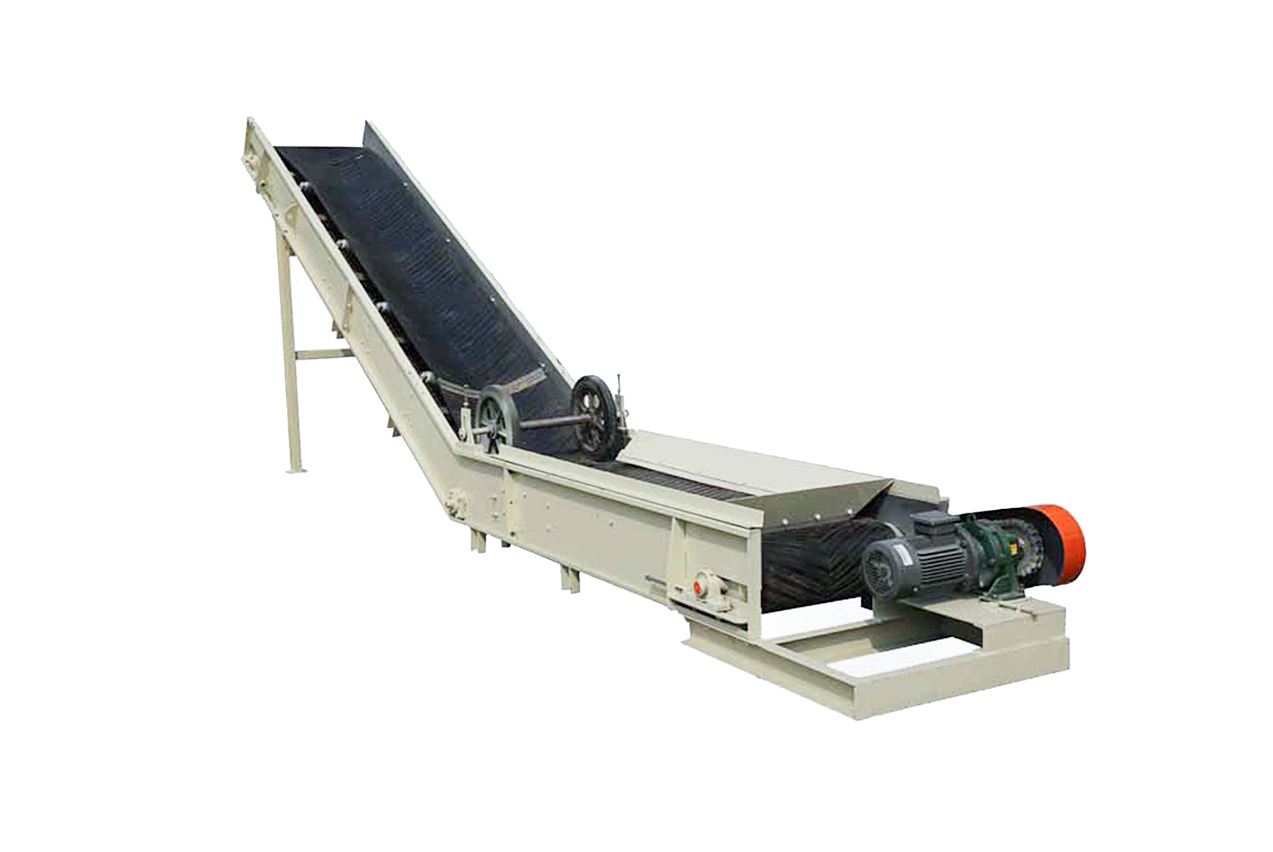
Enclosed conveying: Belt or screw conveyors with enclosed covers between all process stages. Open conveyors in humid climates (Vietnam, Indonesia, coastal India) allow feedstock to re-absorb moisture between drying and pelletizing, directly degrading PDI.
One item buyers frequently overlook when ordering: spare ring dies and roller shells. Lead time on a replacement ring die from a Chinese manufacturer to Indonesia or India is typically 3–5 weeks. Running a line without a spare die means a 3-to-5-week production stoppage when the working die reaches end of life. Budget for at least one spare die per pellet mill at the time of initial order.

Kingwood (Jiangsu Kingwood Industrial Co., Ltd., founded 1999) has planned and designed over 2,000 production line projects across 30+ countries, with equipment currently supporting more than 10 million metric tonnes of annual biomass fuel capacity in customer facilities. The company holds ISO 9001 and ISO 14001 certification, CE certification, and is recognized as a Jiangsu Provincial High-Tech Enterprise and Jiangsu Provincial Gazelle Enterprise.
For buyers who need more than equipment supply, Kingwood operates under a full lifecycle model:
The company's 27 years of dedicated R&D in biomass pellet equipment, 20-person R&D team, and joint R&D center with Nanjing University of Agriculture mean engineering decisions are grounded in tested production data rather than catalog estimates.
For buyers evaluating supplier capability, request these specific items: documented case studies with capacity figures (not just photos), spare parts pricing and lead time commitments in writing, and references from operating plants in your target country or region.
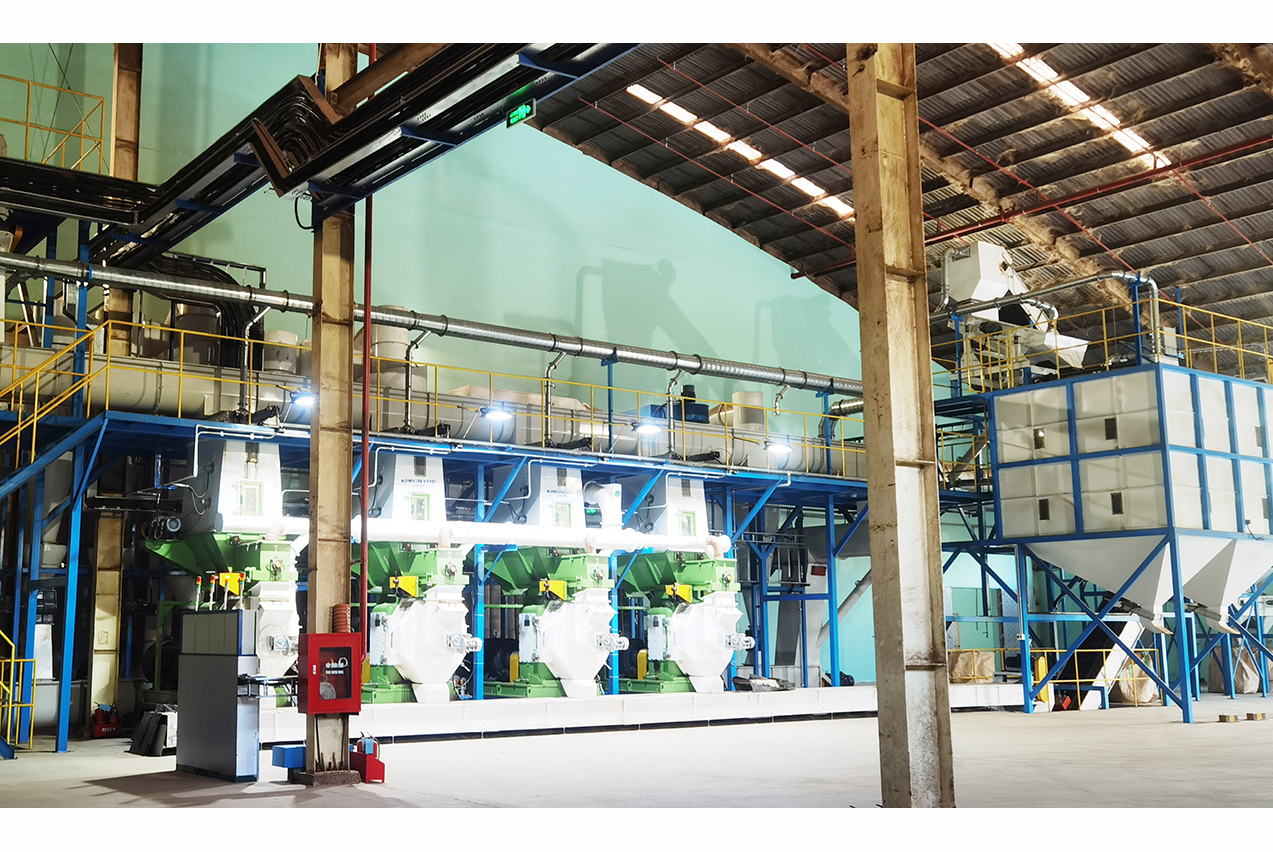
Line cost varies widely by capacity: a 1–2 t/h small line typically starts around USD 30,000–60,000, while a 10 t/h automated line can exceed USD 300,000. The 2023 Jingmen City project involving four JWZL-688 pellet mills at 10 t/h each carried a total power draw of 1,980 kW, which indicates industrial-scale investment. Always request an itemized EPC quote that includes drying, auxiliary equipment, civil works, and commissioning.
Most industrial lines handle sawdust, wood chips, furniture offcuts, agricultural straw, rice husk, palm shell, and bamboo. Feedstock moisture content is the critical variable — material must be dried to 10–14% before pelletizing regardless of species. Lines using Kingwood's rotary drum dryer can accept incoming moisture up to 50–55% and still hit target pelletizing moisture.
A documented Kingwood deployment in Vietnam — a 12 t/h forestry and energy line using JWZL688 mills — achieved full payback in 23 months. Payback speed depends on local feedstock cost, pellet selling price, and line utilization rate. Lines selling pellets into ENplus-certified export markets typically achieve shorter payback than those supplying lower-value domestic industrial boiler fuel.
An EPC (Engineering, Procurement & Construction) contract covers equipment manufacturing, plant layout design, civil construction, installation, commissioning, and operator training under one contract. Equipment-only supply transfers all integration risk to the buyer. For first-time operators in Vietnam, Indonesia, or India, an EPC approach reduces startup failures and is often mandatory for project financing — Kingwood offers full GC/EPC turnkey contracting for this reason.
At minimum, look for ISO 9001 quality management and ISO 14001 environmental management certification — Kingwood holds both. CE certification is required if equipment is destined for the European market or if end-product pellets must qualify for ENplus or Sustainable Biomass Program (SBP) certification. Suppliers recognized as provincial high-tech enterprises (as Kingwood is in Jiangsu) typically maintain stricter internal quality controls.

Wood Biomass Machinery Manufacturer


 English
 日本語
日本語
 한국어
한국어