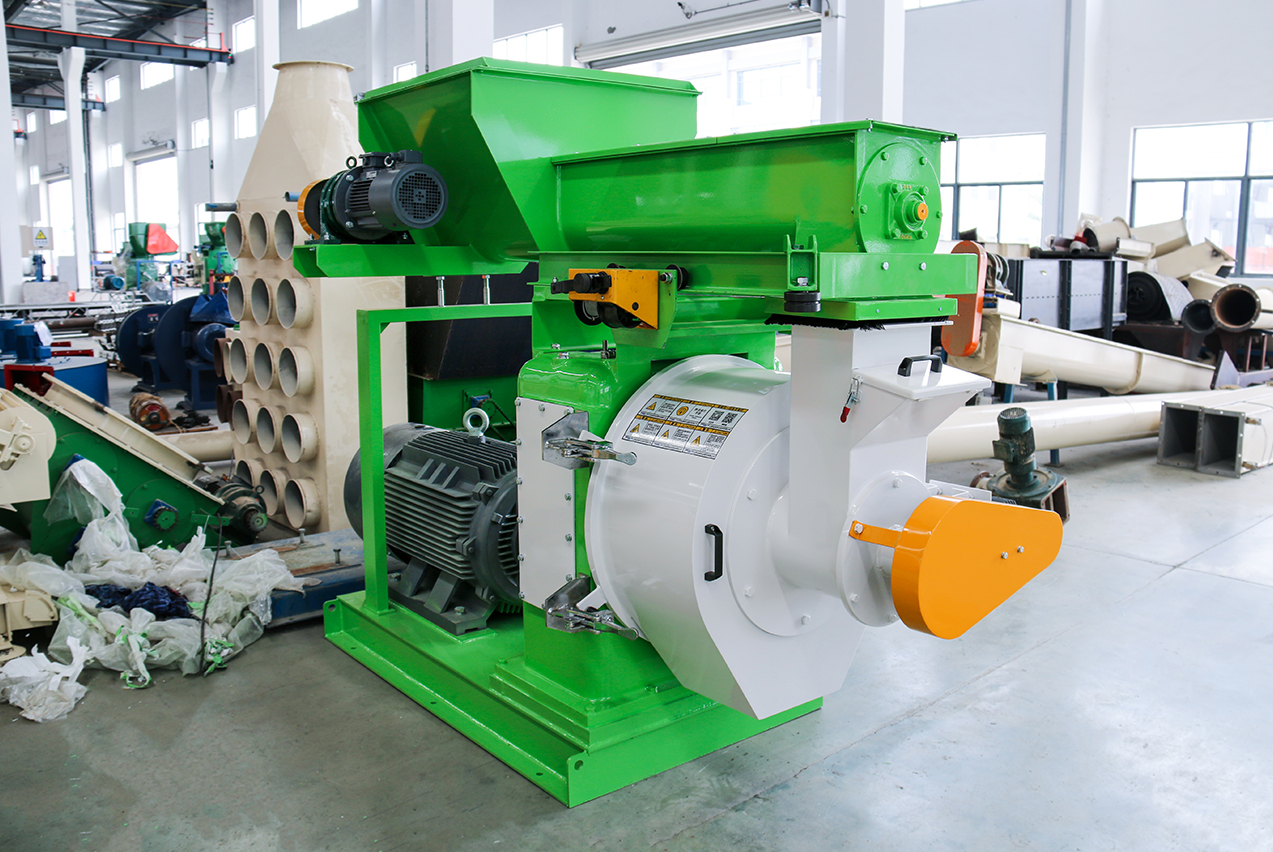
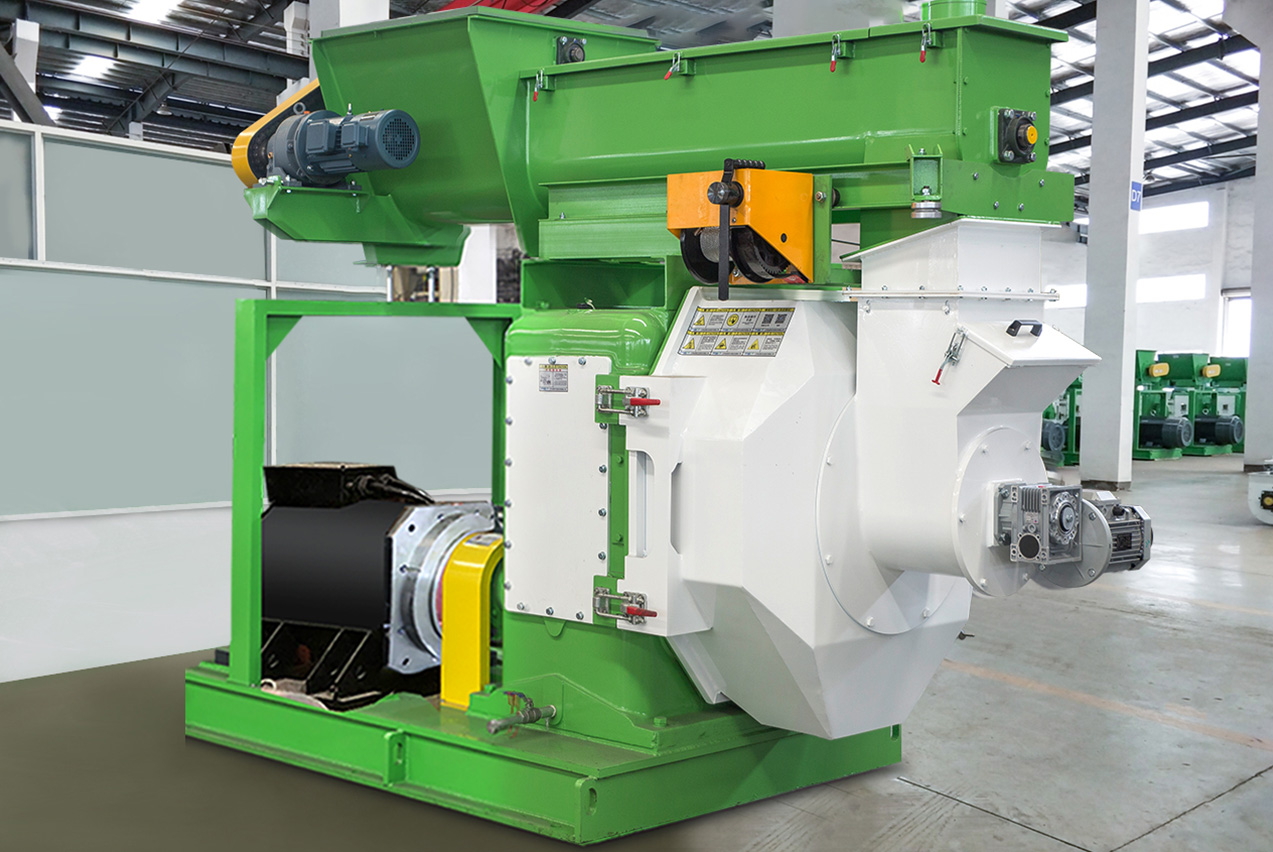
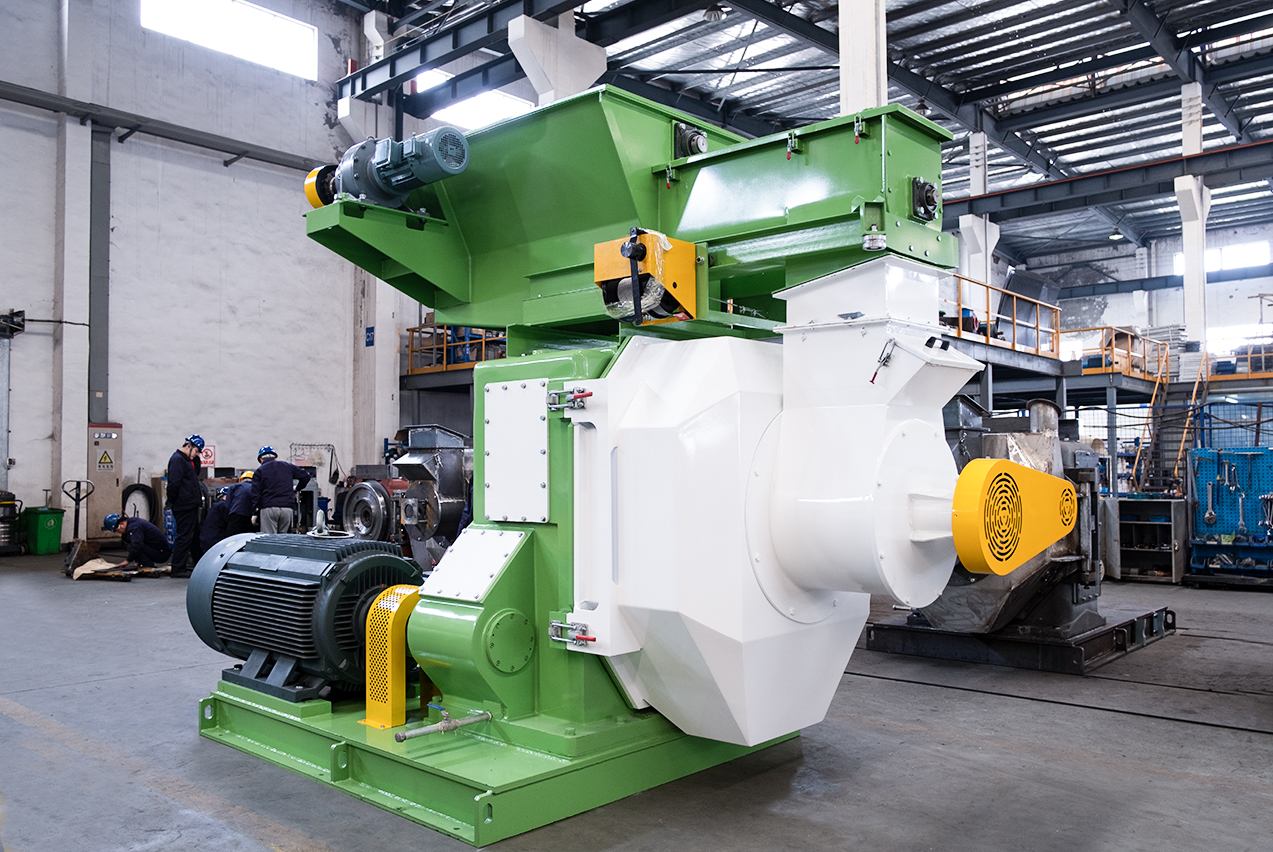
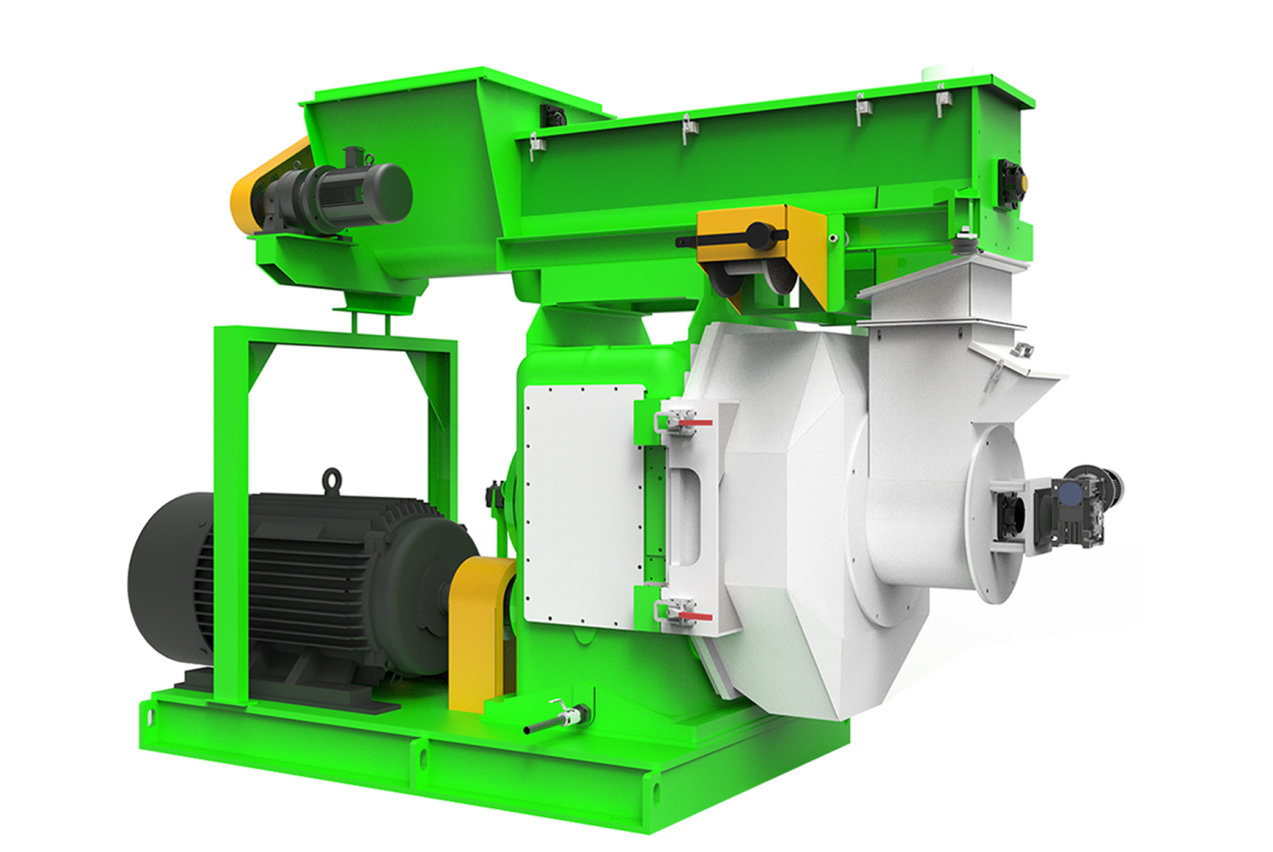
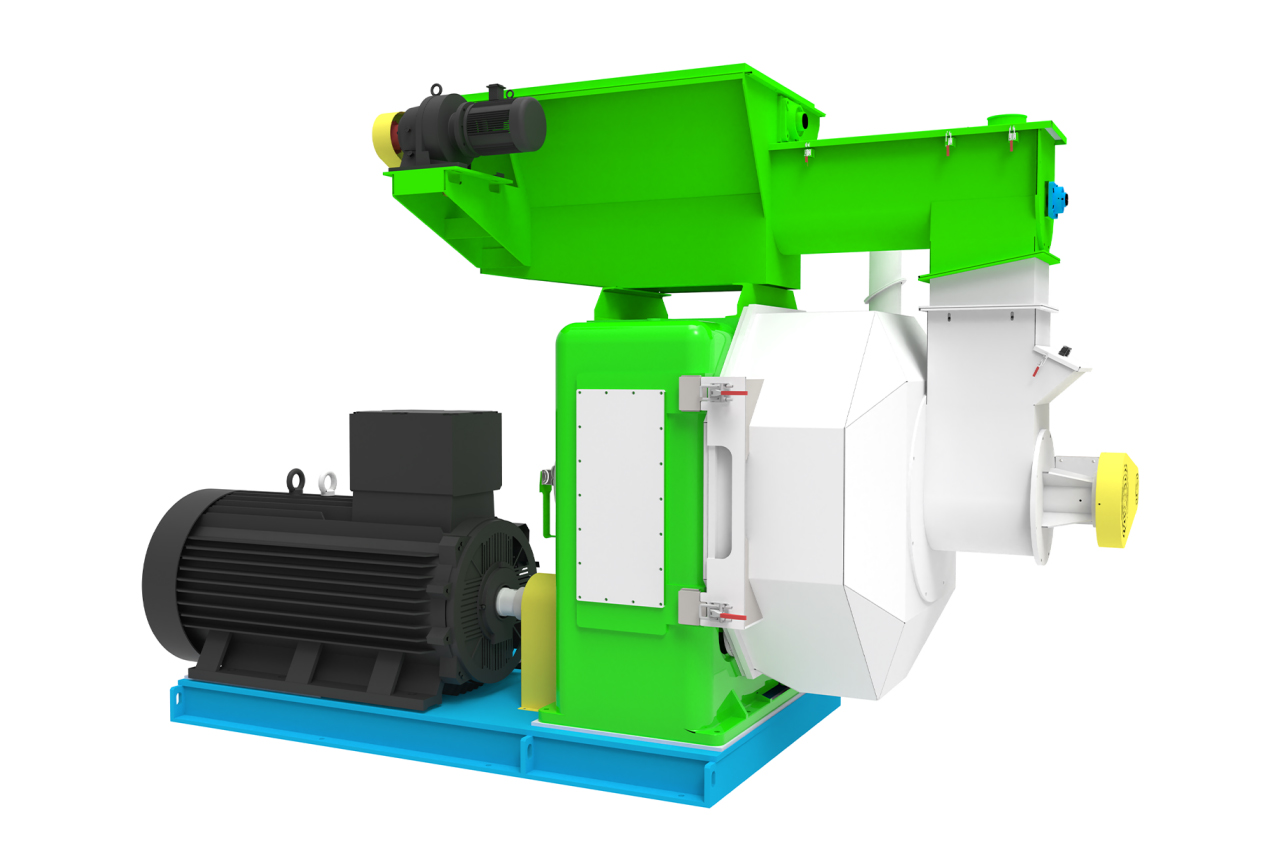
A ring die pellet mill is the standard machine for industrial-scale biomass densification. It converts loose feedstocks—sawdust, wood chips, agricultural straw, palm shell—into cylindrical pellets of consistent diameter and density, typically 6–8 mm, by forcing material through precision-drilled holes in a rotating steel die.
The ring die is a hollow cylinder with thousands of radial holes. Two or more compression rollers sit inside the die. As the die rotates (driven by the main motor through a gearbox), friction between the die's inner surface and the feedstock causes the rollers to spin. Material fed into the gap between the rollers and the die wall is compressed and extruded outward through the die holes. A stationary cutter blade on the outside of the die trims the extruded strands into pellets of the required length.
This arrangement differs fundamentally from a flat die mill, where the die lies horizontal and rollers press material downward through vertical holes. Flat die mills suit small-scale operations—typically under 500 kg/h—because their die wear is uneven and throughput is limited. Once you need sustained output above 500 kg/h, a ring die configuration becomes more practical: the die load is distributed symmetrically, wear is more even, and throughput scales efficiently with die diameter.
| Parameter | Ring Die | Flat Die |
|---|---|---|
| Typical capacity | 1–6+ t/h per unit | 50–500 kg/h |
| Feedstock flexibility | Wide (wood, straw, palm) | Narrow (dry fine materials) |
| Die wear pattern | Even, circumferential | Uneven, centre-heavy |
| Recommended scale | Industrial | Small farm / lab |
For any buyer planning a production line above 1 t/h, a ring die mill is the appropriate starting point.
The ring die itself is the most performance-critical component in the machine. Specifying it correctly for your feedstock is worth more attention than most buyers give it. For detailed technical reference, see ring die specifications and hole geometry.
Industrial ring die mills are sized by their die inner diameter. Kingwood's current line covers four main diameters:
Larger diameter means more die surface area, more active holes, and higher throughput for a given linear speed—but also a heavier, more expensive die that requires more power to accelerate.
Standard biomass pellets for industrial boilers and power plants are produced through 6 mm or 8 mm die holes. A 6 mm die produces denser pellets with slightly higher bulk density (typically above 600 kg/m³ on dry sawdust at 10–14% moisture). An 8 mm die gives higher throughput but marginally lower pellet density. For ENplus or ISO 17225 compliance, 6 mm is more common.
The compression ratio is the ratio of hole length to hole diameter (L/D). It determines how much pressure the feedstock experiences during extrusion.
Setting the wrong L/D for your feedstock is one of the most common causes of poor pellet durability. We've seen buyers order a die specced for wood chips and attempt to run rice straw through it—pellet formation rate drops below 80% and die wear doubles.
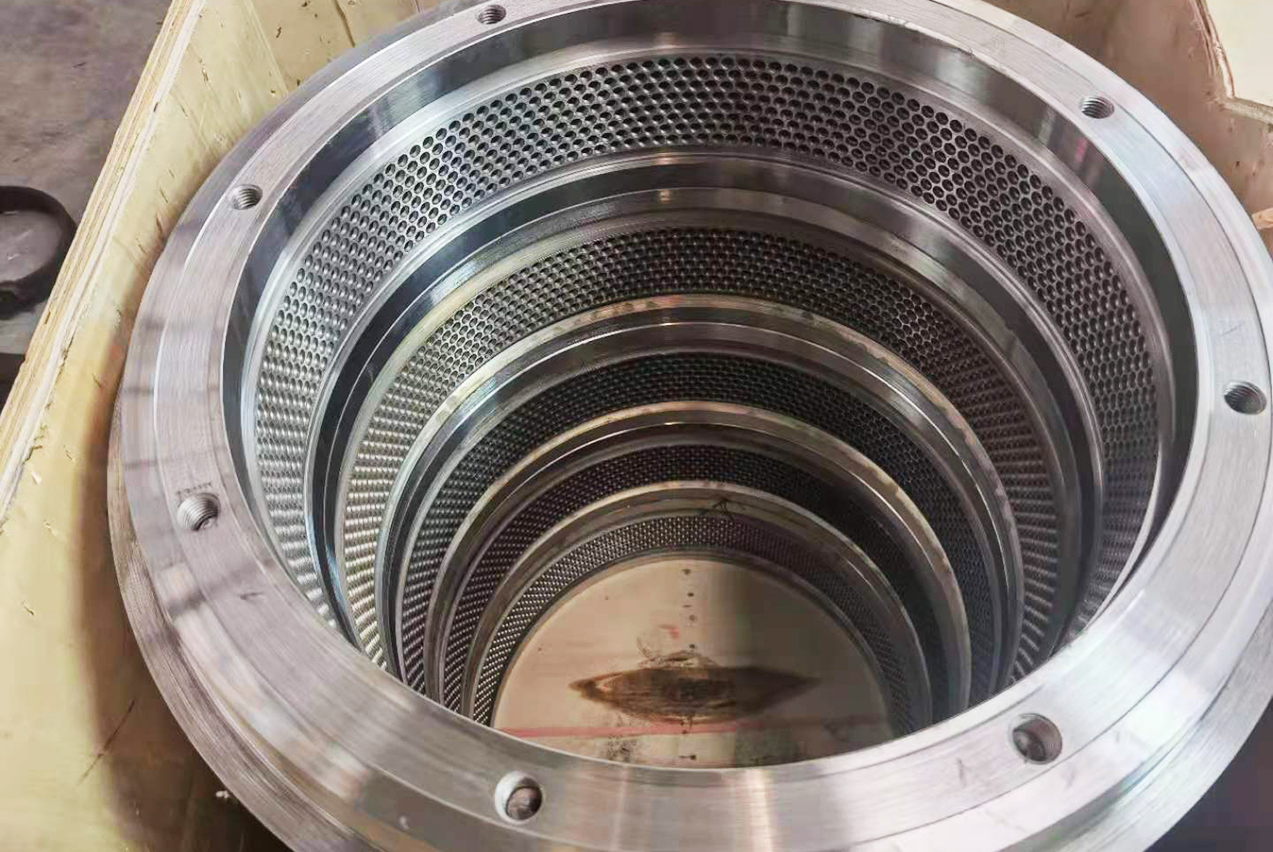
Kingwood's ring dies are manufactured on fully automatic CNC ring die drilling machines. Single-pass drilling produces smooth hole walls with low surface roughness, which reduces friction during extrusion and improves pellet surface quality. Vacuum heat treatment after drilling stabilises the steel and prevents distortion of hole geometry under thermal cycling. On dry sawdust at 10–14% moisture, a correctly specced die with smooth holes achieves a Pellet Durability Index (PDI) above 97.5%—a standard benchmark for industrial fuel pellets.

The roller assembly works in direct contact with the ring die. Its condition determines throughput consistency and die life.
Roller shells are the replaceable outer sleeves that contact the feedstock. High-quality shells are manufactured from alloy steel with surface hardness in the range of 58–62 HRC after heat treatment. Harder shells resist the abrasion of silica-containing feedstocks (rice straw, palm shell) longer than softer alternatives. Kingwood's roller shells are produced on specialised machinery that holds tight tolerances on inner bore diameter and outer surface cylindricity—both matter for consistent nip force across the die face.
The gap between the roller outer surface and the die inner surface—typically 0.1–0.3 mm for wood feedstocks—controls how much material is nipped and compressed per die revolution. Too tight a gap causes metal-to-metal contact and rapid wear. Too wide a gap allows material to slip through without adequate compression, resulting in low pellet formation rate. Operators should set gap using feeler gauges during cold start-up and recheck after the first 50 operating hours when parts have bedded in.
Under normal conditions with clean, correctly dried wood sawdust, roller shells typically last 800–1,500 hours before replacement. Die life is longer—often 1,500–2,500 hours—but depends heavily on feedstock abrasivity. What shortens both: running over-moisture material (above 16%), silica-heavy straw, or foreign metal fragments in the feed.
Roller bearings operate in a dusty, humid environment. Kingwood's roller bearing assemblies use labyrinth mechanical seals that block dust and moisture ingress without rubbing contact, extending bearing life compared to conventional lip seals. However, the seal alone is not sufficient: bearings require greasing at scheduled intervals. Insufficient lubrication causes bearing failure within 800–1,200 hours. Buyers sourcing machines for remote sites—common in Southeast Asia and Sub-Saharan Africa—should confirm whether the mill includes a non-stop automatic lubrication system, which Kingwood fits on its JWZL-688 and larger models.
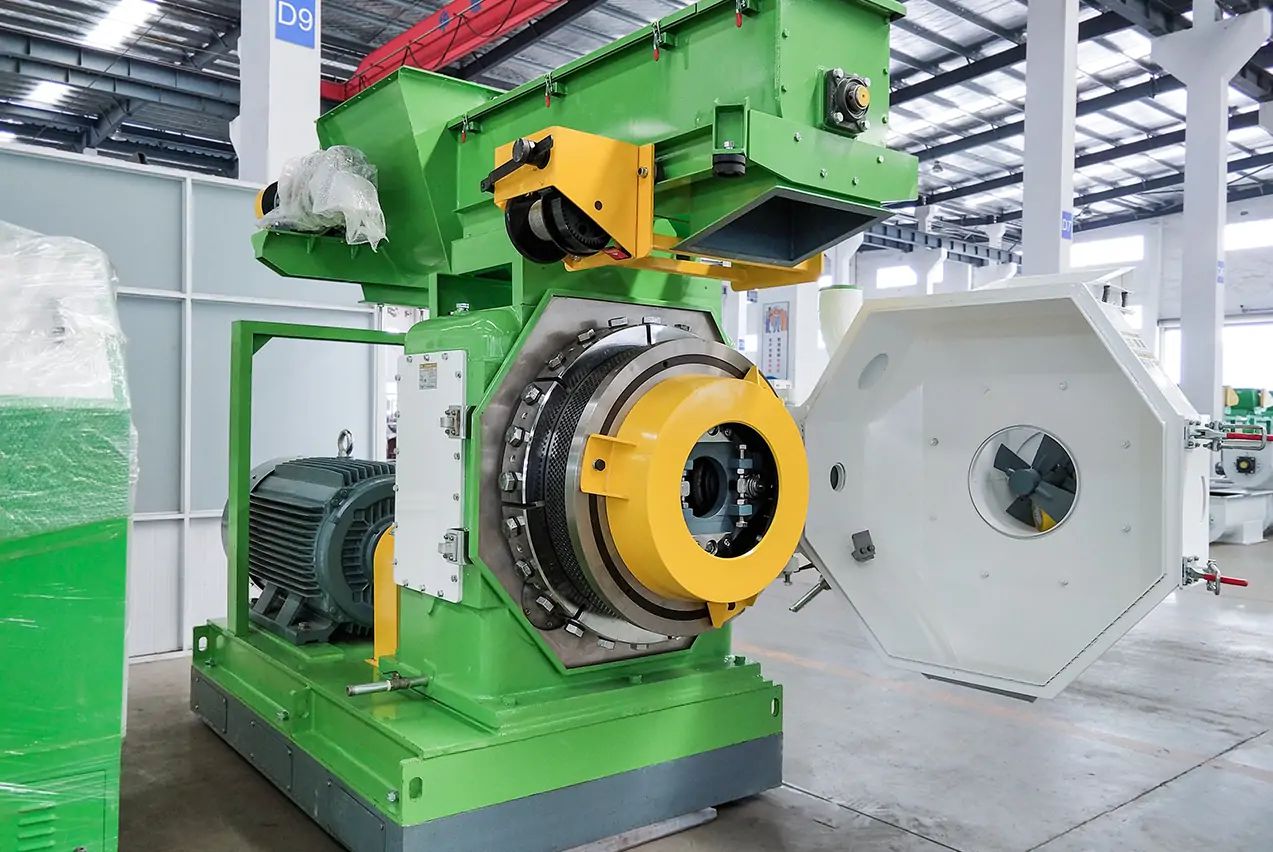
Understanding how die diameter, motor power, and throughput relate allows buyers to size equipment correctly for their production targets.
| Model | Die Diameter | Motor Power | Capacity (t/h) | Machine Weight |
|---|---|---|---|---|
| JWZL-420 | 420 mm | 90 kW | 1.0–1.5 | 3.5 t |
| JWZL-688 | 688 mm | 200 kW | 2.2–3.0 | 9.5 t |
| JWZL-688D | 688 mm | 200 kW (servo) | 2.5–3.2 | 9.5 t |
| JZWH-860 | 860 × 120 mm | 280–355 kW | 4.0–5.0 | 12.5 t |
| JWZL-998 | 998 mm | 400 kW | 5.0–6.0 | 18 t |
The JWZL-688 industrial ring die pellet mill is the most widely deployed model in Kingwood's export range, particularly for production lines in the 8–12 t/h range where multiple units run in parallel.
The JWZL-688D replaces the standard 200 kW 10-pole induction motor with a TYL-series liquid-cooled permanent magnet synchronous servo motor. The practical difference: the servo motor maintains constant torque at variable speeds, so it can slow down during feedstock fluctuations rather than stalling and restarting. This reduces mechanical shock on the gearbox and die, and cuts energy consumption per tonne of pellets produced by approximately 8–12% compared with a fixed-speed induction motor under variable load conditions.
A common project configuration for a 10 t/h production line uses four JWZL-688 units, each running at 2.5 t/h. Total installed power for the four pellet mills alone is 4 × 200 kW = 800 kW. From a documented project in Jingmen, Hubei—four 688 pelletizers at up to 10 t/h total—total power consumption across the full line (including crusher, dryer, conveyors, and auxiliaries) was 1,980 kW.
Buyers specifying pellets for industrial boilers or export should write the following into their purchase agreements:
These numbers are achievable on a correctly specced and maintained Kingwood ring die system. A supplier who cannot commit to them in writing is worth questioning.

Ring die mills handle a wider range of feedstocks than flat die machines, but the die specification, pre-processing requirements, and expected wear rate all change with feedstock type. For a detailed breakdown, see how feedstock choice affects pellet mill performance.
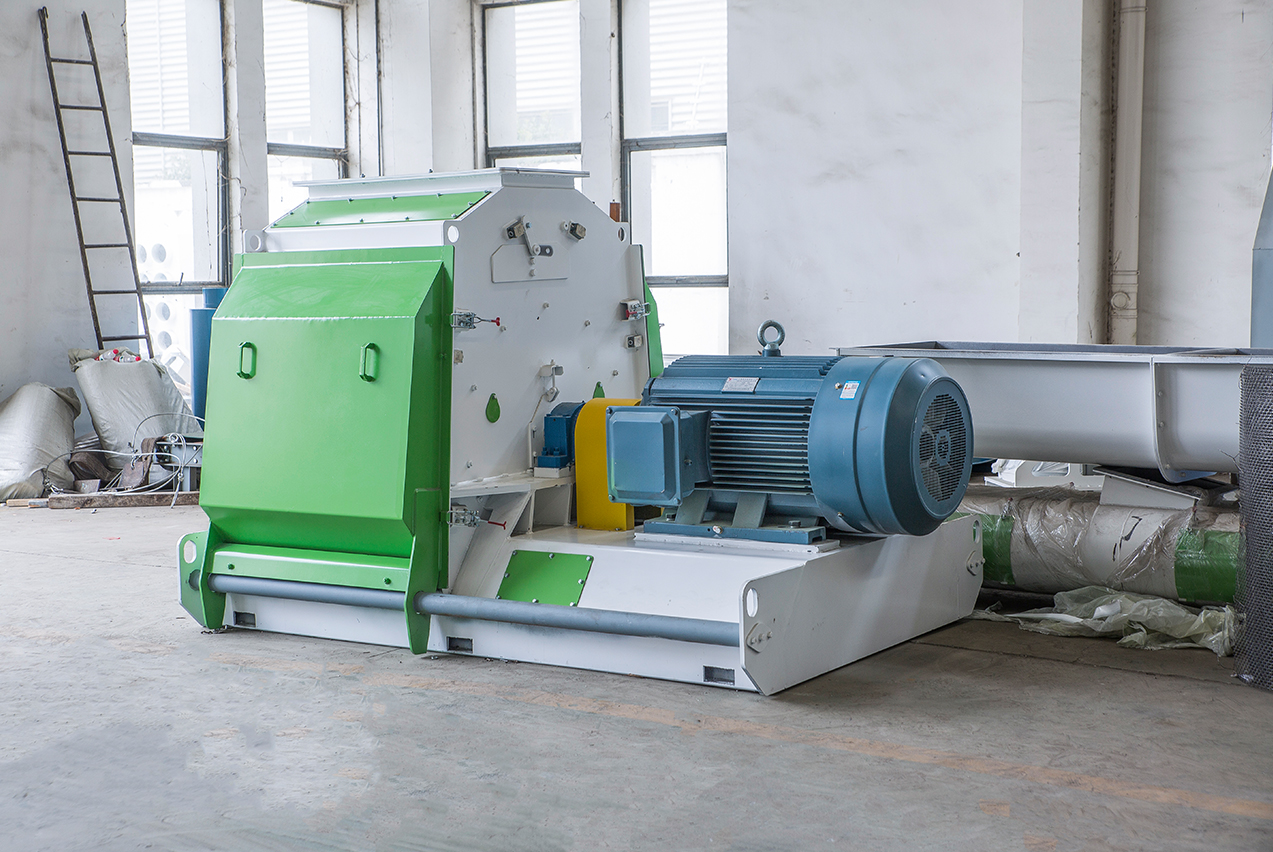
Wood chips and sawdust are the most forgiving feedstocks. They pelletize well at 10–14% moisture content, require L/D of 5–6, and cause moderate die wear. Pre-processing typically involves a hammer mill to reduce particle size to ≤ 5 mm, plus a rotary drum dryer if incoming moisture exceeds 20%.
Agricultural straw (rice, wheat, corn) requires a higher L/D die (7–9) and tighter moisture control. Straw particles tend to be fibrous and springy; too-dry straw (below 10%) crumbles, while over-wet straw blocks holes. High silica content in rice straw accelerates die and roller wear by 30–50% compared with clean wood.
Palm shell and palm kernel expeller (PKE) are common in Indonesia and Malaysia. Palm shell is dense and abrasive—use hardened dies with L/D of 6–8 and expect shorter die life. PKE has residual oil content that can aid pellet binding but also causes die holes to clog if temperature is not managed.
Bamboo (common in Vietnam and Yunnan, China) has high density and moderate silica content. Fine grinding to ≤ 3 mm particle size before pelletizing improves die life. Kingwood has supplied production lines processing bamboo powder in both Vietnam and Beijing projects.
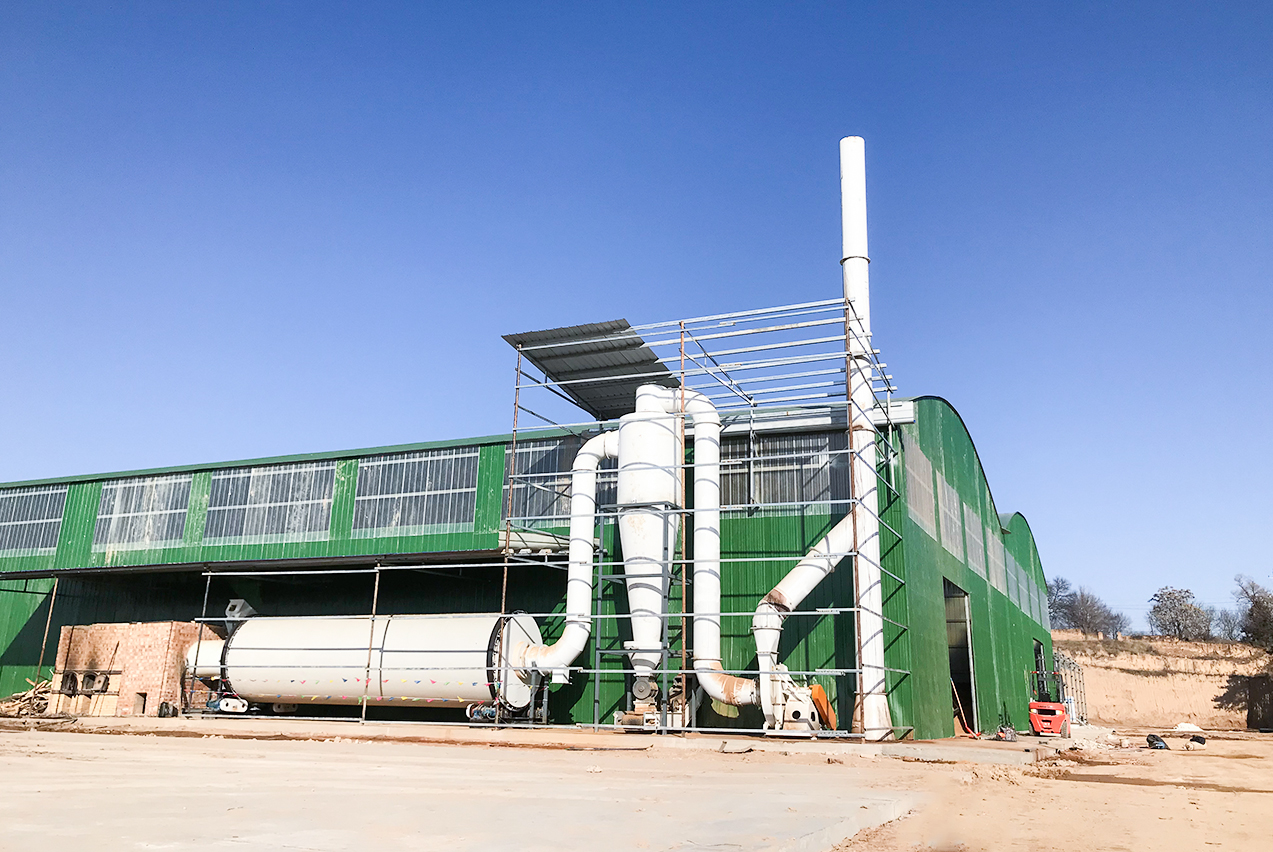
Target moisture before entering the pellet mill: 10–14%. Above 16%, steam builds up inside die holes, pellets swell on exit, and bulk density drops. Below 8%, the feedstock lacks plasticity, friction in the die holes generates excessive heat, and hole wear accelerates. The rotary drum dryer upstream must deliver consistent outlet moisture—not just a daily average but batch-to-batch consistency.
Both configurations use the same ring die and roller pelletizing principle. The difference is the orientation of the main shaft and die.
In a horizontal ring die mill, the main shaft runs horizontally, the ring die rotates in a vertical plane, and feedstock is introduced axially. This is the dominant configuration in large industrial plants. It handles high throughput well and the gearbox design is mature and widely serviced.
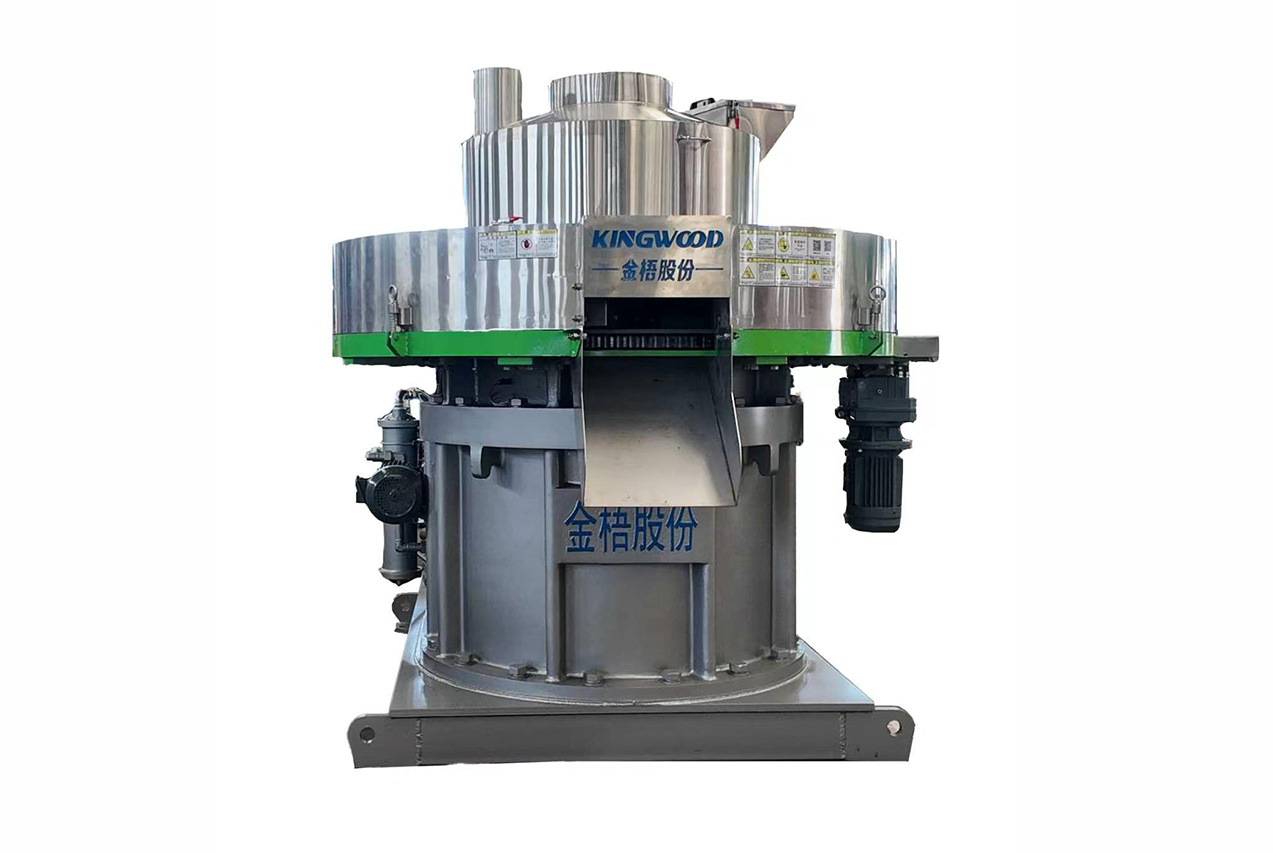
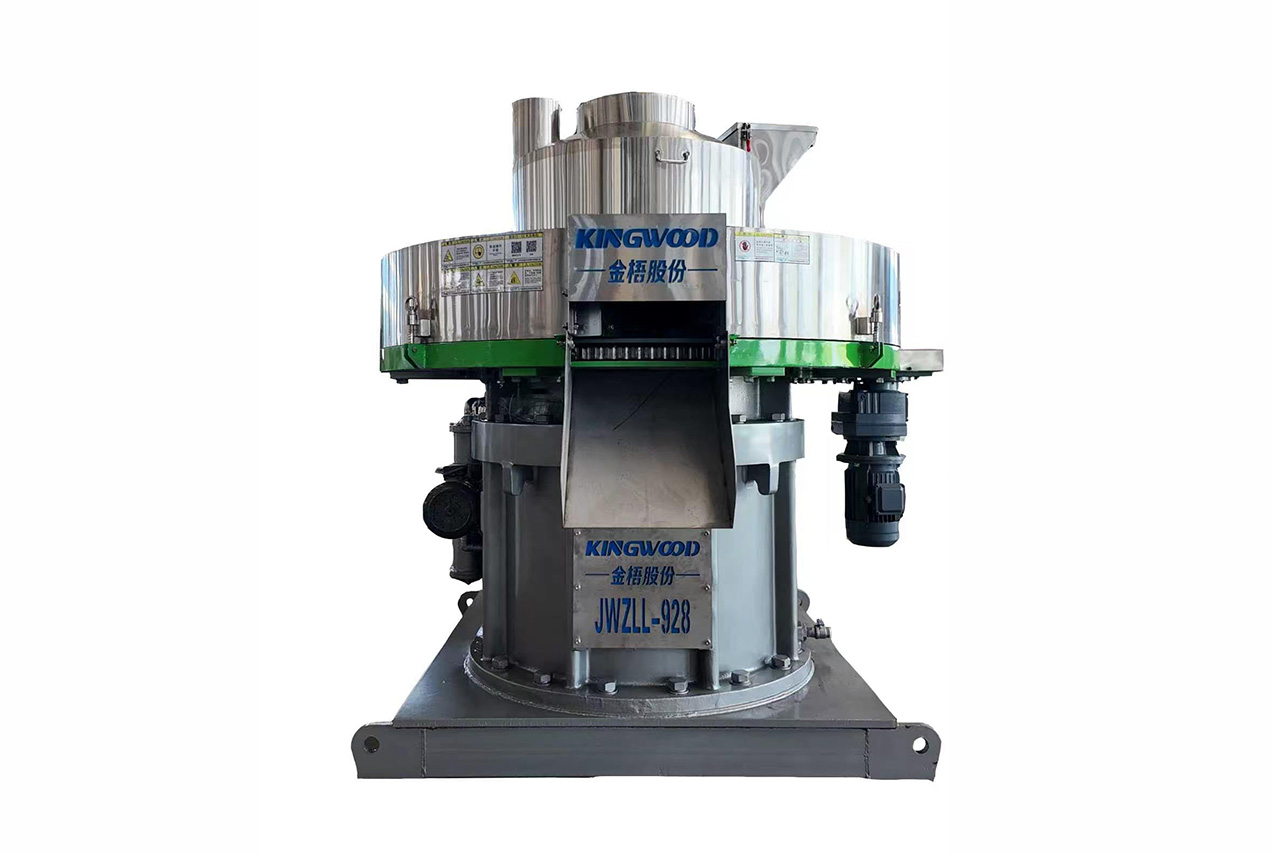
In a vertical ring die mill, the main shaft is vertical and the die rotates in a horizontal plane. Feedstock drops into the die from above by gravity, which gives more consistent feeding without a forced feed auger—particularly useful for fine, low-density materials.
Vertical configurations have a smaller floor footprint for the same die diameter, which matters in older factory buildings with limited bay width. Gravity-assisted feeding reduces the feed motor power requirement and smooths out material distribution around the die face, which can improve pellet length consistency.
For new purpose-built plants with sufficient floor space, horizontal configurations remain more common globally. In Southeast Asia, where many lines are retrofitted into existing sawmill sheds with low roof clearance and narrow bays, vertical ring die machines are gaining traction. Read more on why vertical ring die machines are gaining popularity.
A ring die pellet mill that is correctly built and maintained should deliver:
These are not aspirational figures—they appear in Kingwood's equipment datasheets as guaranteed performance indices under defined feed conditions.
Buyers in Europe and Australia require CE certification for any machinery entering their facilities. Buyers sourcing for domestic use in China need GB-standard compliance. For export markets across Southeast Asia, CE is increasingly requested by end customers and insurers.
ISO 9000 and ISO 14000 certification of the manufacturer's quality management and environmental management systems matters for B2B procurement departments running vendor qualification audits. These certifications do not guarantee product quality on their own, but they indicate that documented processes exist for manufacturing control, traceability, and corrective action.
Ask specifically about ring die manufacturing method. CNC single-pass drilling with vacuum heat treatment stabilises hole geometry and extends die service life. A manufacturer relying on manual drilling or multi-pass drilling will have greater hole-to-hole variation, which shows up as uneven throughput across the die face and shorter usable life.
For orders above USD 100,000, a pre-shipment factory audit is practical. Third-party inspection agencies (SGS, Bureau Veritas, TÜV) can verify dimensional tolerances on ring dies, gearbox oil grade (L-CKC220 is specified for Kingwood gearboxes), and motor specifications before container loading.
Before issuing a purchase order, confirm every item below in writing from the supplier.
The most commonly overlooked items at initial order: safety pins (shear pins that protect the gearbox from shock loads—budget 10–20 per year per machine), hammer mill blades for the upstream crusher, and screen meshes for the hammer mill. These wear parts may have 6–10 week lead times from China if not ordered in advance.
Kingwood operates as a full-lifecycle partner rather than a box-shipper. For overseas buyers—particularly those commissioning first plants in Vietnam, Indonesia, or India—the EPC/turnkey model covers raw material analysis, plant layout, equipment manufacturing, civil construction supervision, installation, commissioning, operator training, and spare parts supply under one contract. Kingwood has planned and designed over 4,000 production line projects across 40 countries, with a global operation and maintenance service network in place.
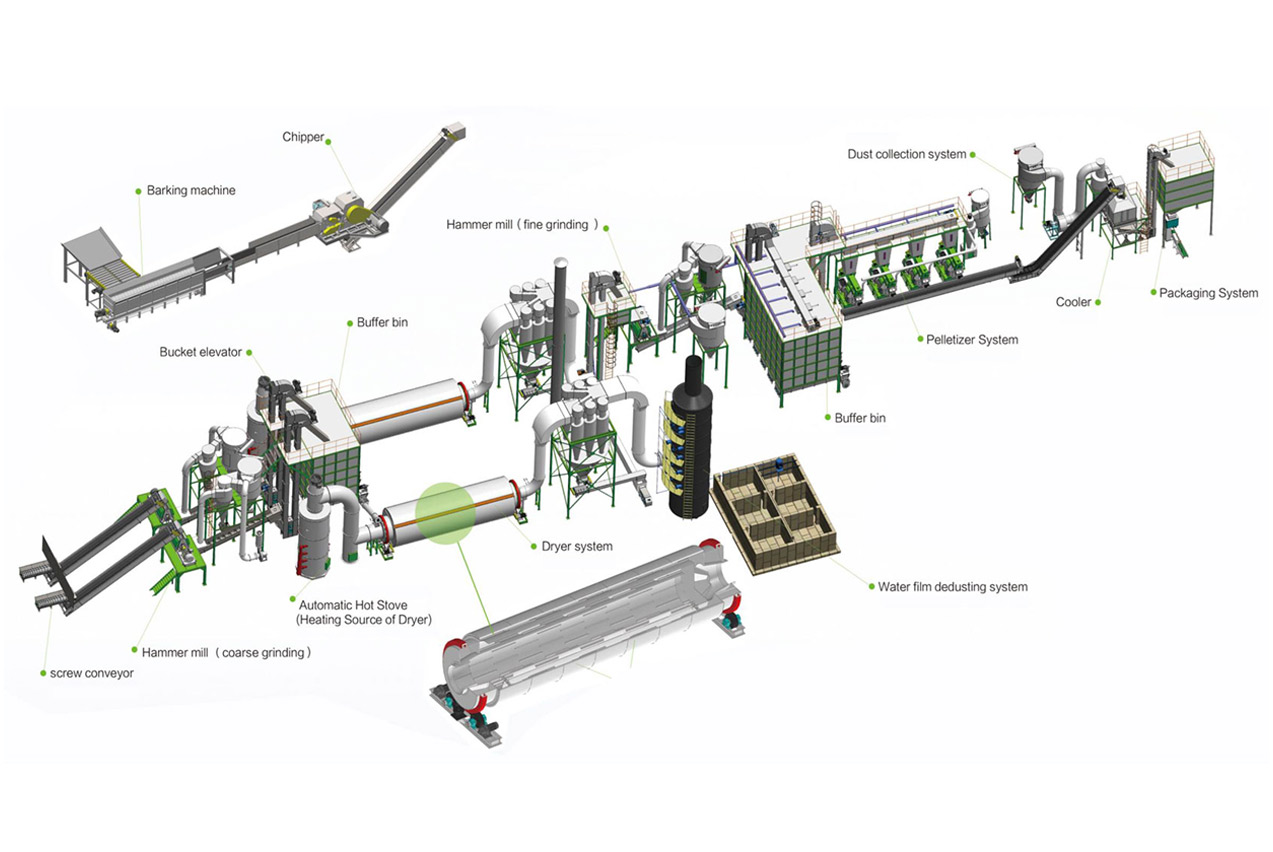
For a complete production line, pellet mill auxiliary equipment (coolers, conveyors, dust collectors) is part of every Kingwood turnkey package—not an afterthought. Buyers who source pellet mills from one supplier and auxiliaries from another typically encounter integration problems at commissioning that delay first pellet production by four to eight weeks.
A customer in Vietnam operating a 12 t/h JWZL-688 production line achieved full investment payback within 23 months—a result directly attributable to correct feedstock preparation, die specification, and commissioning support.


Wood Biomass Machinery Manufacturer


 English
 日本語
日本語
 한국어
한국어