Project at a glance: Jiangsu Kingwood Industrial Co., Ltd. deployed a JWZL-928 ring die pellet mill in Xinjiang, China, building a 10 t/h biomass pellet line that converts cotton stalks and tree branches into certified pellet fuel, with equipment delivery completed in October 2026.
Xinjiang is China's largest cotton-producing region, and the harvest season produces enormous volumes of crop residue. For decades, the default solution to post-harvest cotton stalk accumulation has been open-field burning — fast, cheap, and deeply problematic. Understanding the scale and regulatory context of this challenge is essential for any investor or enterprise considering similar biomass infrastructure in Northwest China.
Cotton stalks are a structurally dense, high-fiber agricultural residue. Unlike wheat straw, which can be baled and reused as animal bedding relatively easily, cotton stalks have few direct secondary uses in their raw form. After mechanical harvesting, they are scattered across fields in volumes that, at regional scale, run into millions of tonnes per crop cycle. The logistical and economic cost of collecting, transporting, and storing this material has historically made recycling impractical for individual farmers and small cooperatives.
The result is predictable: material accumulates on the field edge, and when the window between harvest and the next planting narrows, burning becomes the fastest solution. The same pattern repeats with tree branches from orchard management — another major feedstock category in Xinjiang's agricultural landscape.
From an investor's standpoint, this waste stream represents an untapped input. The Xinjiang project treated cotton stalks and tree branches not as a disposal problem to be managed but as a raw material asset to be processed. That reframing is what makes the business model viable.
China's regulatory environment around open-field burning has tightened significantly. Under national straw utilization policies and local environmental enforcement, burning bans have expanded across major agricultural provinces. In Xinjiang, where air quality monitoring has become more rigorous as part of broader national environmental governance, the pressure on enterprises and local governments to demonstrate compliant straw disposal solutions is real and growing.
This project was explicitly designated as a key demonstration project for comprehensive straw utilization in the region, which signals both regulatory support and the expectation that it will serve as a policy-replicable model. For biomass investors, government-backed demonstration status can translate into faster permitting, preferential feedstock supply agreements, and visibility that attracts future offtake partners.
The Kingwood engineering approach to this project was built on the same methodology applied across its global project base: the Three-Standardization Framework of integrated upstream-to-downstream supply chain management, enclosed dust-free processing, and fully automated operation. Applied to a high-fiber agricultural feedstock like cotton stalks, each of these three principles does specific and measurable work.
Integrated (一体化): Cotton stalk supply chains in Xinjiang are seasonal and geographically dispersed. An integrated process design — from crushing through pelletizing and packaging under a single coordinated plant layout — reduces inter-stage material handling, limits exposure of partially processed material to ambient humidity, and shortens the time between raw-material intake and finished-pellet output.
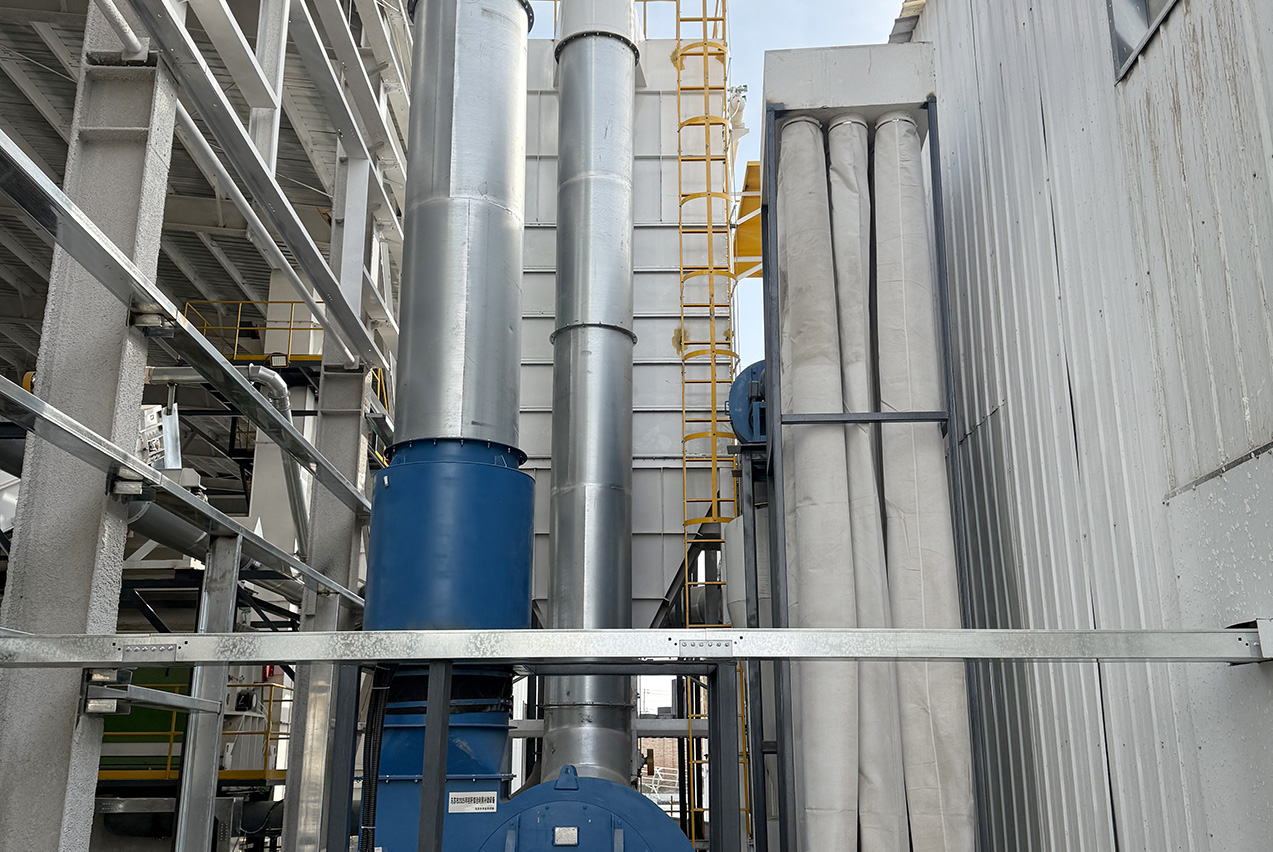
Dust-Free (无尘化): Cotton stalk grinding and drying generate significant airborne particulate. The enclosed conveying and processing design with dedicated dust removal systems keeps the workshop environment clean, protects equipment bearings and electrical components from contamination, and ensures that emissions at the plant boundary stay within what local environmental authorities require. Importantly, the dust captured by collection systems is not discarded — it is returned to the process, which is one of the mechanisms that drives the line's raw material utilization rate above 99%.
Automated (自动化): Agricultural straw feedstock is variable in geometry and density. Automated feeding, moisture-monitoring, and die-pressure control allow the pelletizing stage to self-adjust to incoming material variation without manual intervention at every shift change. This is particularly relevant for a Xinjiang operation where the feedstock blend shifts between cotton stalks and branch wood depending on supply availability.
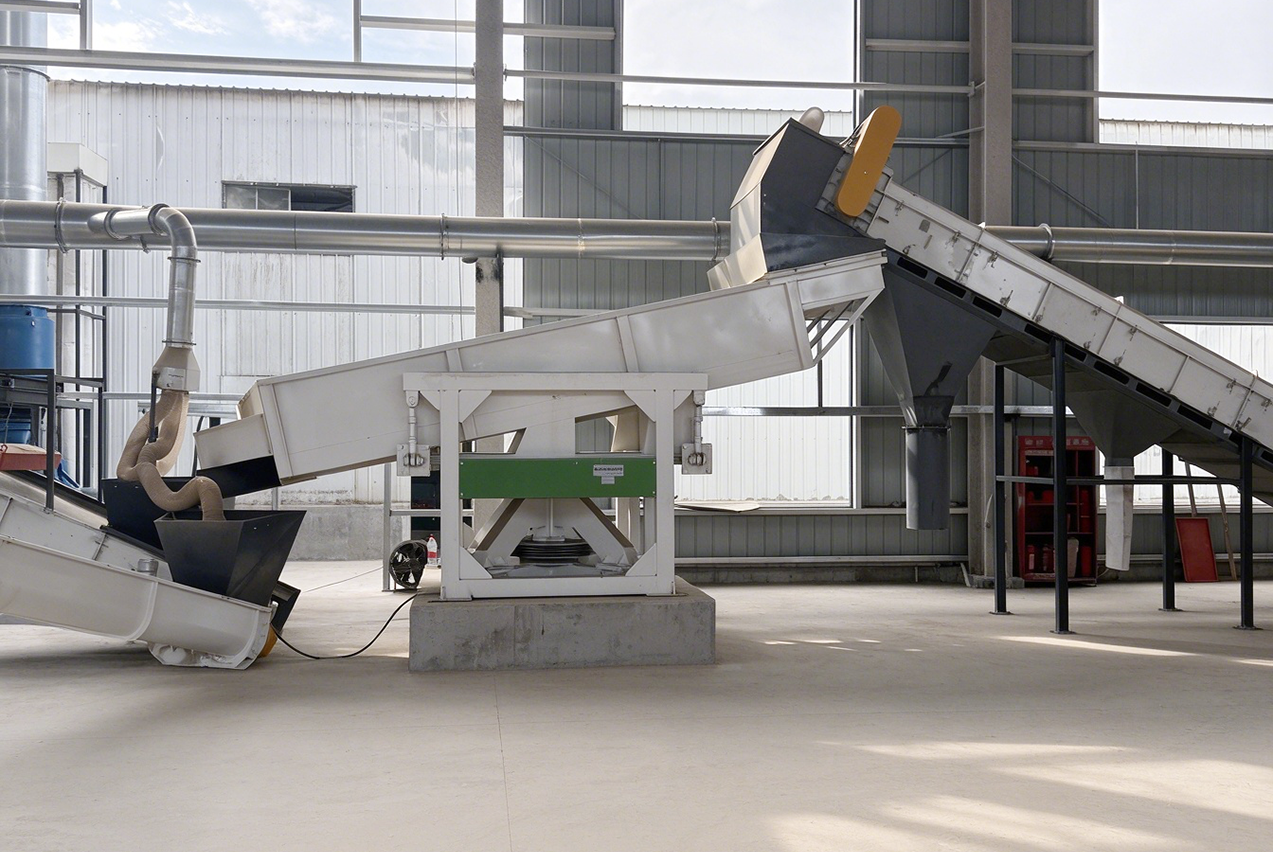
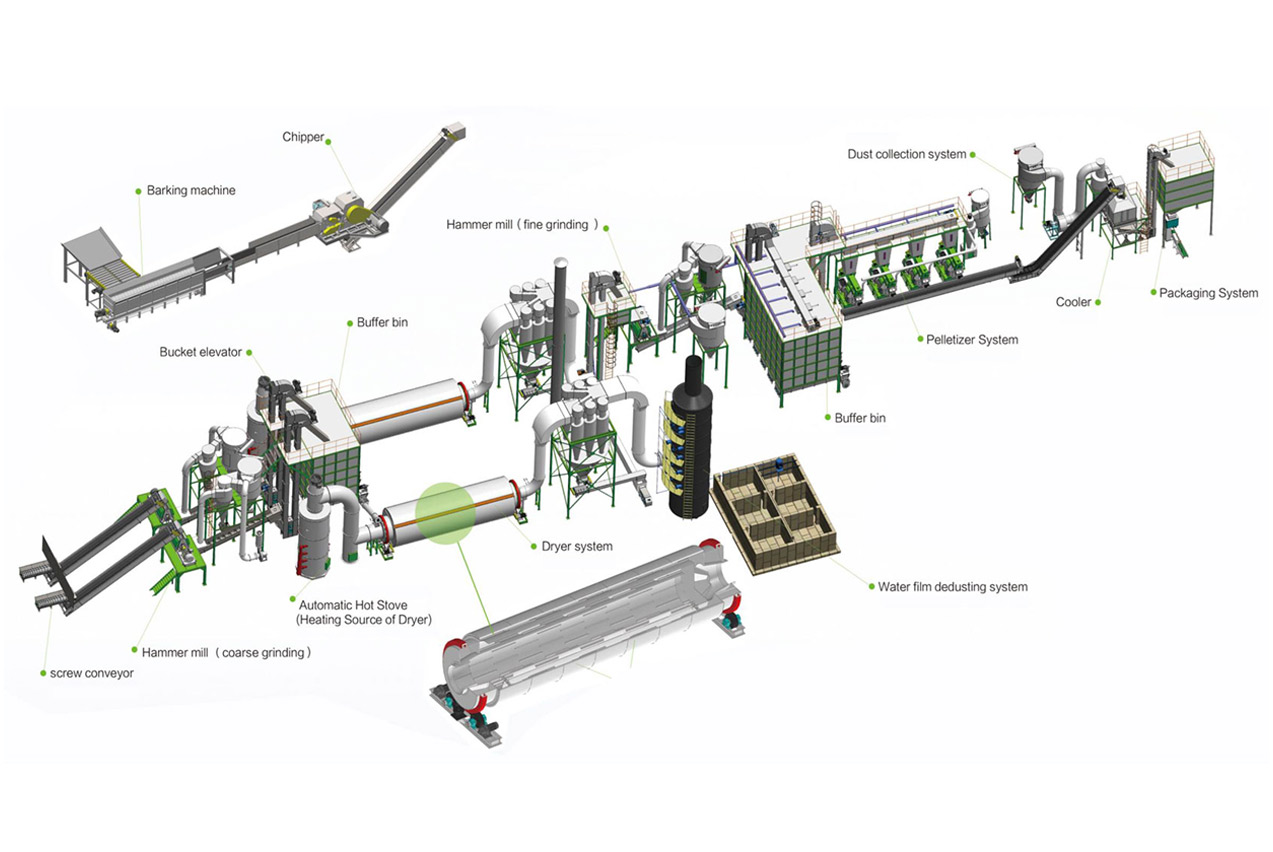
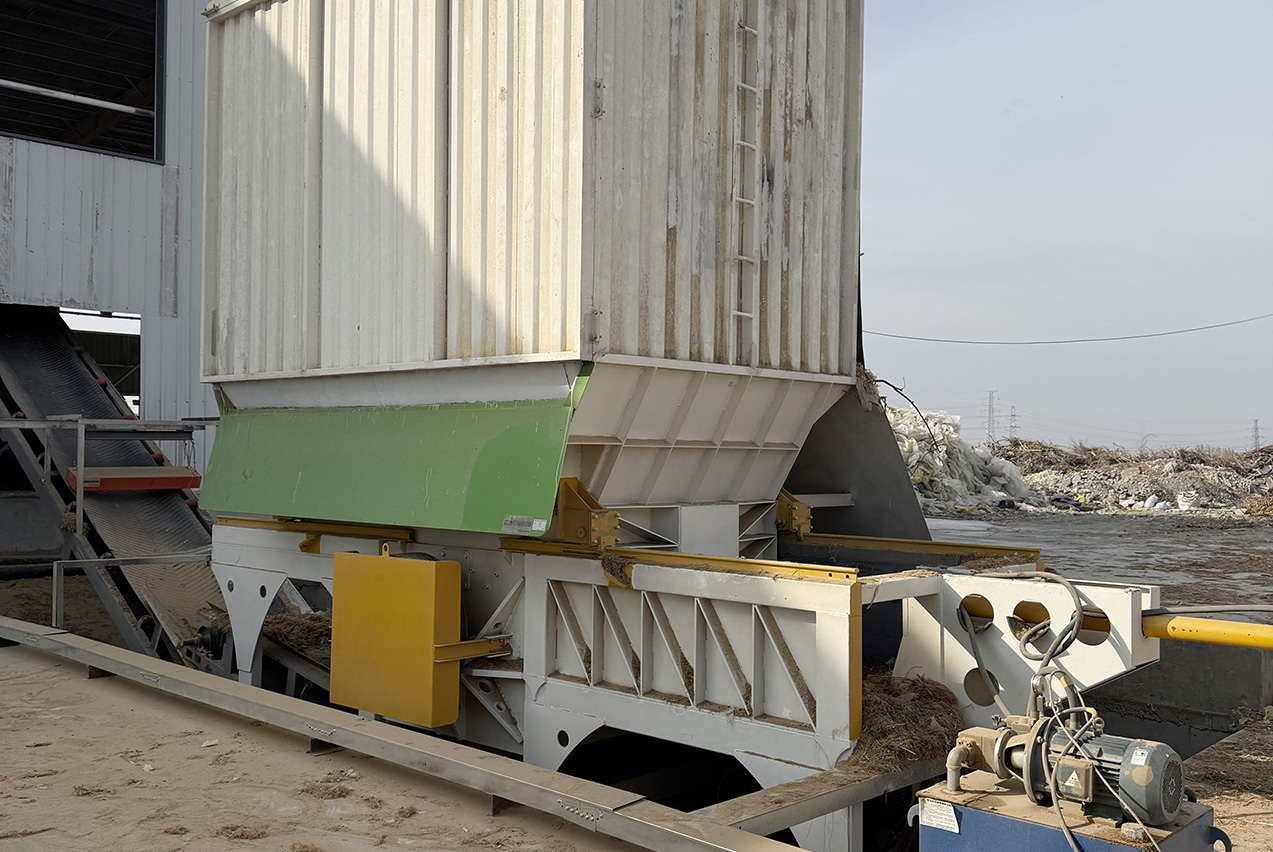
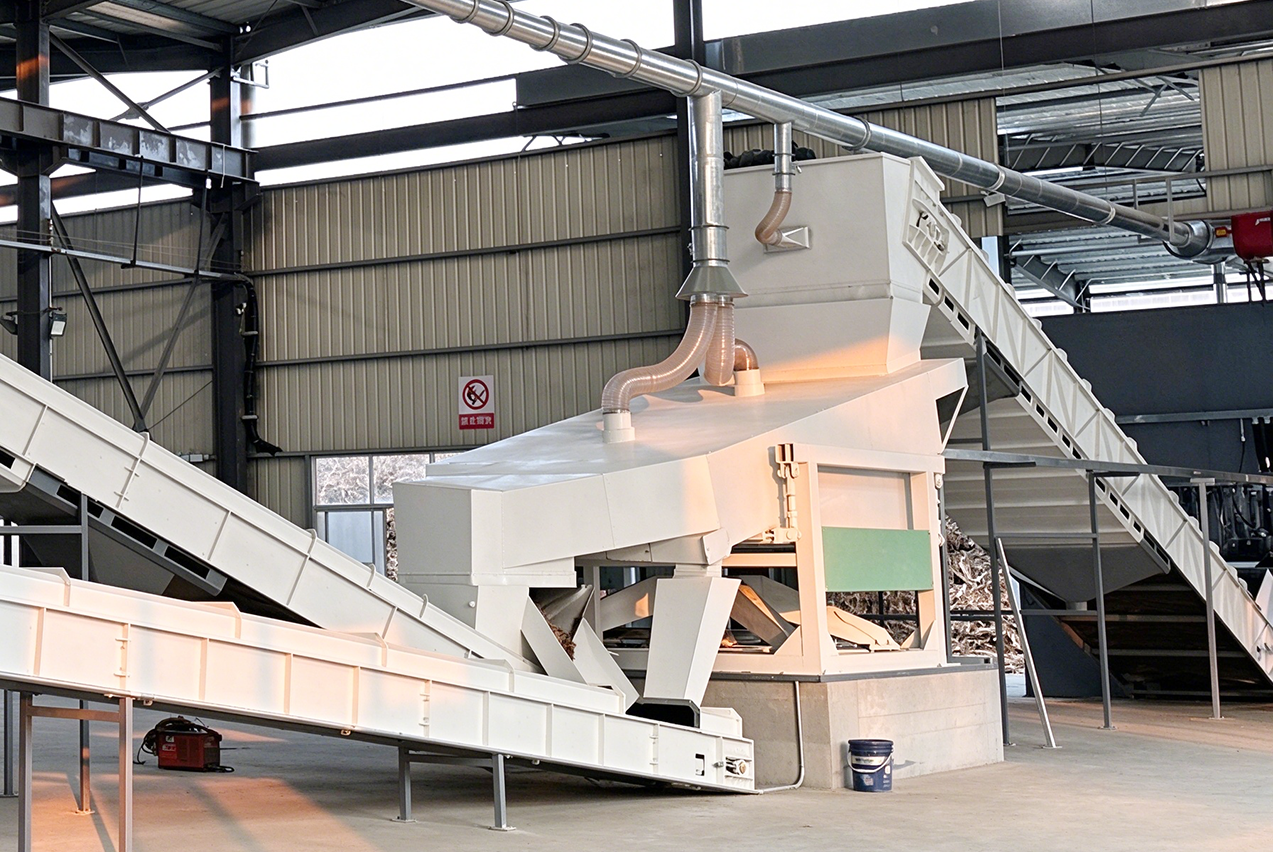
The production flow for this xinjiang biomass pellet line follows Kingwood's standard wet-feed architecture, adapted for high-fiber agricultural feedstock:
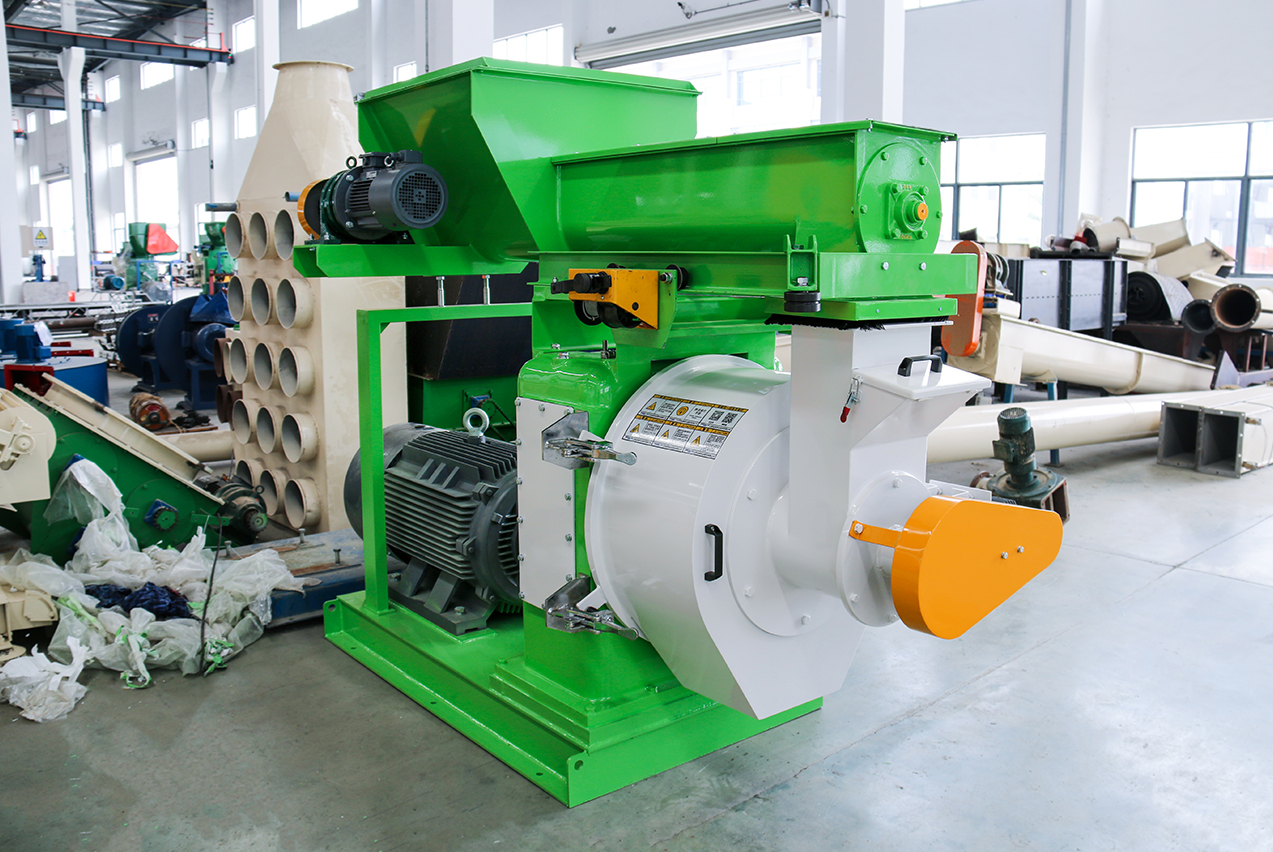
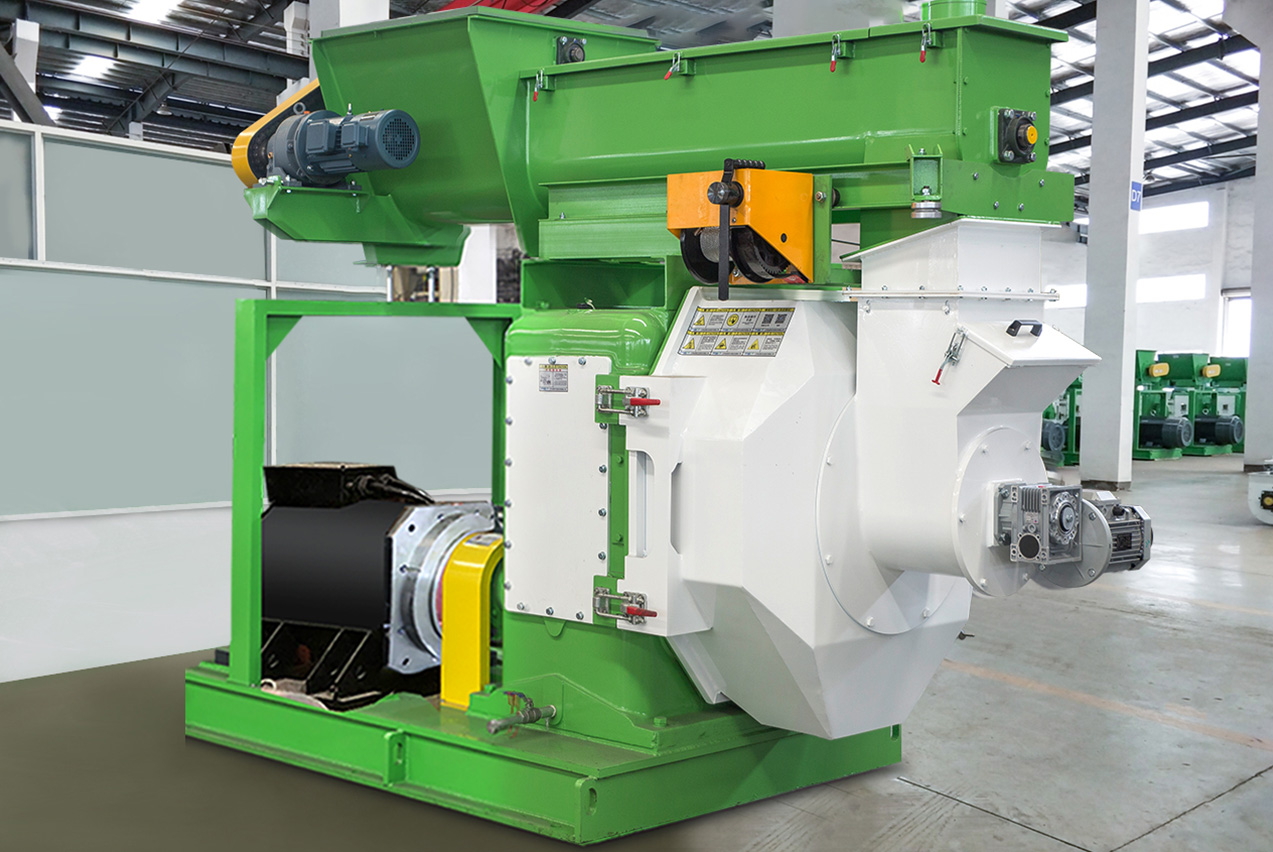
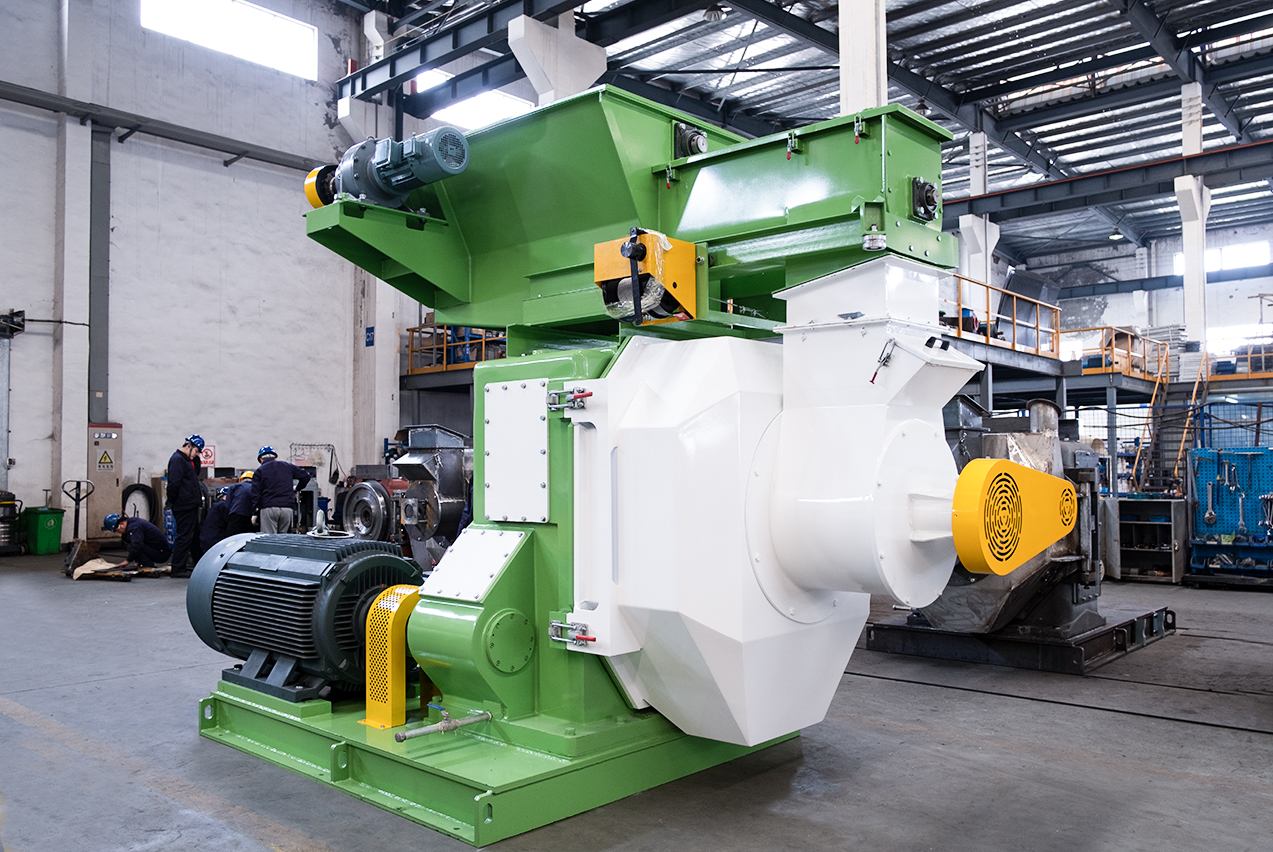
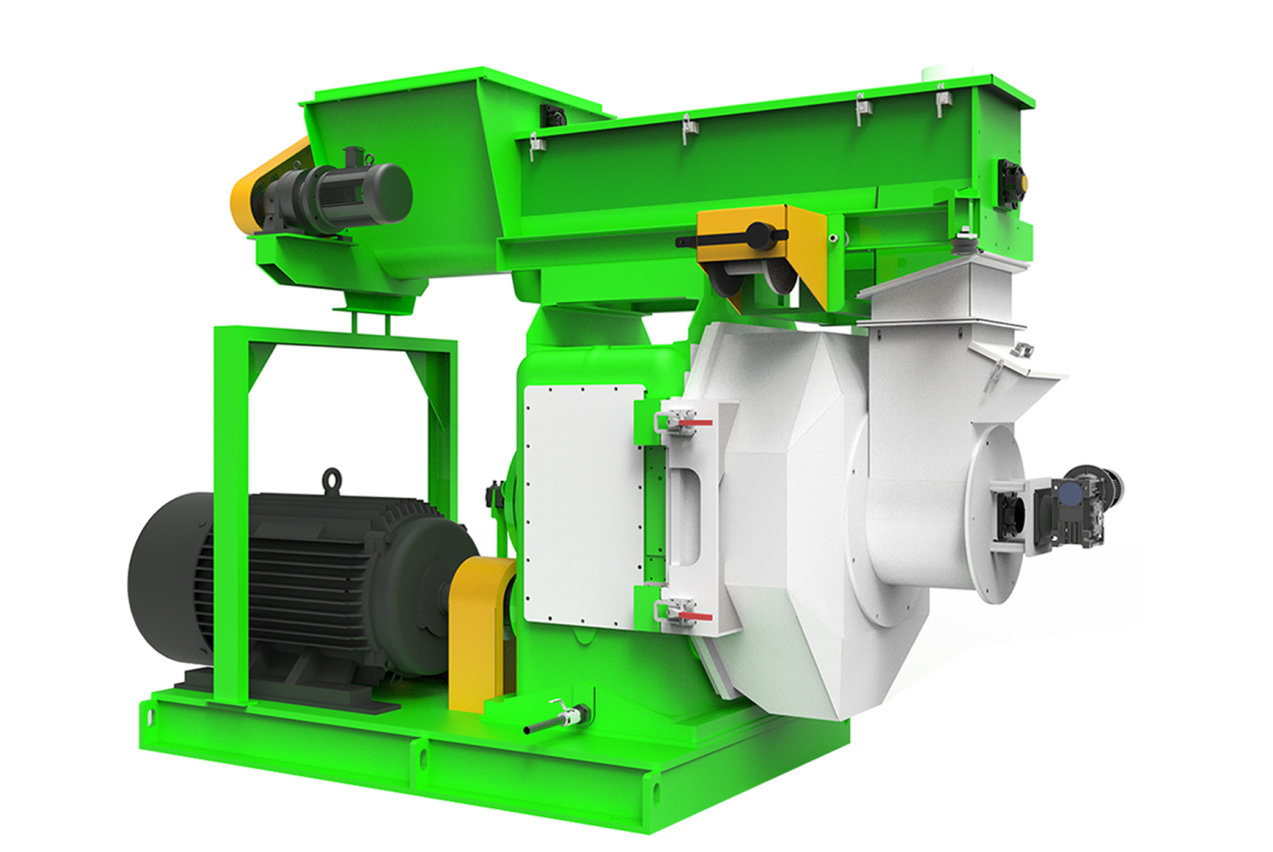
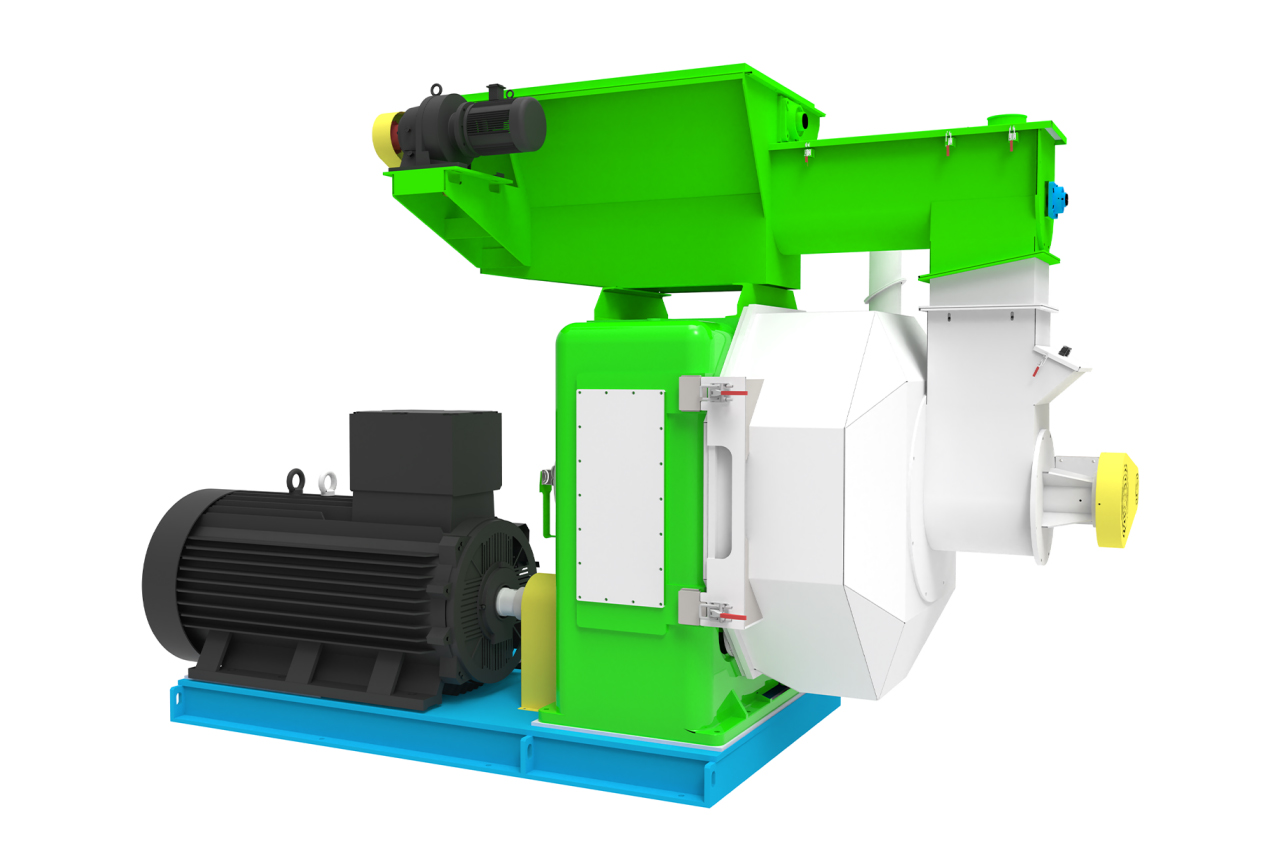
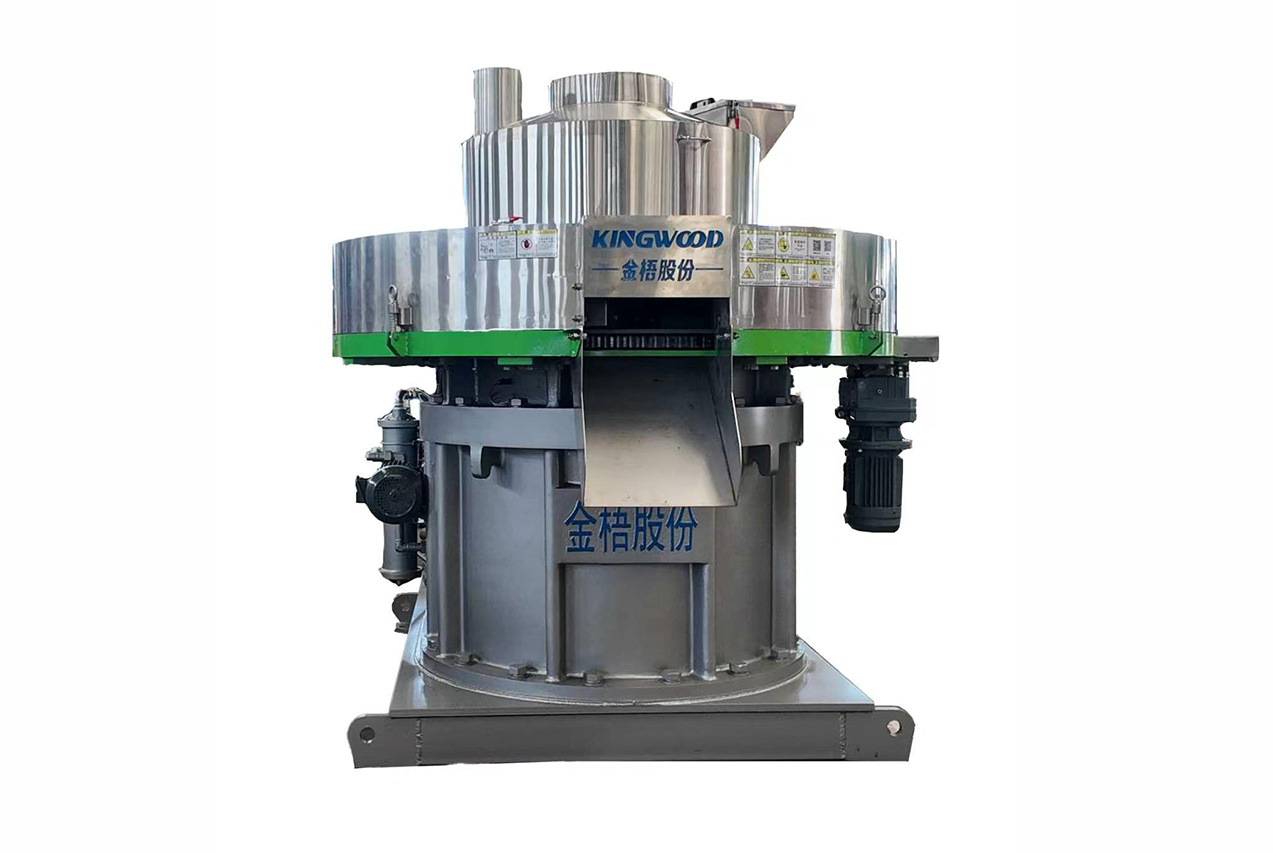
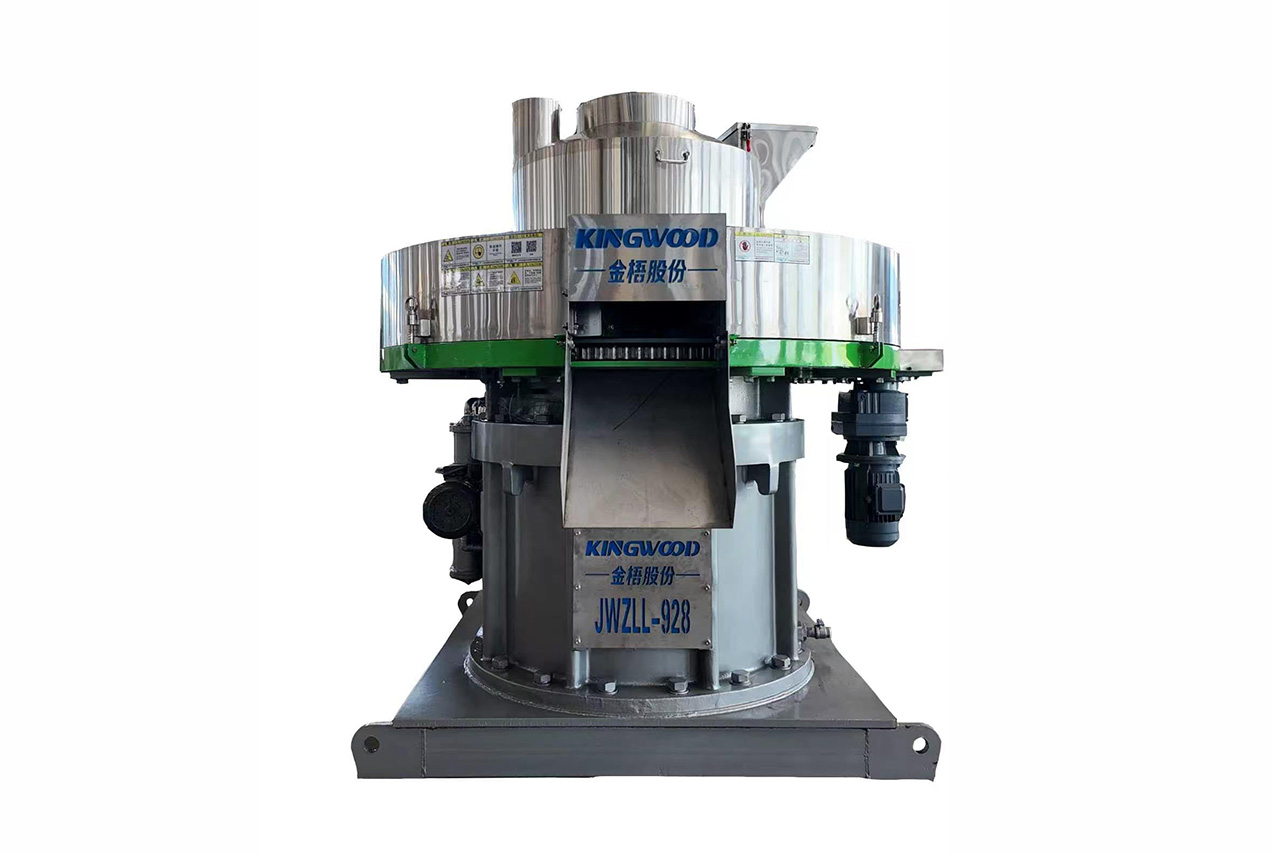
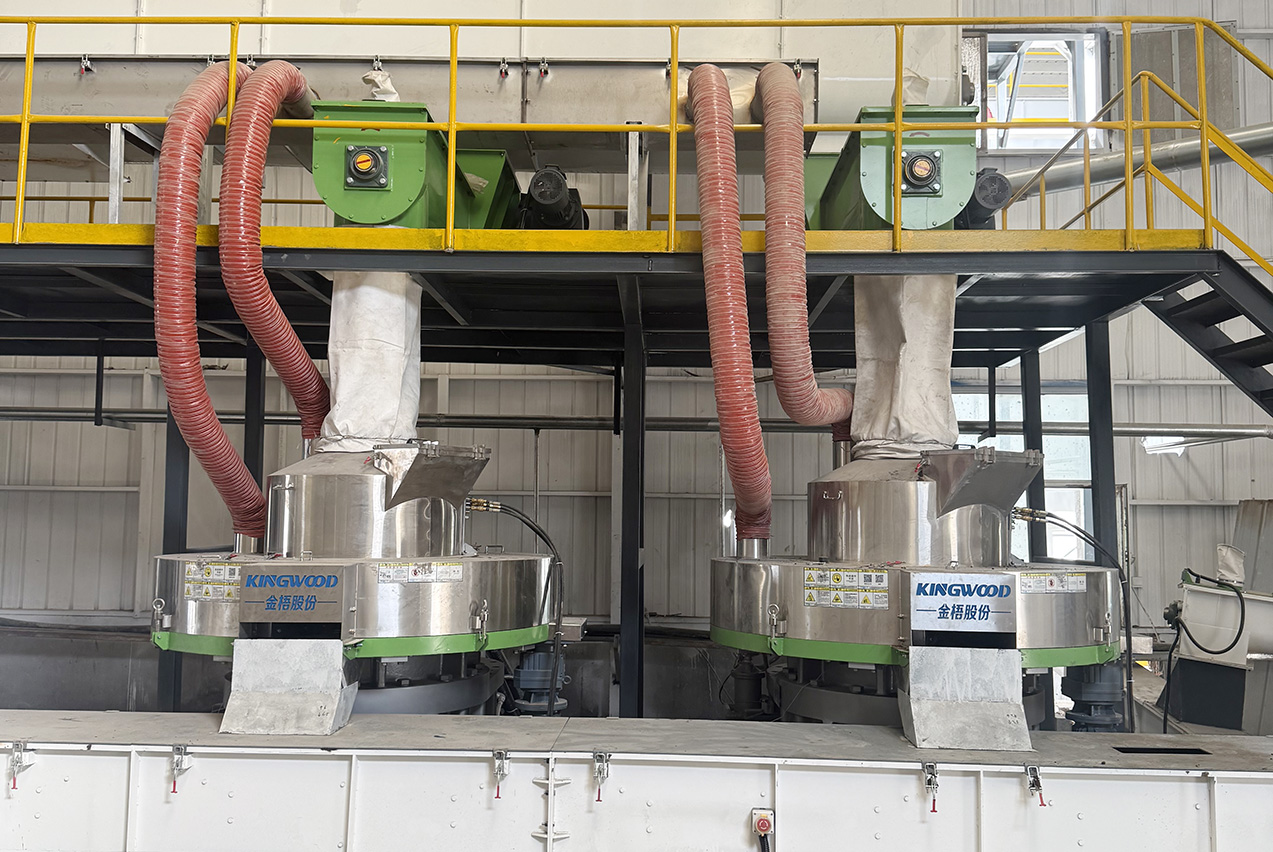
The centerpiece of this deployment is the JWZL-928 ring die pellet mill, a large-frame industrial pellet mill from Kingwood's ring die series. Understanding why this model was selected — and what supporting equipment surrounds it — gives a realistic picture of what a 10 t/h agricultural straw line actually requires.
Ring die pellet mills are Kingwood's preferred technology for production volumes above approximately 500 kg/h. For this Xinjiang project running at 10 t/h, a flat die configuration would be entirely unsuitable. The ring die design — in which the die rotates and the rollers are driven by contact — distributes compression force more evenly across the die face, which matters particularly for abrasive, high-fiber feedstocks like cotton stalks and branch wood.
The JWZL-928 designation indicates the 928-series die diameter, which sits above the 688-series used in Kingwood's 3–3.5 t/h and 10 t/h-per-four-mill configurations documented in other case deployments (such as the Jingmen, Hubei project completed in May 2023, which used four JWZL-688 units for a combined 40 t/h). For a single-mill 10 t/h target with agricultural straw feedstock, the larger die frame of the 928 provides the bearing surface area and compression path length needed to handle variable-fiber material at sustained throughput.
Kingwood's ring die manufacturing uses a fully automatic CNC drilling process with vacuum heat treatment, which ensures dimensional consistency across the die holes and contributes to surface finish quality. Consistent hole geometry directly affects pellet density uniformity across the die face — an important quality parameter for downstream combustion applications.
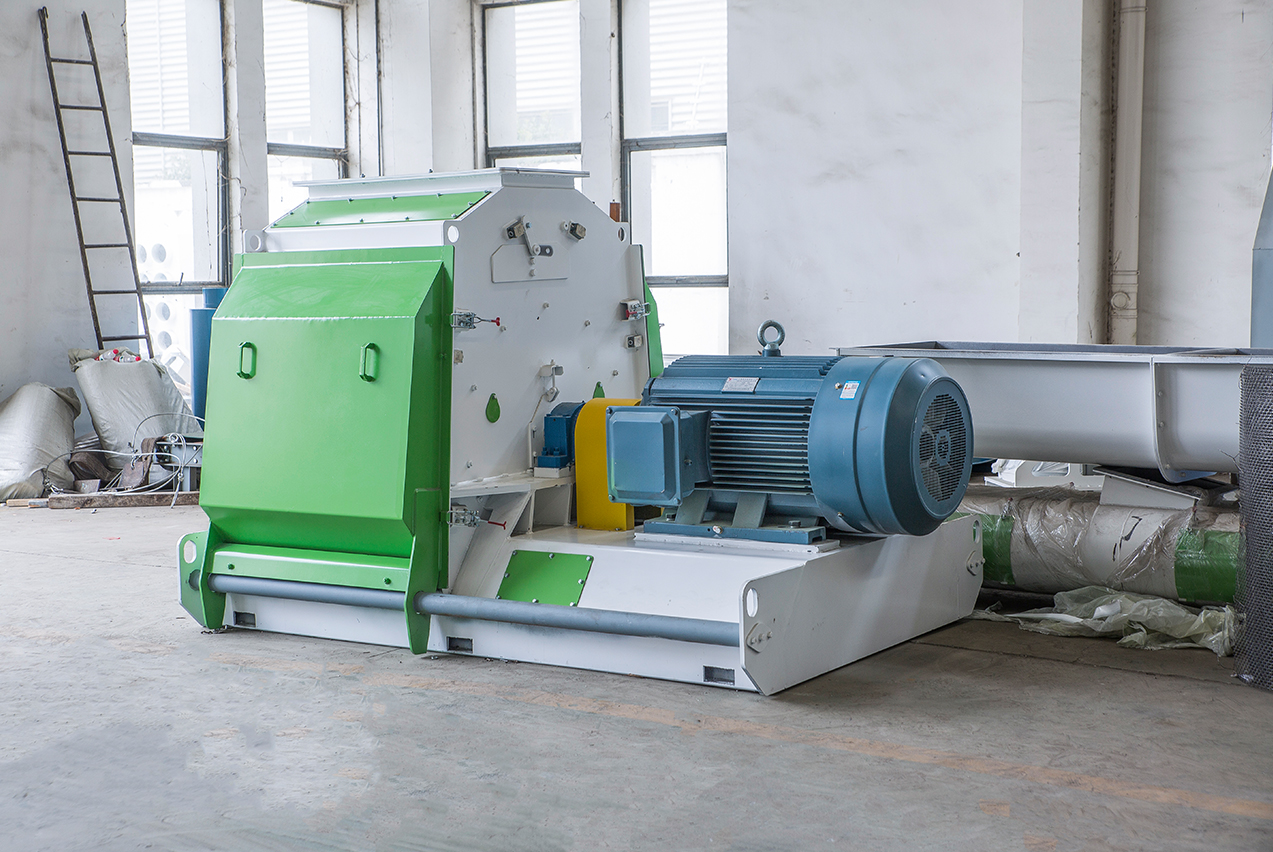
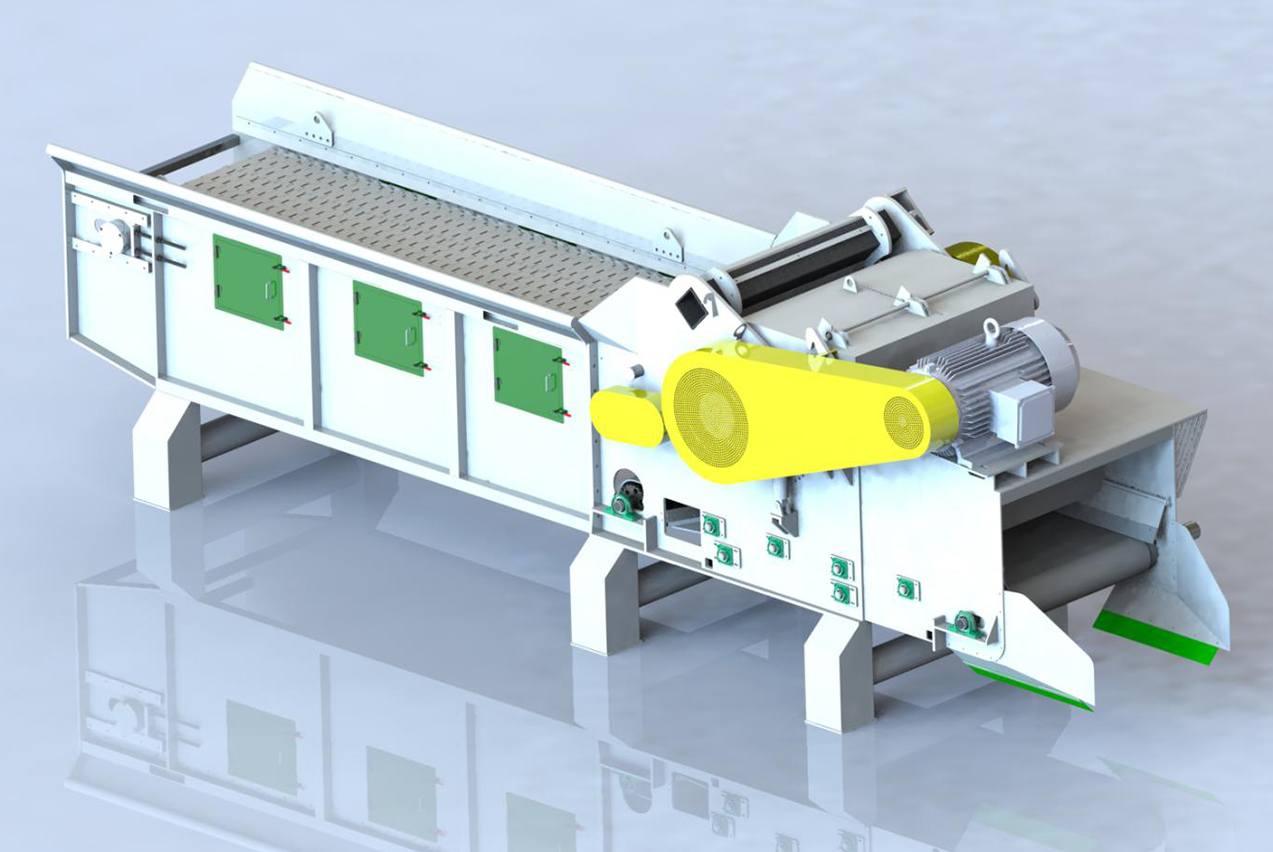
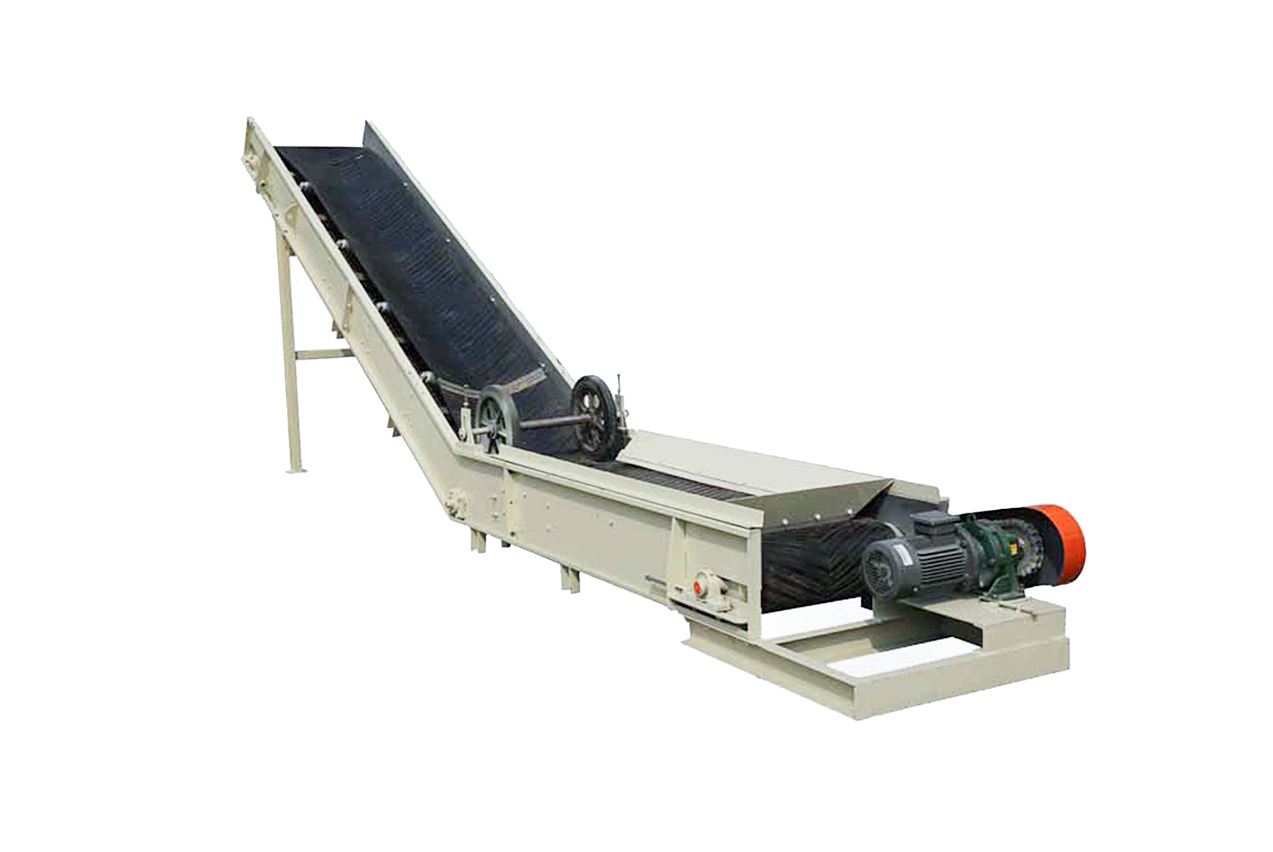
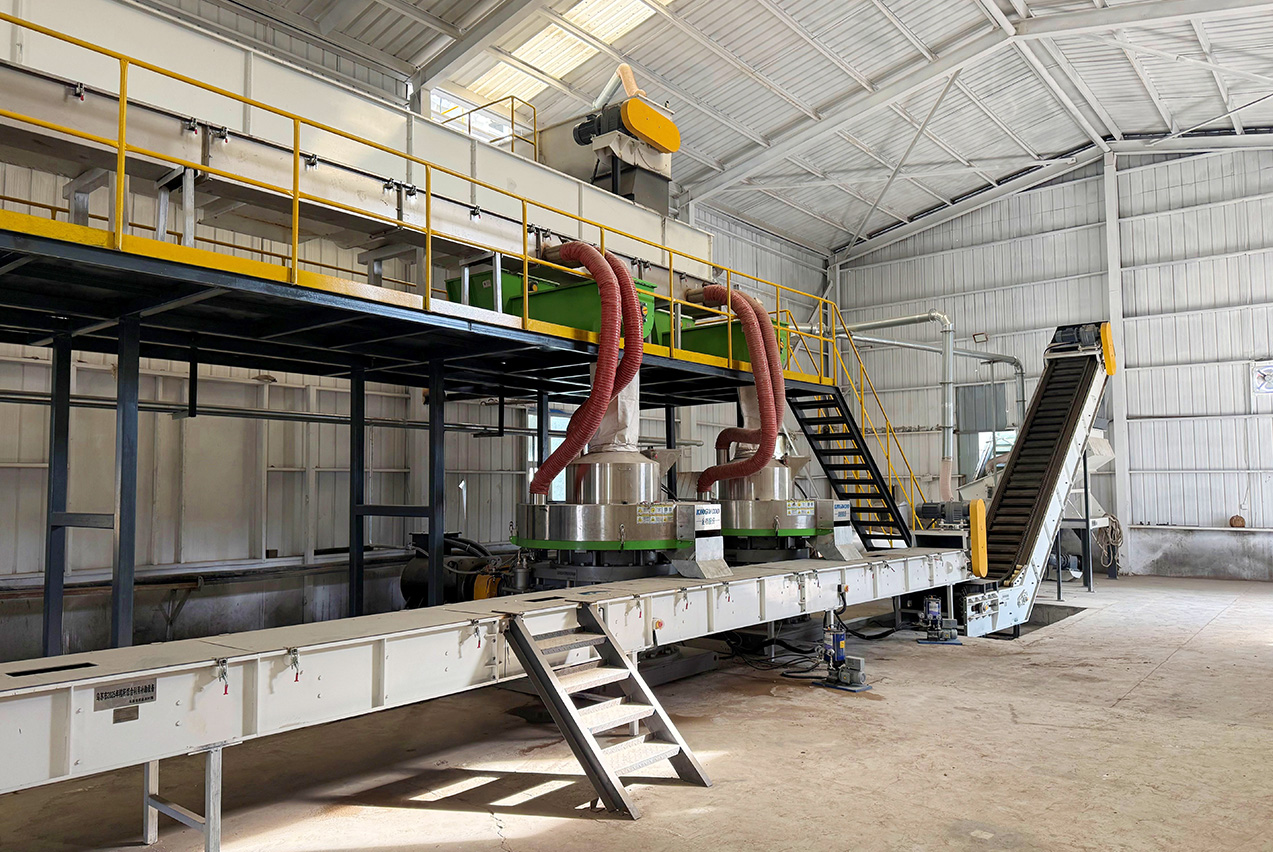
A 10 t/h pellet mill does not operate in isolation. The complete biomass pellet production line around the JWZL-928 in this deployment includes:
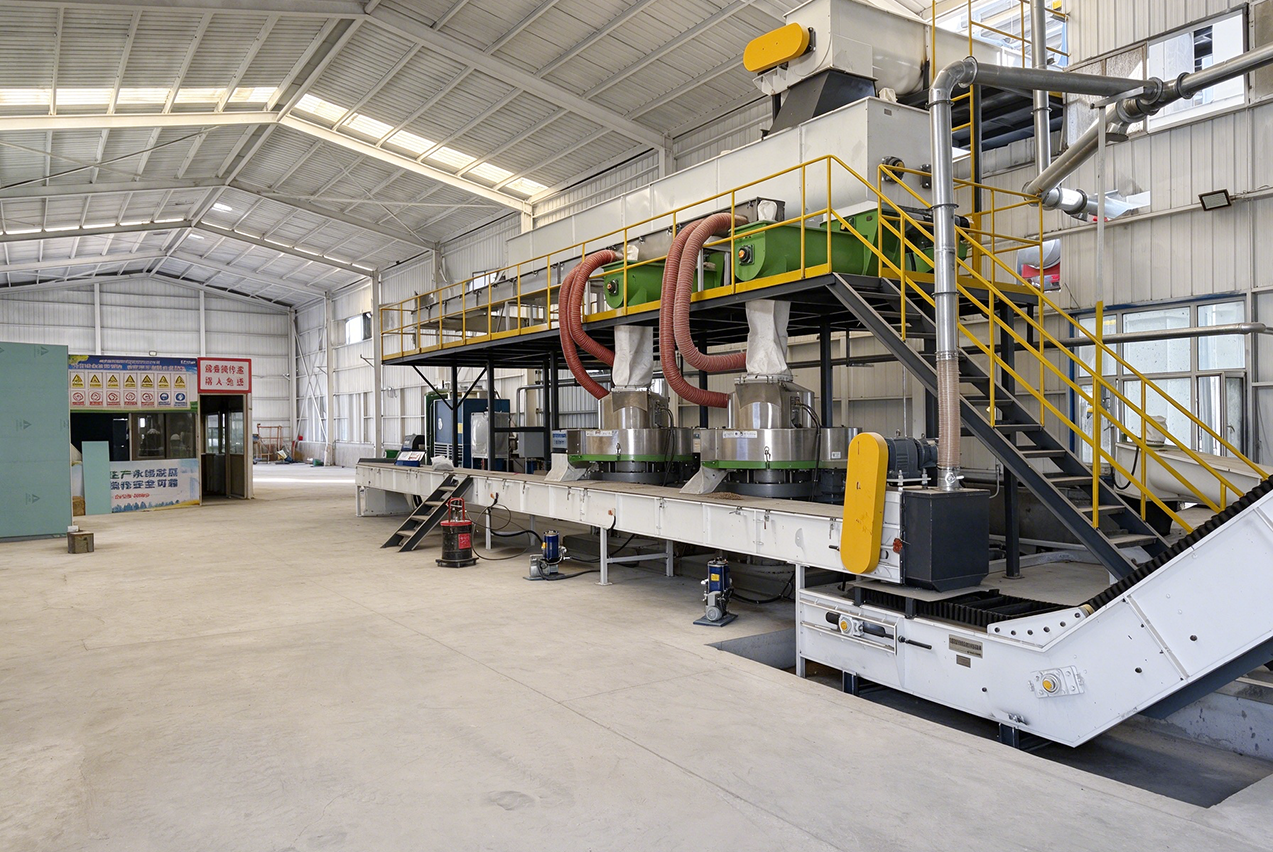
The most concrete operational outcome documented for this project is a raw material utilization rate of over 99%. For a feedstock like cotton stalks, where collection and transport costs are non-trivial, maximizing the conversion of every incoming tonne into saleable product directly affects unit economics.
The utilization rate above 99% is achieved through the closed-loop design of the scrap and non-conforming particle management system. Material that does not meet pellet quality specification at the cooling and screening stage is not sent to waste — it is reintroduced into the crushing or pelletizing circuit. This is a direct consequence of the dust-free, enclosed plant design: because material is handled in controlled conveying systems throughout, diverting substandard output back into the process is mechanically straightforward.
Equipment delivery for this project was completed in October 2026. The project runs at 10 t/h throughput using the JWZL-928 ring die pellet mill as its primary pelleting unit. No annualised throughput figure is stated here because operating hours per year depend on feedstock supply scheduling and commercial offtake arrangements that are specific to the operator — projecting these would require assumptions we do not hold.
The project's designation as a key demonstration project for comprehensive straw utilization reflects an explicit design intent: the configuration, process flow, and equipment specification should be reproducible at other sites in Xinjiang and across Northwest China's agricultural belt.
Kingwood's project base — more than 2,000 production line projects across 30+ countries — means the company has engineering and logistics infrastructure for standardised deployment. The Three-Standardization Framework (integrated, dust-free, automated) is not site-specific; it is a methodology applied consistently regardless of geography, which is what makes replication practical rather than aspirational.
For regional governments and agricultural enterprises evaluating similar investments, the demonstration value of this project lies in three areas:
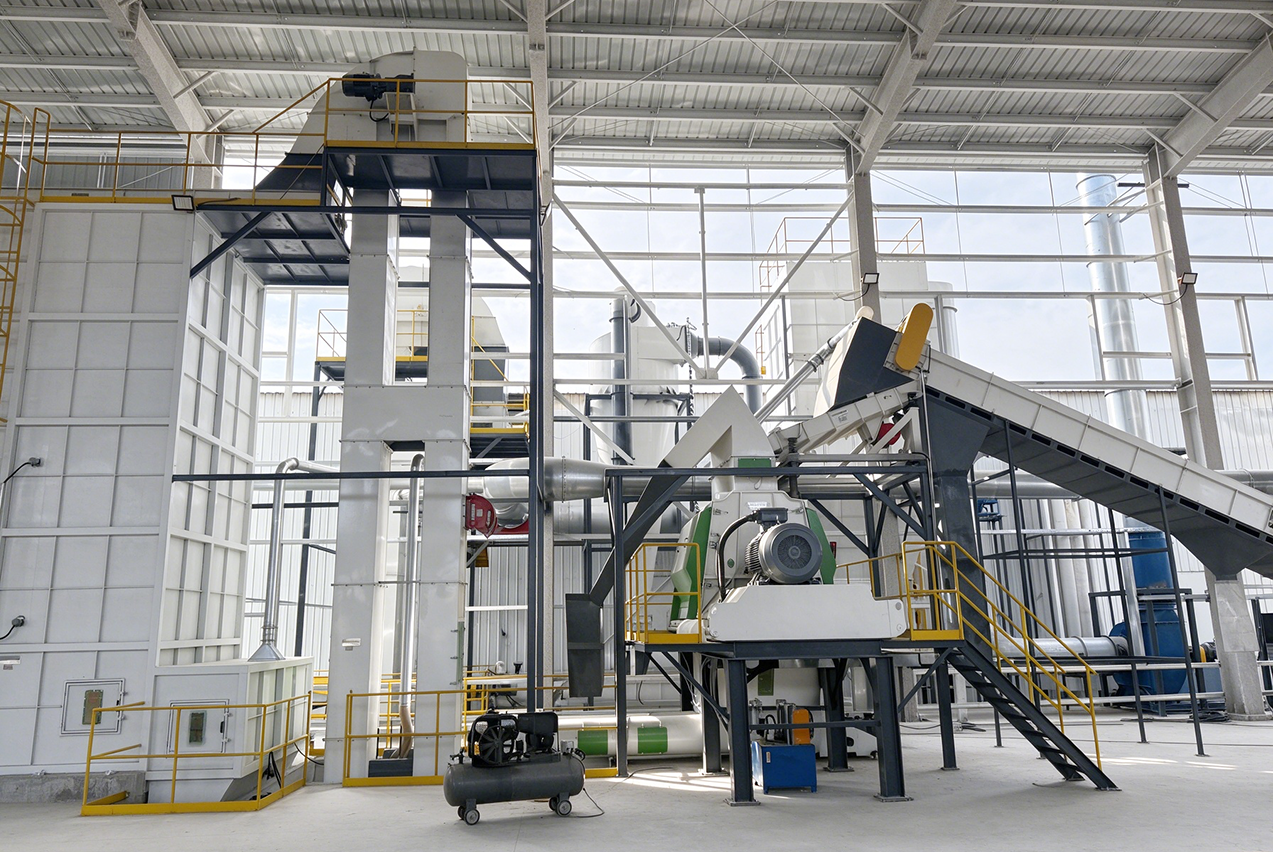
This project offers a concrete reference point for enterprises and investors considering biomass pellet infrastructure in agricultural residue-heavy regions of China. Several implications are worth noting directly.
Feedstock abundance is not sufficient on its own. Xinjiang has cotton stalks in very large volumes, but converting that abundance into a viable production business requires solving collection logistics, seasonal supply variability, and moisture management before the pelleting stage. The Kingwood integrated plant design addresses the on-site processing challenges; feedstock supply agreements and collection infrastructure are the investor's responsibility to negotiate locally.
Demonstration project status changes the risk profile. A project recognised as a regional demonstration initiative for straw utilization typically benefits from closer engagement with local government, which can accelerate permitting and create visibility with offtake buyers. Investors evaluating greenfield sites in similar regions should assess whether their project could qualify for equivalent designation.
The 99%+ utilization rate matters most when feedstock cost is the primary cost driver. For agricultural straw, where the commodity price is low but collection and transport add cost per tonne, minimizing in-process waste is a more powerful economic lever than it would be for a wood pellet line sourcing sawmill residue at near-zero cost. The closed-loop scrap recovery design of this line is therefore economically well-matched to its feedstock context.
Kingwood offers EPC turnkey contracting for projects of this type, covering raw material analysis, plant layout, equipment manufacturing, site installation, commissioning, operator training, and after-sales support. Enterprises beginning project evaluation can request feedstock analysis and preliminary line configuration assessment through Kingwood's technical team.
The JWZL-928 is a ring die pellet mill capable of processing cotton stalks, tree branches, wood chips, sawdust, and other agricultural and forestry residues. In this Xinjiang project, the primary feedstocks are cotton stalks and branch wood — both high-fiber materials that benefit from the 928's robust die design and controlled compression. Kingwood's non-selective feeding philosophy means the line can handle mixed feedstock batches without reconfiguration.
By converting cotton stalks directly into compressed pellet fuel, the production line eliminates the need for open-field burning, which is a major source of particulate matter and greenhouse gas emissions across Northwest China. The enclosed, dust-free processing design ensures that no fugitive dust escapes the workshop, meeting China's GB13271-2001 emissions standards. At 10 t/h capacity, a single line can process tens of thousands of tonnes of straw annually, significantly reducing seasonal burning events.
A utilization rate above 99% means that virtually all incoming cotton stalk and branch material is converted into saleable pellet fuel or recycled back into the process. Scrap material and non-conforming particles from quality-control screening are reintroduced into the crushing or pelletizing stage rather than discarded. For a 10 t/h line running two shifts, this minimizes feedstock cost per tonne of finished pellet and improves the project's overall economics.
Equipment delivery for this project was completed in October 2026. Kingwood manages the full project lifecycle — from raw material analysis and plant layout planning through equipment manufacturing, site installation, operator training, and after-sales support — under its EPC turnkey contracting model, which typically compresses schedule versus multi-vendor procurement.
Yes. The project was explicitly designed as a demonstration model for comprehensive straw resource utilization, with replicability across Xinjiang and other Northwest Chinese provinces where crop residue volumes are large. Kingwood has completed over 2,000 production line projects across 30+ countries, giving it the engineering and logistics infrastructure to deploy standardized configurations at scale. The integrated, dust-free, automated Three-Standardization Framework ensures consistent output quality regardless of site location.



Wood Biomass Machinery Manufacturer


 English
 日本語
日本語
 한국어
한국어