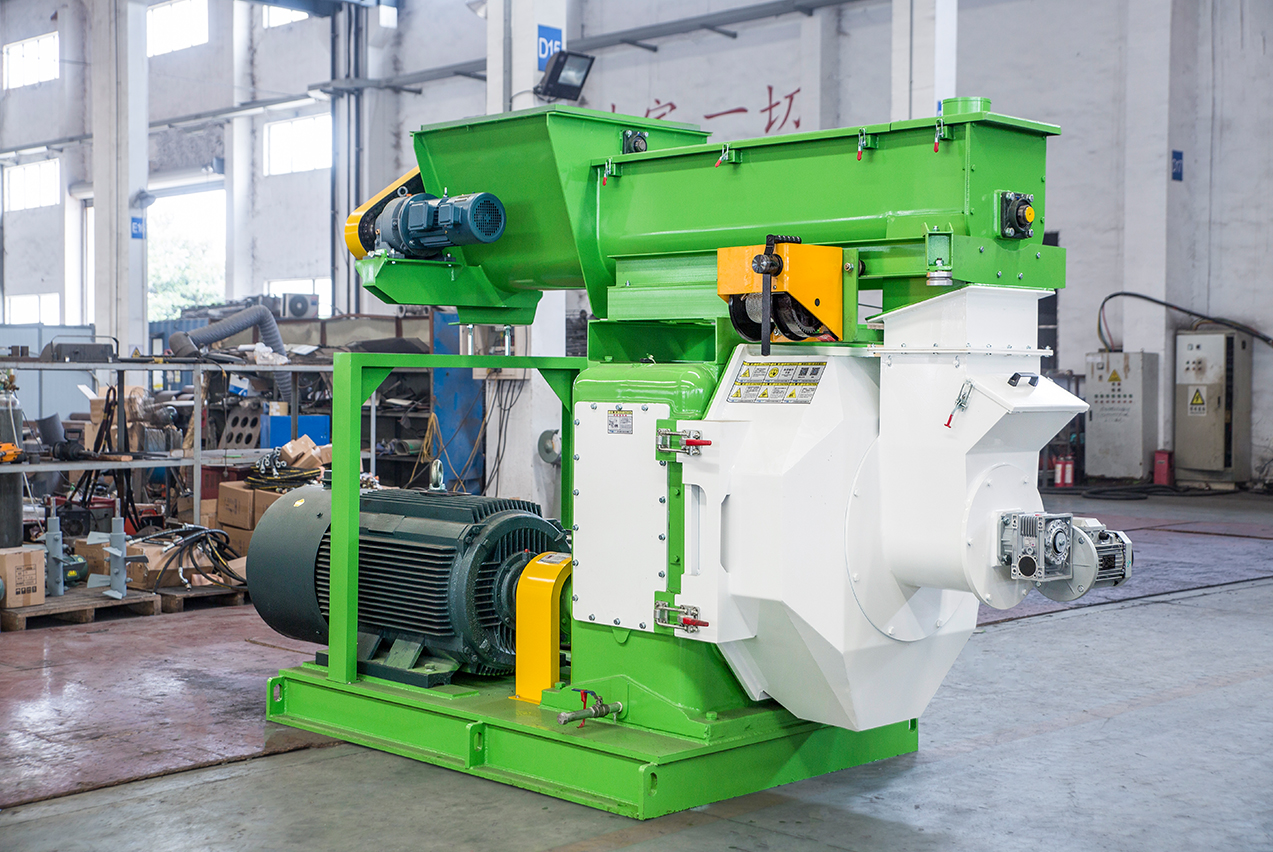
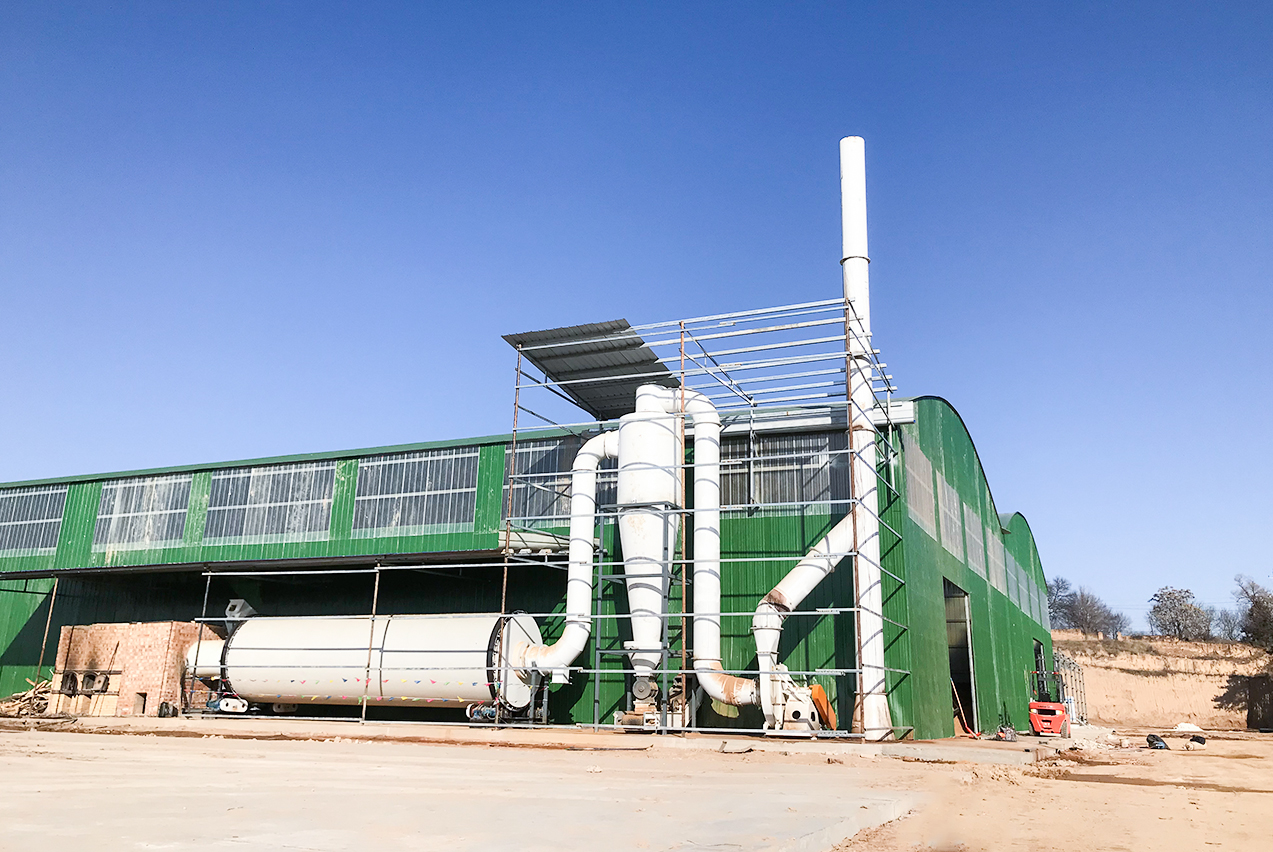
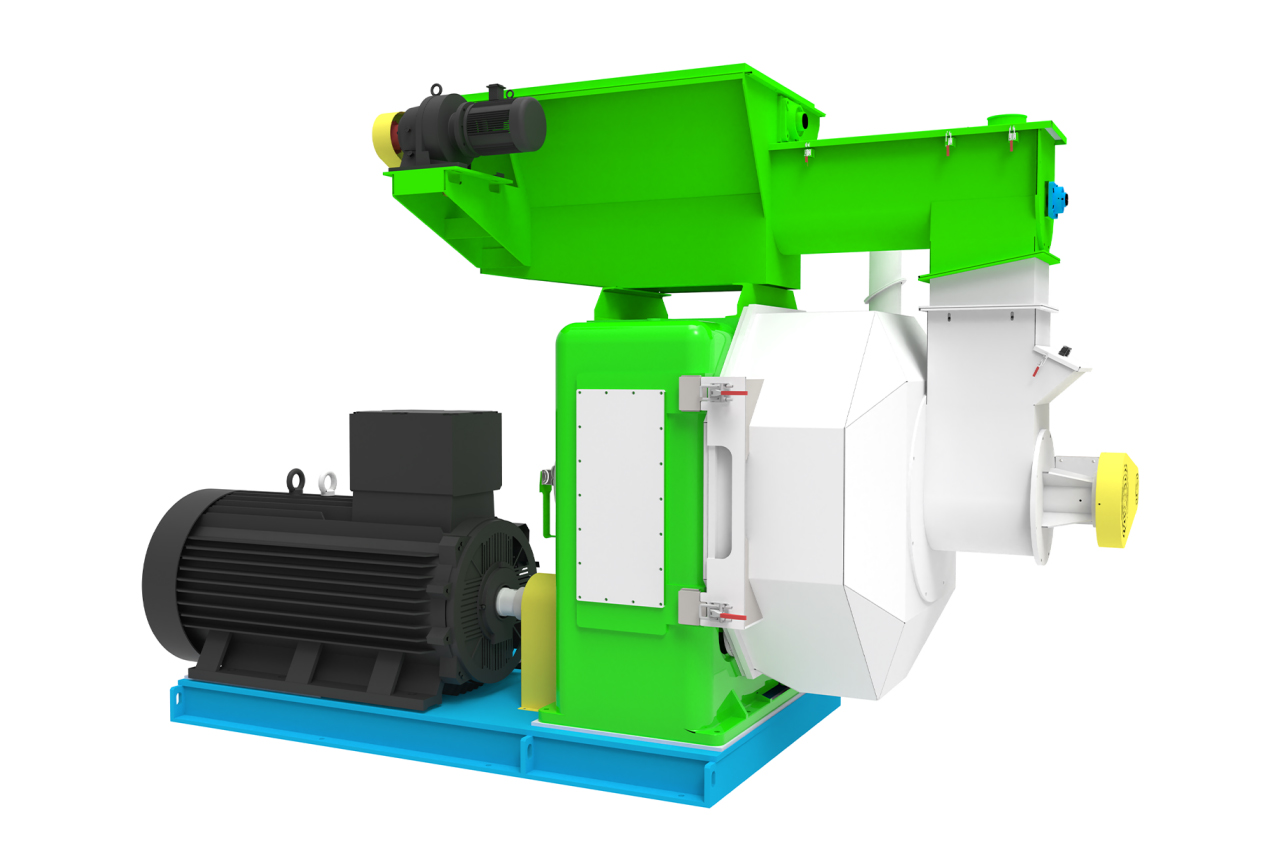
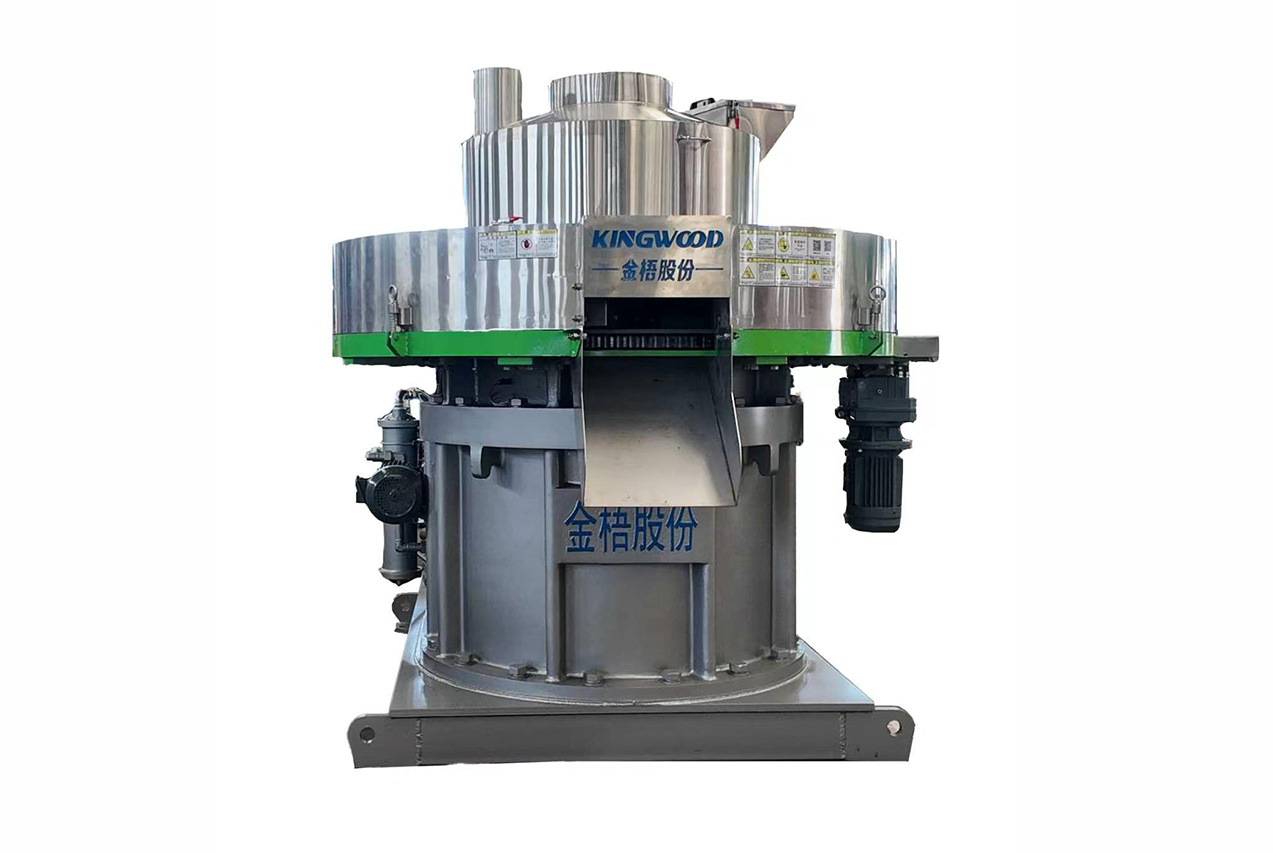
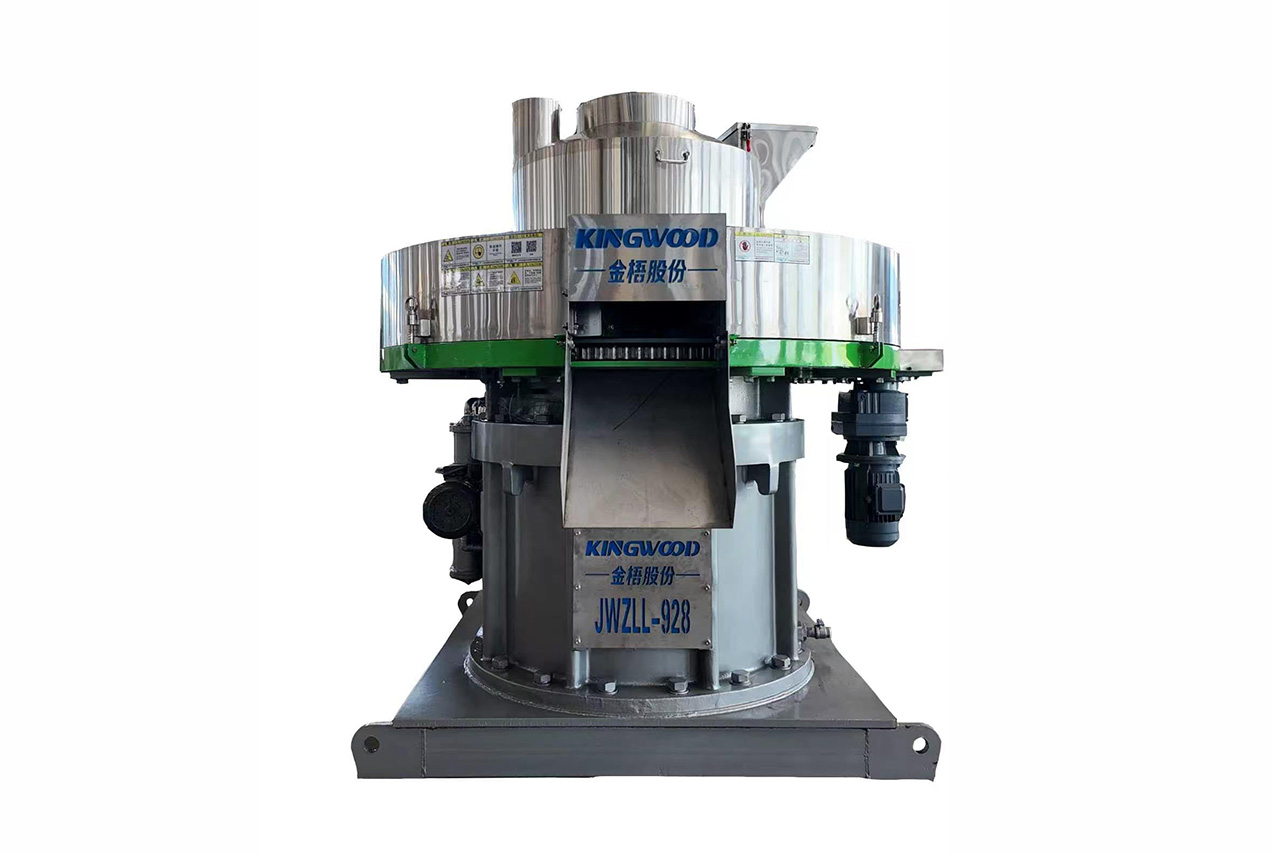
Project at a glance: A chemical-sector operator in 江苏兴化, China deployed Kingwood's JWZL-688 ring die pellet mill in a complete china biomass pellet line delivering 6 t/h output, commissioned December 2024.
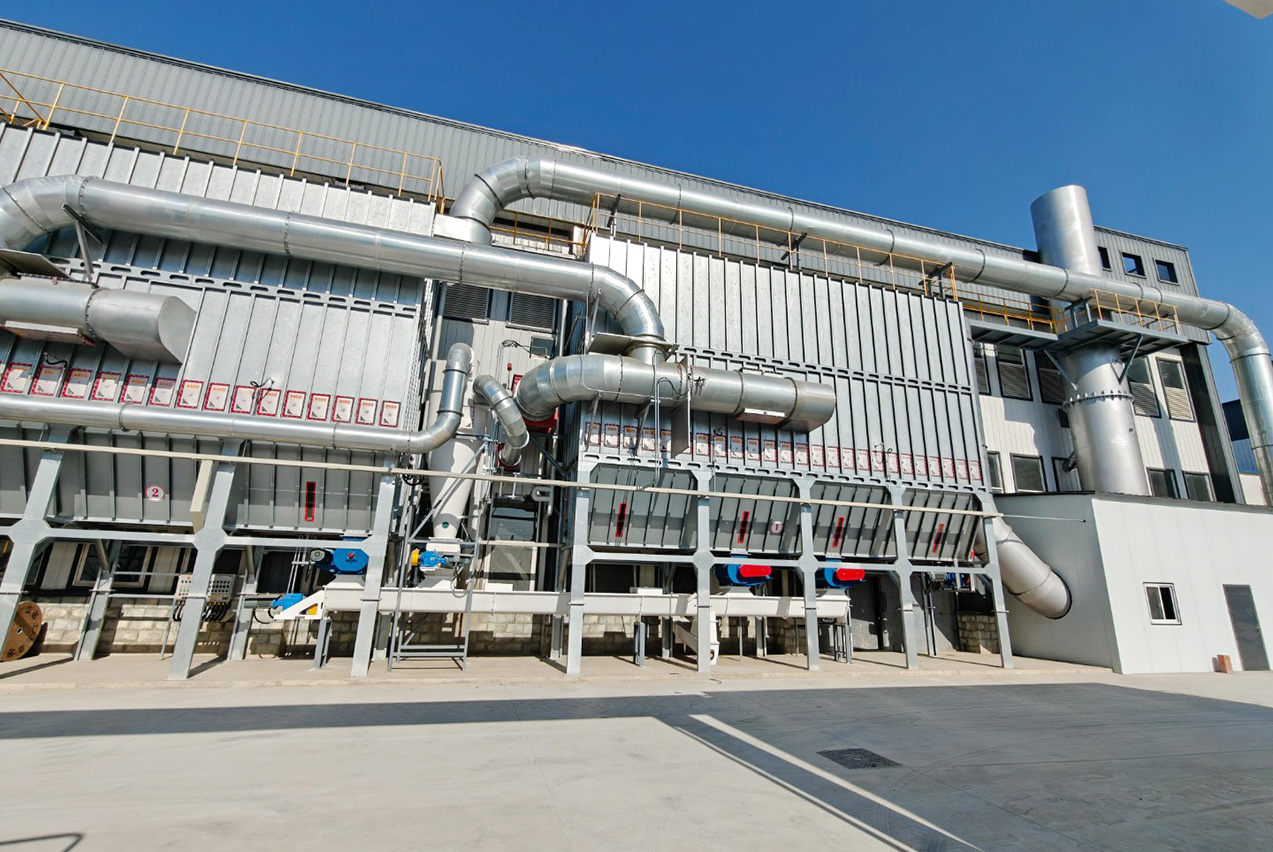
For industrial operators in China's chemical sector, energy costs are a persistent pressure point. This 江苏兴化 company had a specific strategic goal: stop purchasing fuel and instead produce it on-site from waste streams already generated by their operations and surrounding forestry activity. The objective was full biomass energy self-sufficiency — using their own pellet fuel to power their other downstream projects.
That goal sounds straightforward until you look at the feedstock.
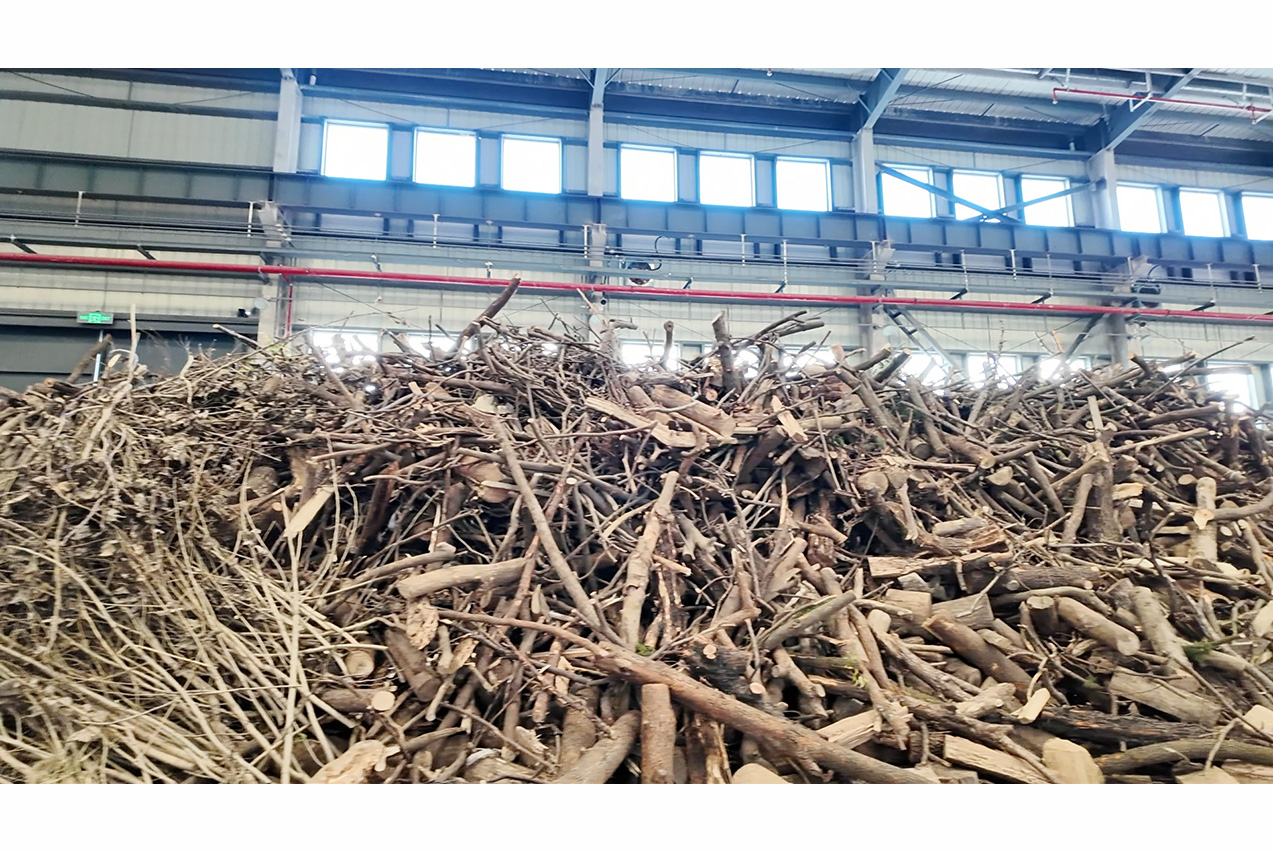
The available raw materials were not uniform wood chips from a single sawmill. They included tree branches of varying diameter, forestry trimmings, construction form templates, and demolition debris — a heterogeneous mix with inconsistent particle size, moisture content, and density. Some pieces were large-diameter structural timber; others were fine branch wood. Construction templates introduced non-wood contaminants requiring magnetic separation.
Processing this kind of mixed stream through a single crusher and directly into a pellet mill would produce inconsistent particle sizing, accelerate die wear, and risk metal contamination reaching the pelletizing stage. The preprocessing design had to match the feedstock reality, not an idealised input.
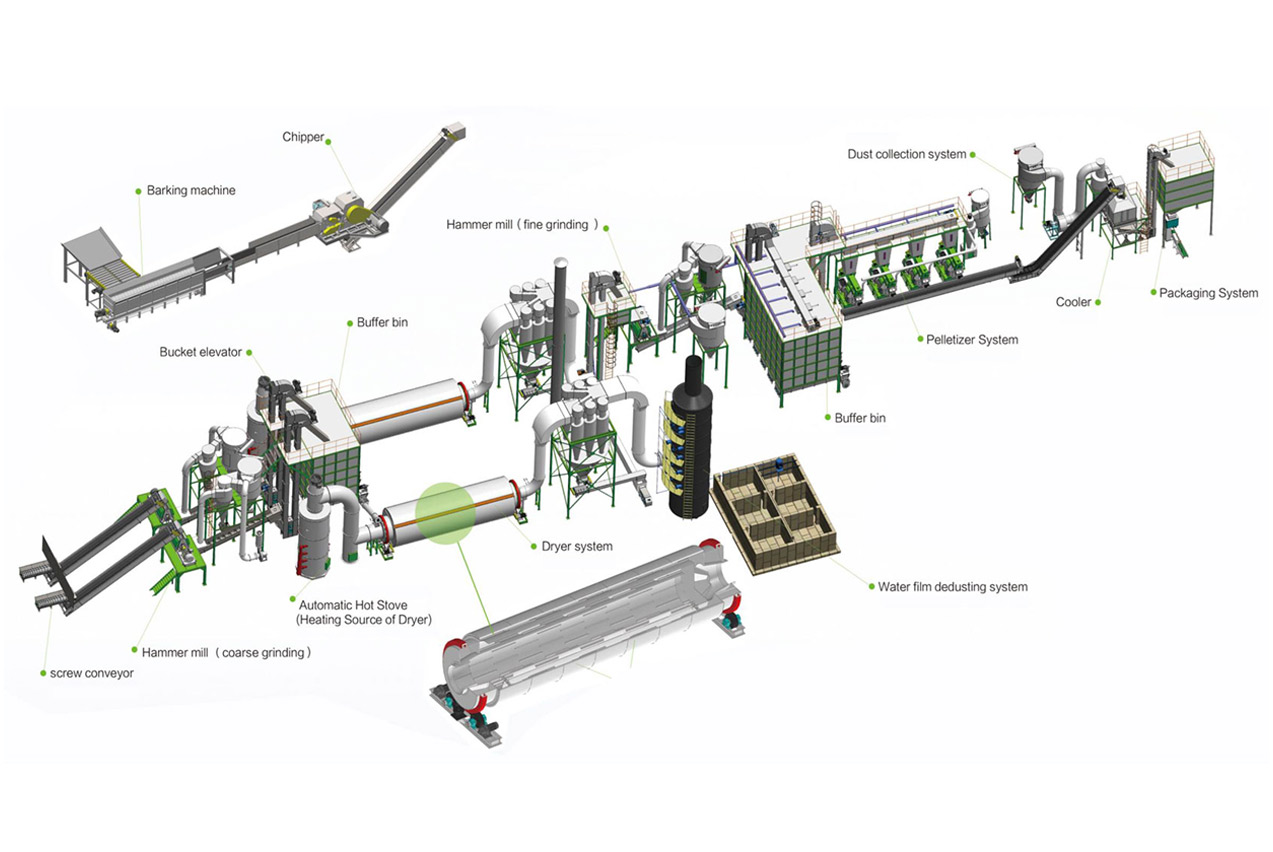
Off-the-shelf single-machine solutions are designed for relatively uniform feedstocks. A purpose-built china biomass pellet line, by contrast, can be engineered from the crushing stage forward to handle the specific mix of materials a given site actually produces. For this operator, that meant a dual-crusher front end, magnetic separation on the conveyors, fire protection on the chip storage hopper, and a multi-circuit feeding arrangement to keep the pellet mills running at consistent throughput. Kingwood's role was to design and deliver that complete system — not just supply a pellet mill.
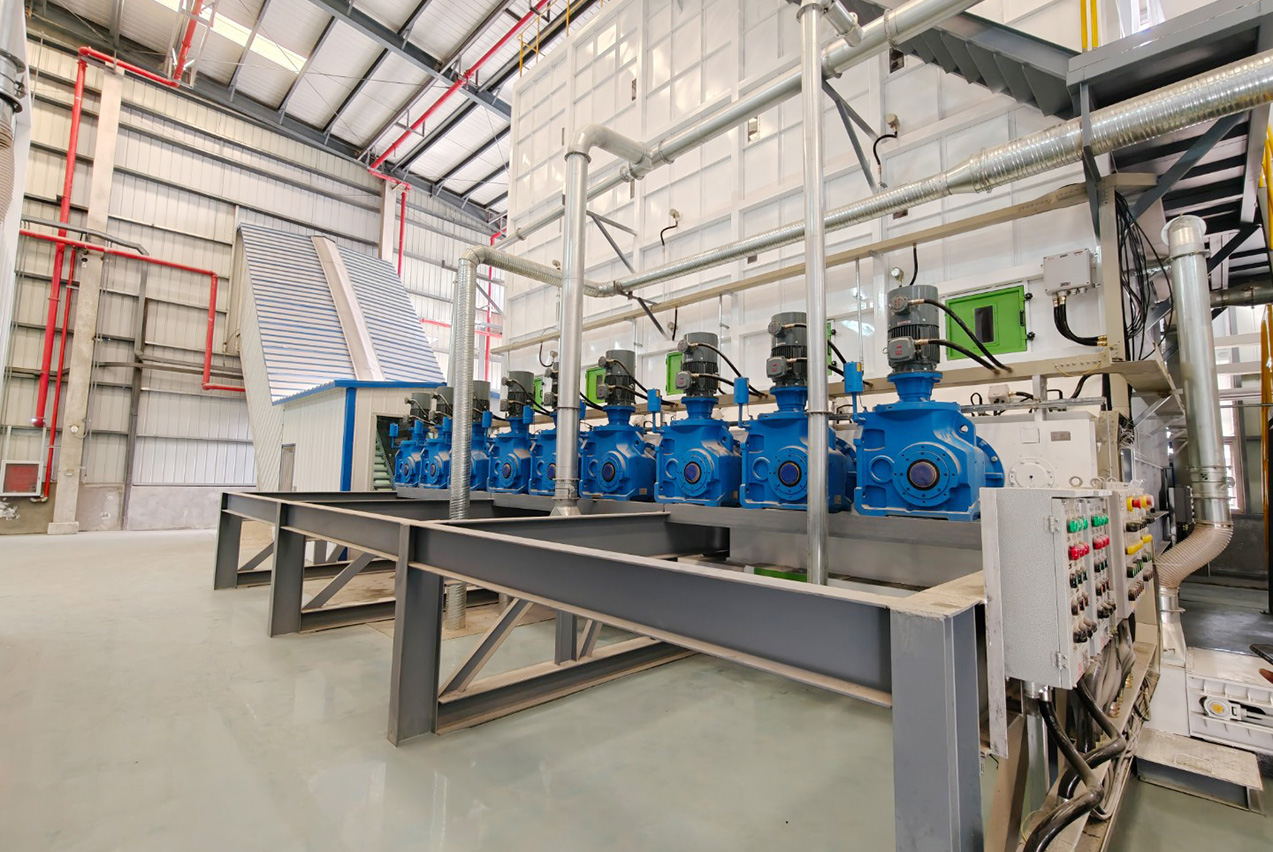
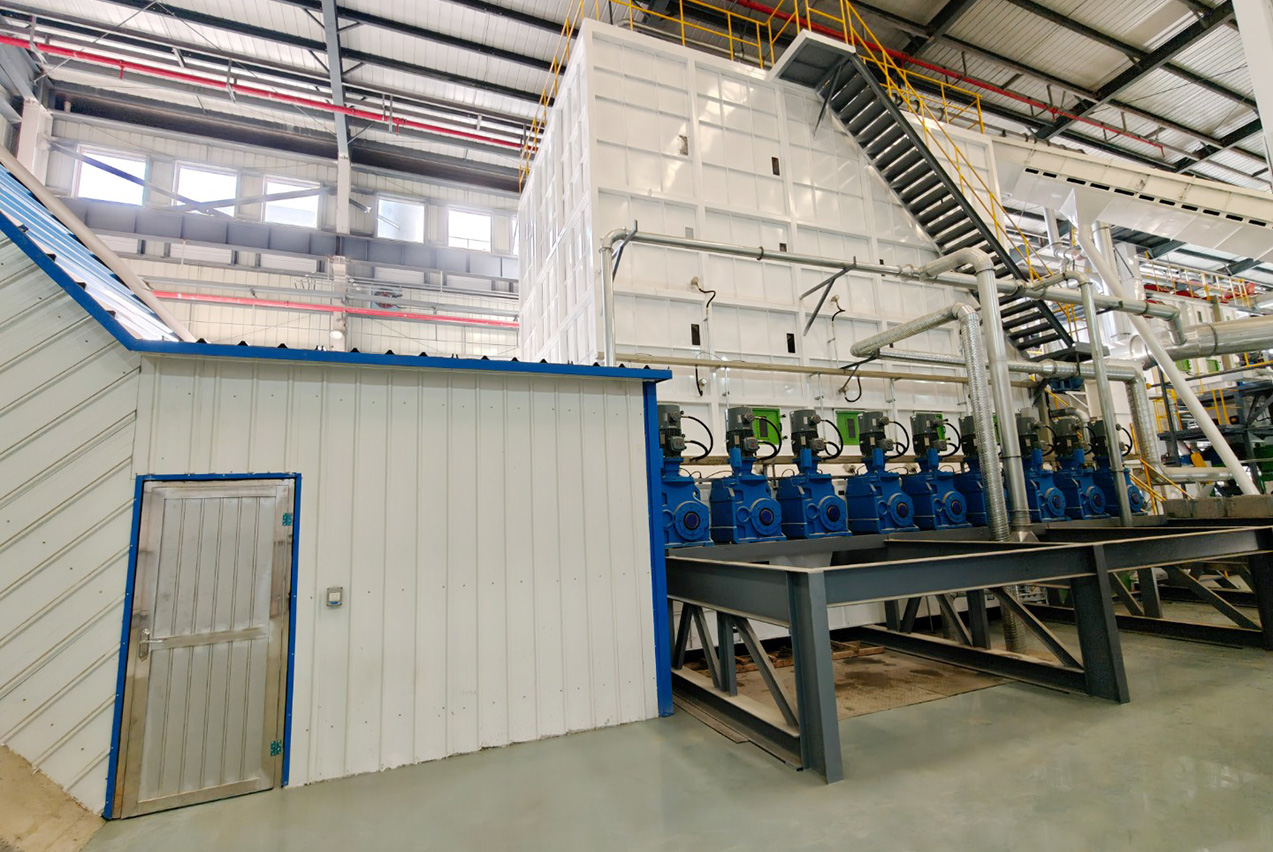
Kingwood engineered a fully enclosed, automated production line built around the JWZL-688 ring die pellet mill, with each upstream stage designed specifically for the mixed demolition and forestry feedstock. The line follows Kingwood's Three-Standardization Framework: integrated supply chain, dust-free enclosed processing, and fully automated operation with minimal manual intervention.
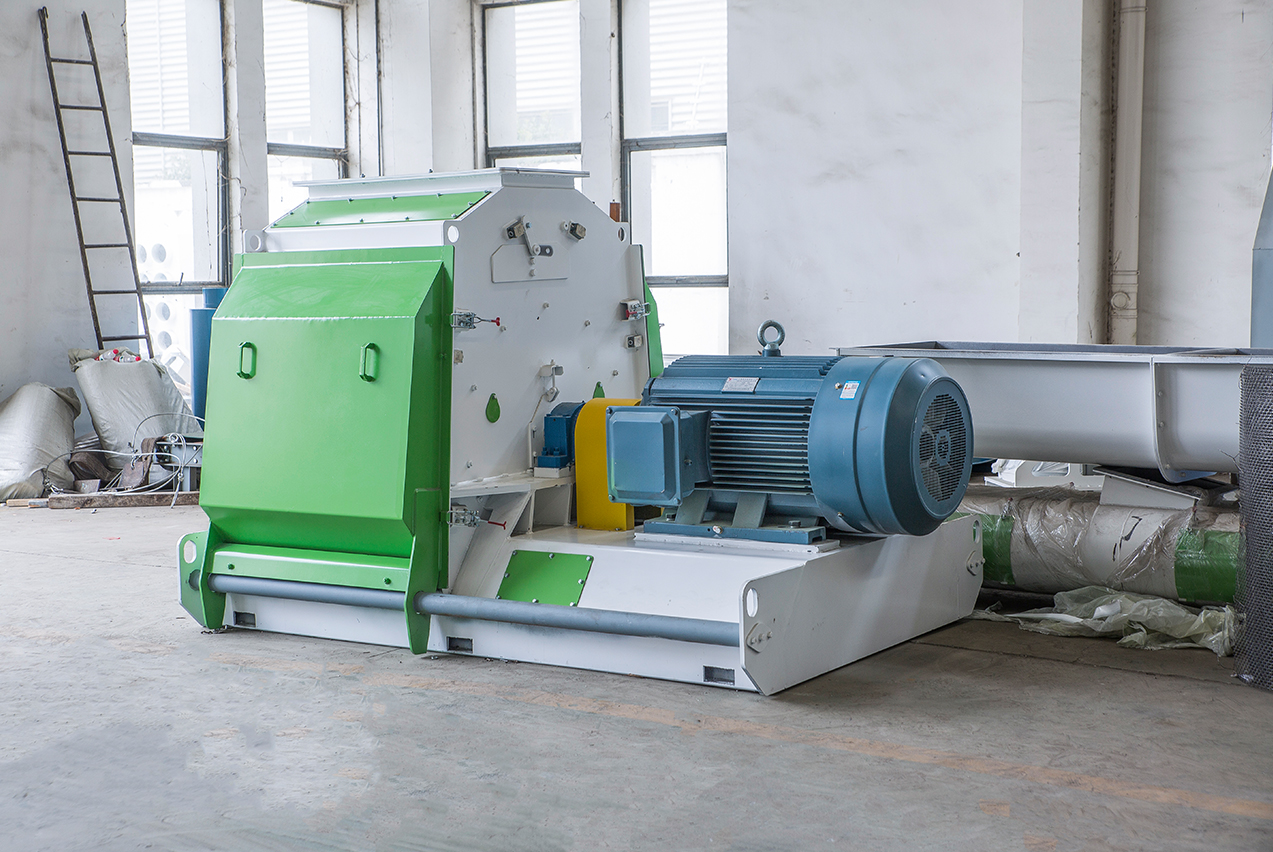
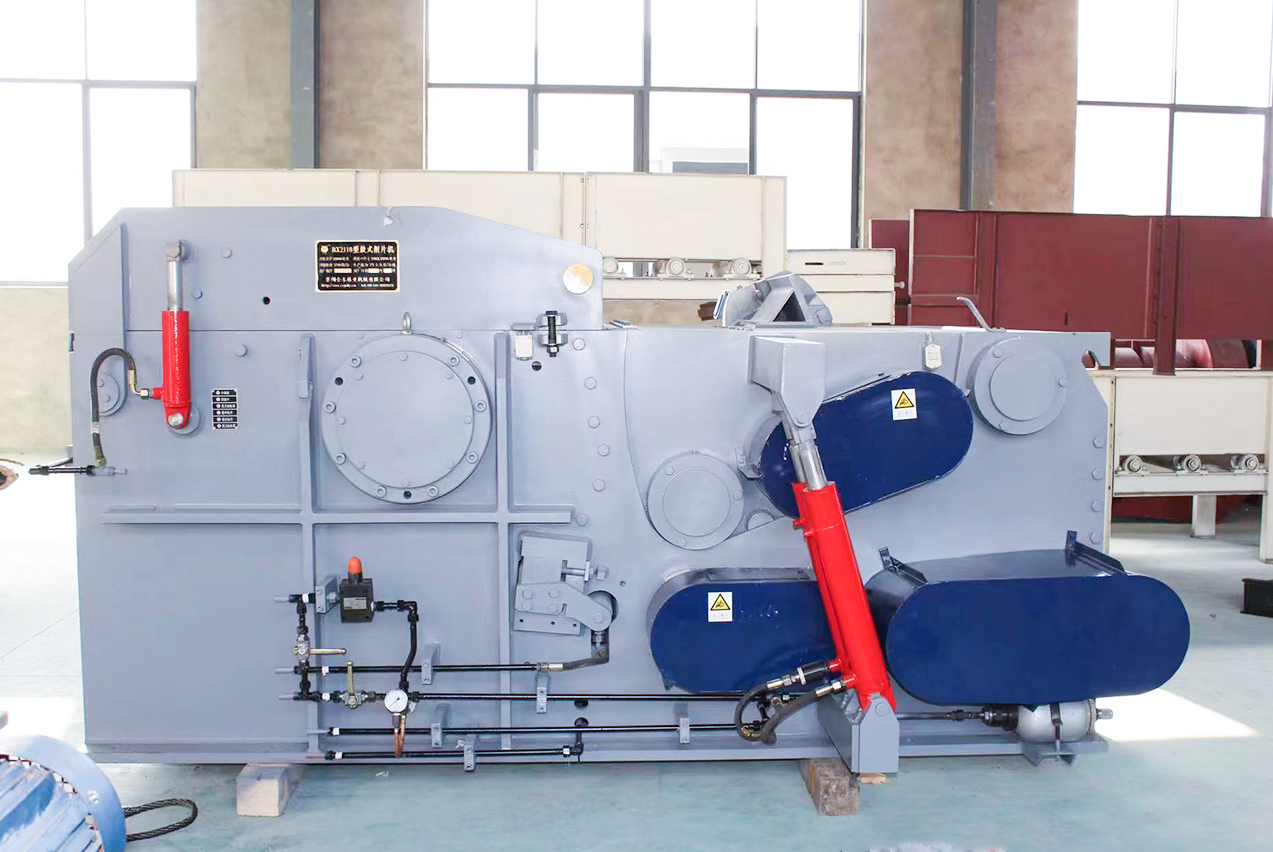
The crushing section uses two comprehensive crushers operating in parallel, each matched to a different fraction of the incoming material:
Both crushers are fitted with dust covers and connected to a dedicated dust removal system, keeping the crushing workshop within the line's dust-free operating standard.
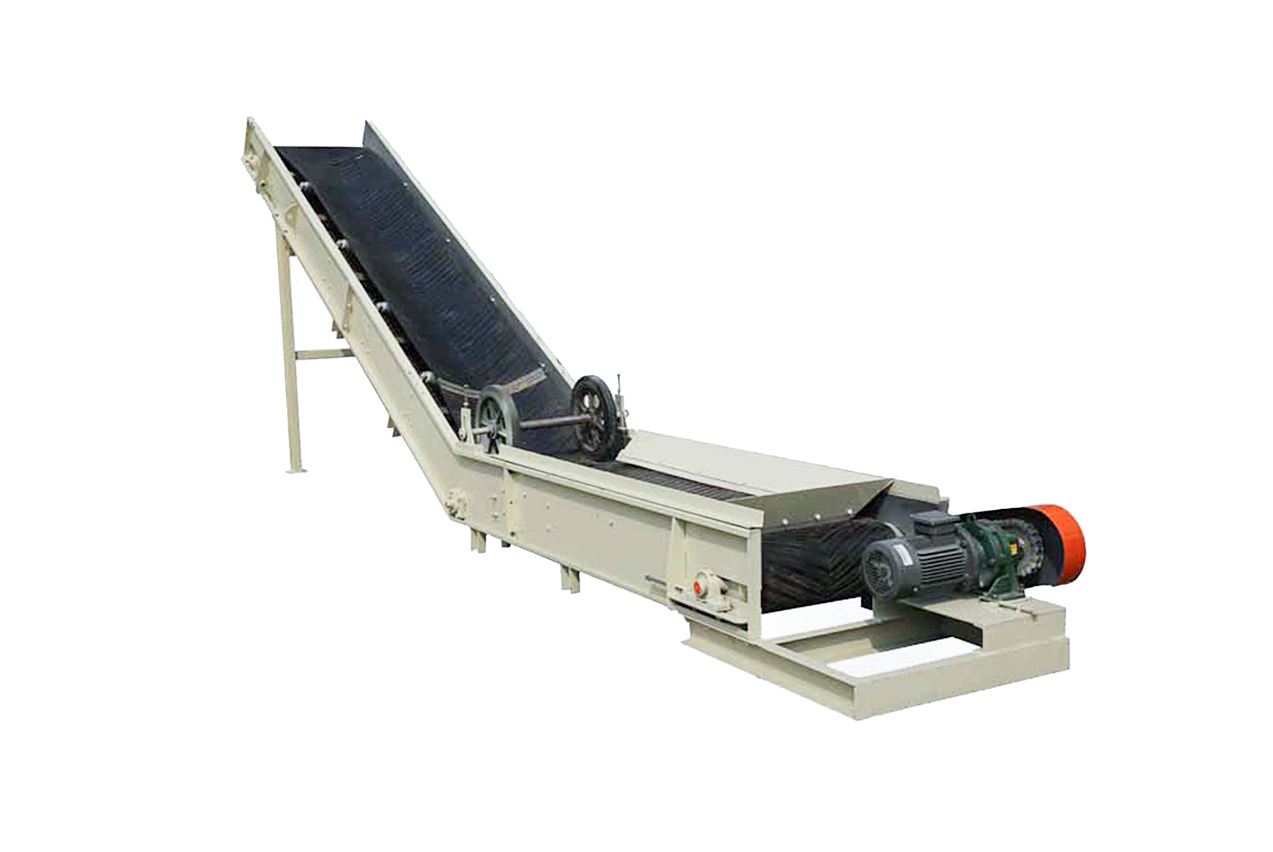
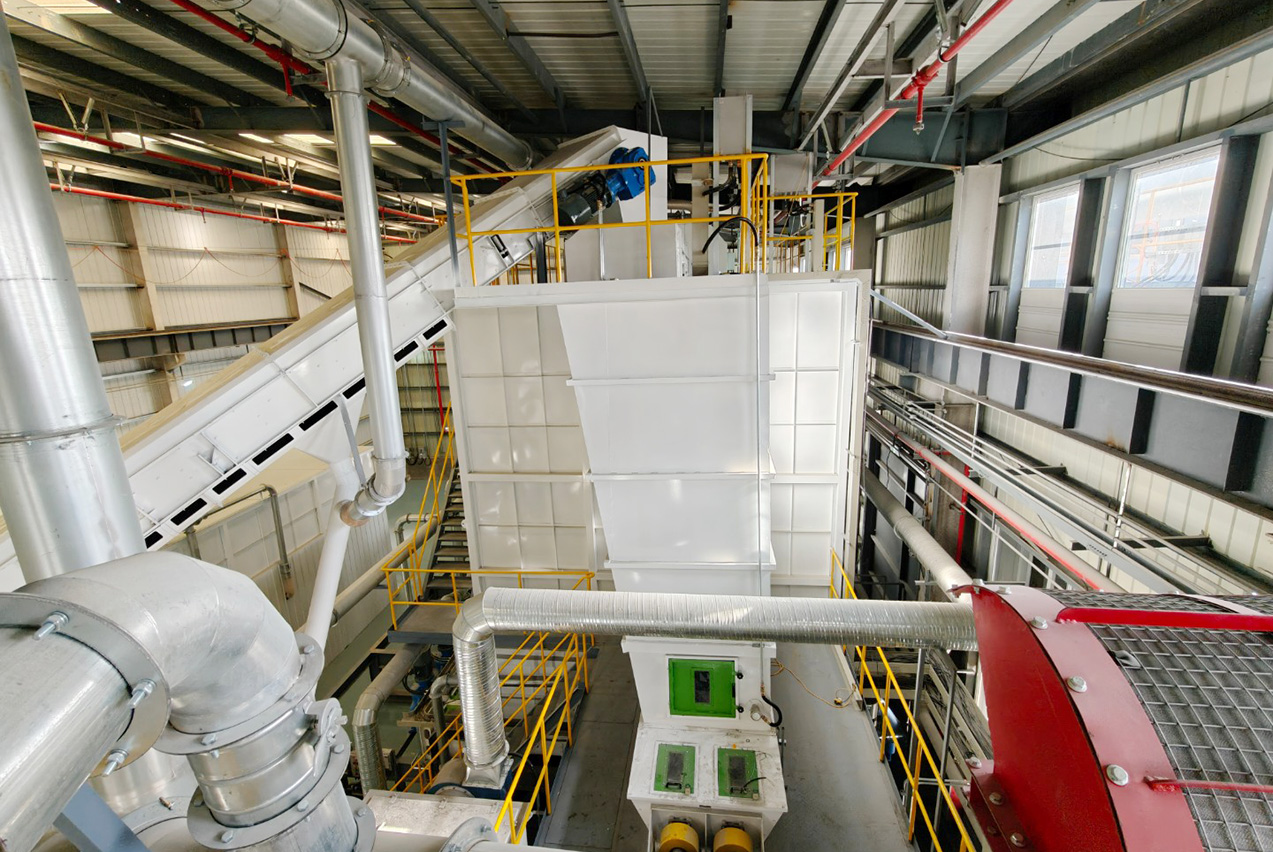
After crushing, material travels on two conveyor belts equipped with self-discharging magnetic separators — a critical step given the construction debris in the feedstock, which can carry embedded metal fasteners. The conveyors feed into a sealed negative-pressure system that transports chips to a dedicated storage hopper.
That hopper is not a passive bin. It is equipped with a temperature monitoring alarm box and a spray fire protection system. Biomass chip storage carries inherent spontaneous combustion risk, particularly with mixed organic material at varying moisture levels. The monitoring and suppression system addresses that risk directly rather than leaving it to operator vigilance.
From the chip hopper, multi-axis spiral conveyors and conveyor belts carry material to a pulverizer for fine grinding. The pulverized powder is then elevated to an upper storage hopper fitted with security monitoring and its own dust removal system — maintaining the enclosed, dust-free standard through the intermediate storage stage.
From the upper hopper, multi-axis dual-circuit spiral conveyors distribute ground material to each pellet mill. The dual-circuit arrangement ensures consistent, balanced feed to the pelletizing stage regardless of minor variation in upstream throughput.
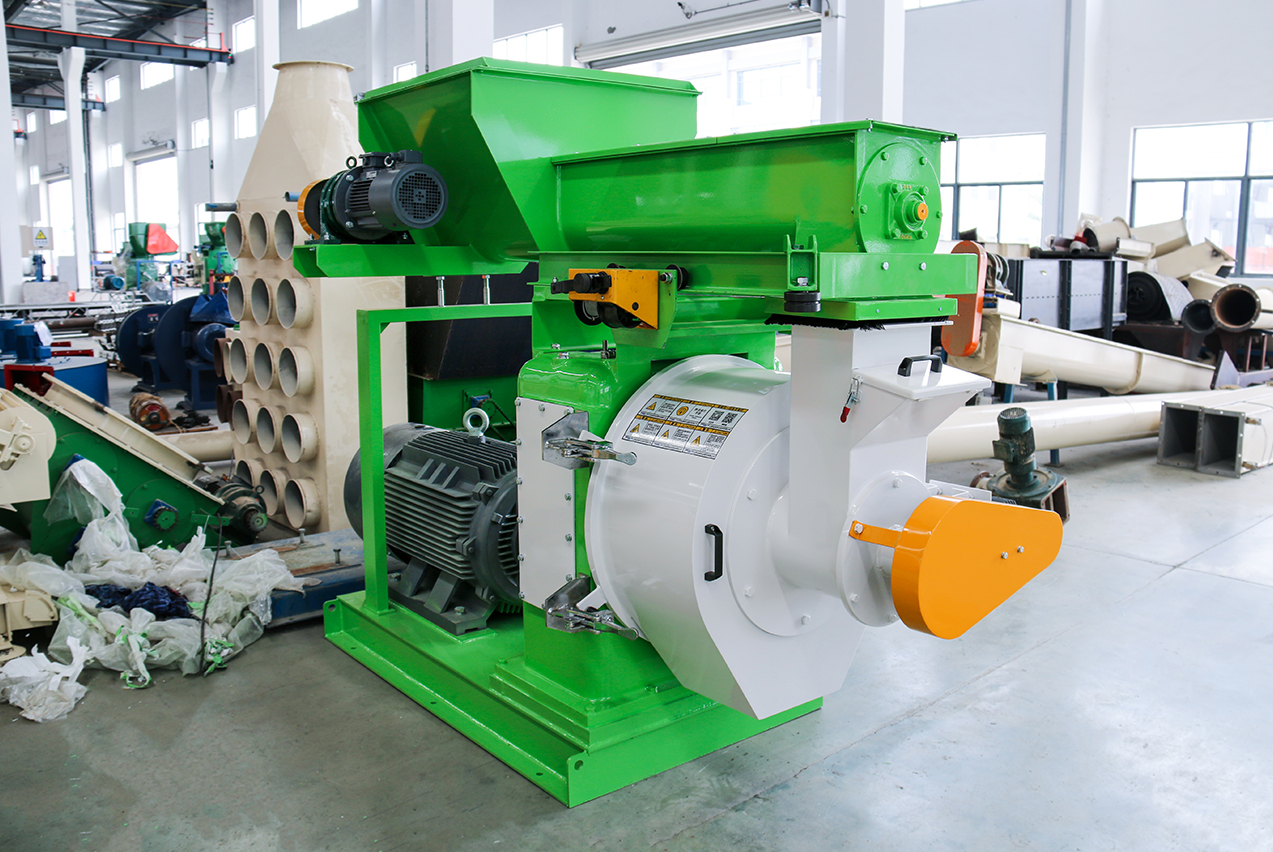
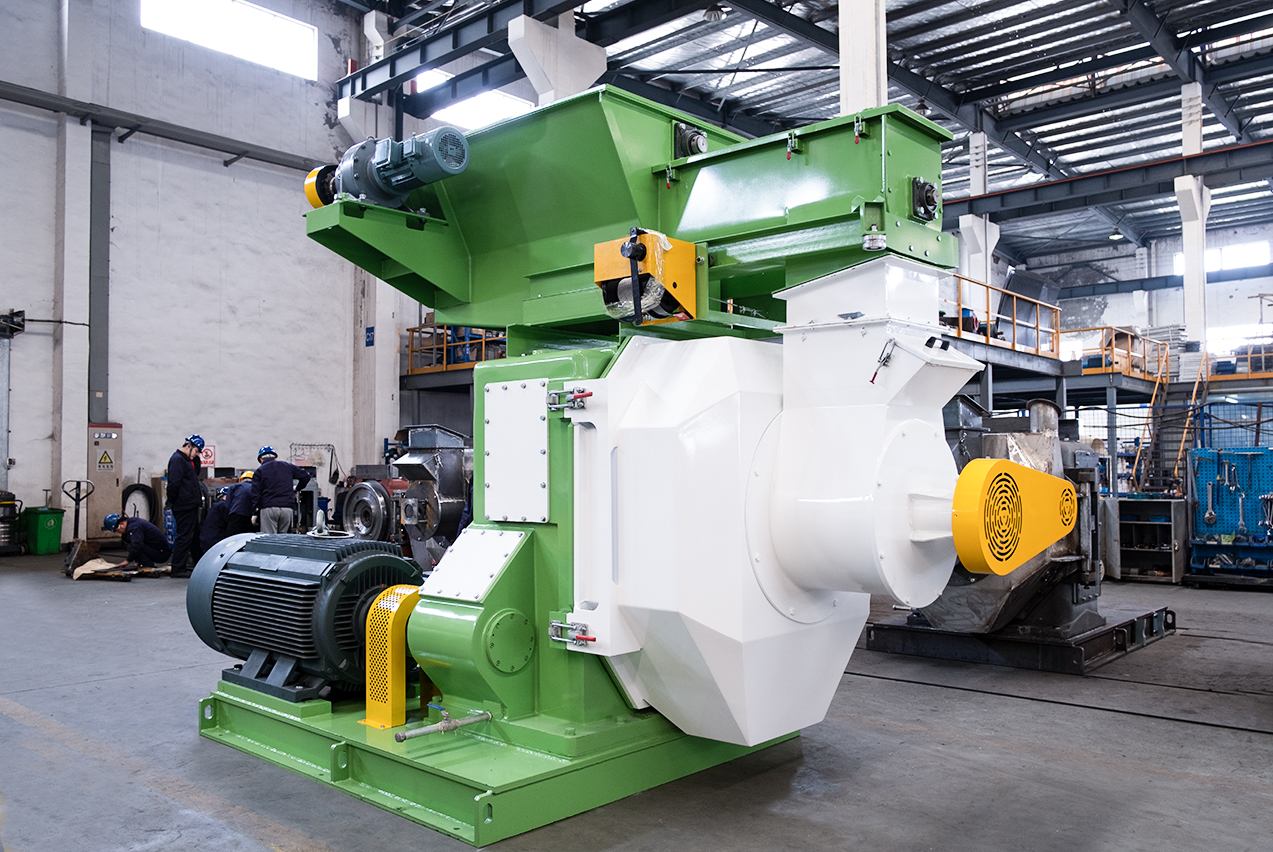
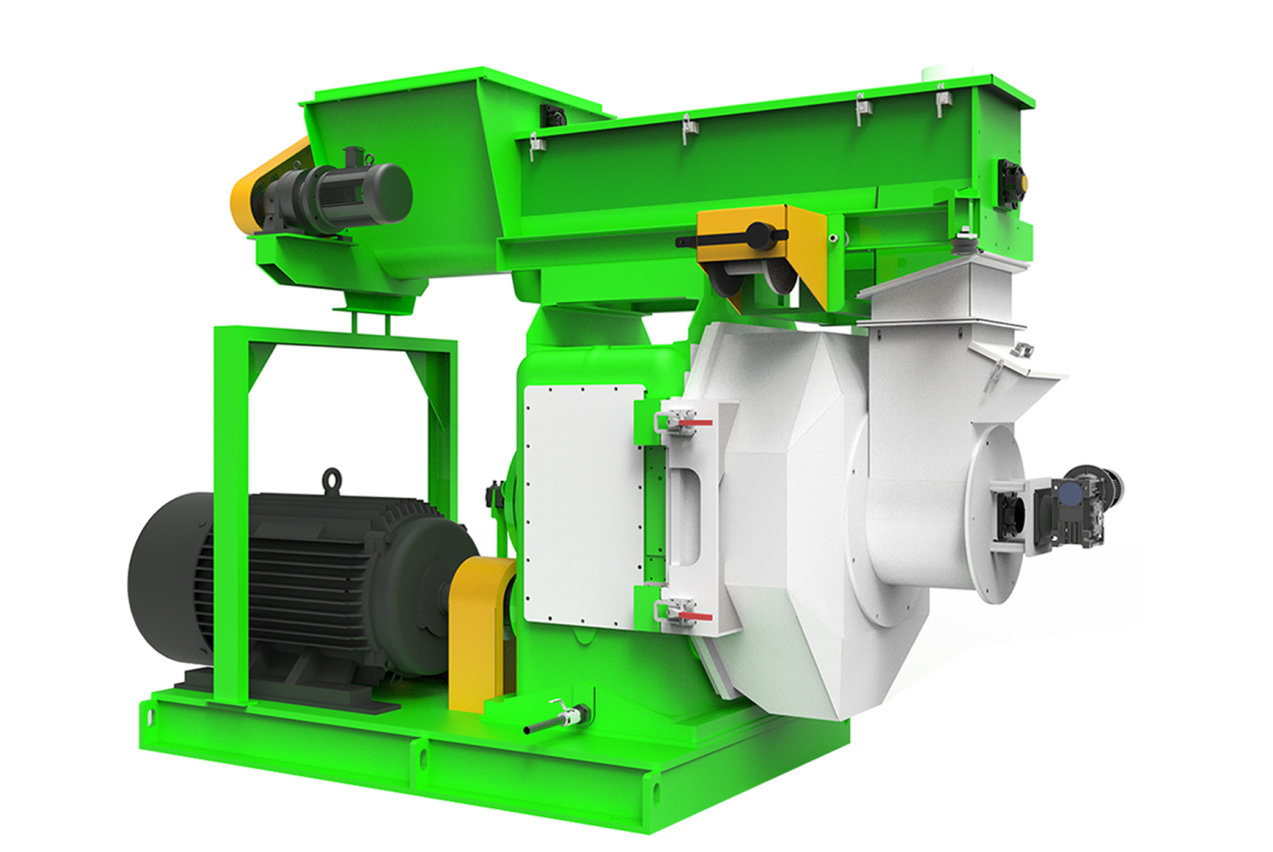
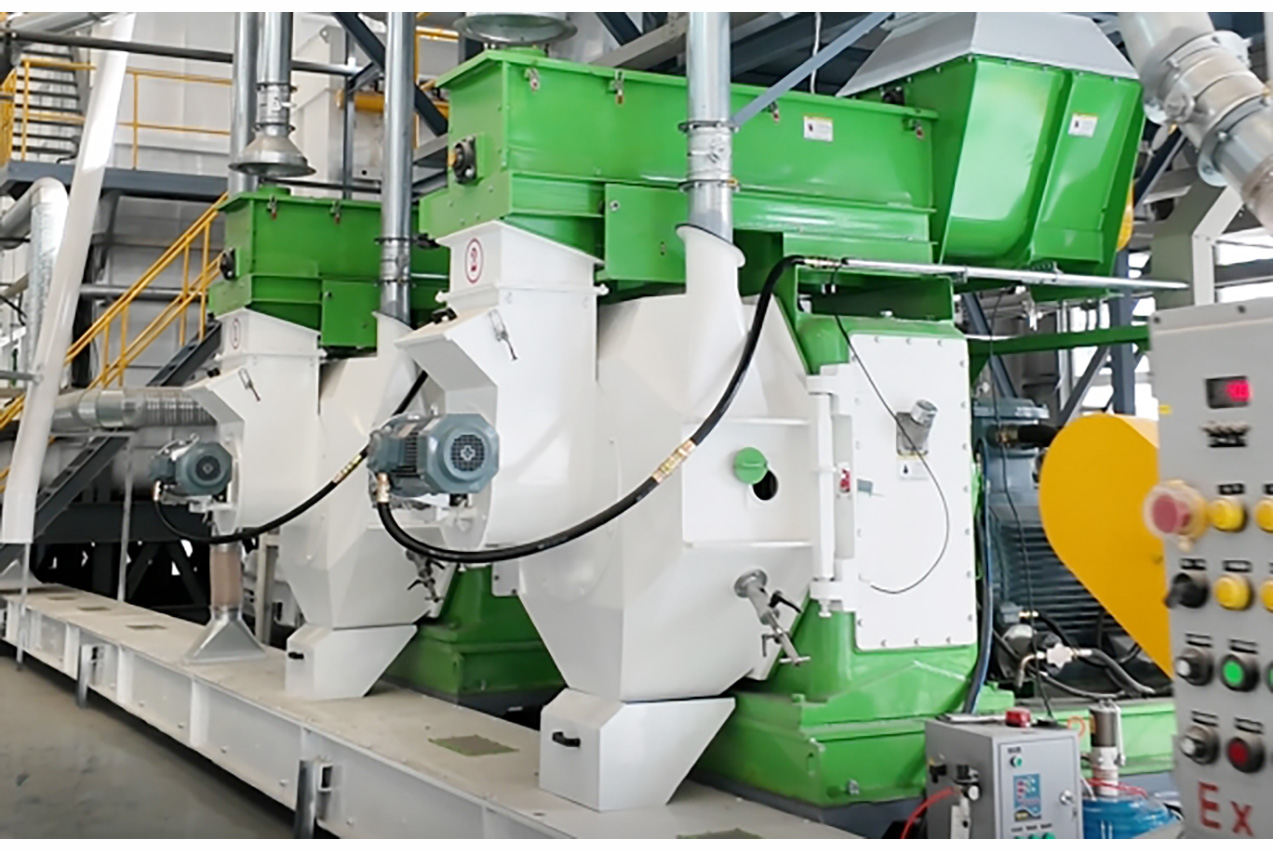
The pelletizing core is the JWZL-688 ring die pellet mill. In this installation, the JWZL-688 achieves an output of 5–6 t/h on the mixed forestry and demolition feedstock processed by the upstream stages. The ring die configuration — where the die rotates and the rollers spin through contact — is the standard choice for production volumes at this scale, handling higher feed rates more efficiently than flat die alternatives.
The JWZL-688 is Kingwood's core industrial ring die pellet mill, rated for 2–3 t/h in standard configuration and up to 3–3.5 t/h in the upgraded JWZL-688D variant (200 kW servo motor, noise ≤93 dB(A)). In this 江苏兴化 installation, the line achieves 5–6 t/h total output — consistent with a multi-mill or optimised single-mill configuration matched to the preprocessed feedstock.
Kingwood's ring die mills are built to the following performance benchmarks on dry sawdust at 10–14% moisture:
| Parameter | Benchmark |
|---|---|
| Bulk density | >600 kg/m³ |
| PDI (Pellet Durability Index) | >97.5% |
| Noise (JWZL-688D) | ≤93 dB(A) |
| Pellet percentage | ≥90% |
| Powder percentage | ≤10% |
Ring die components — including the die itself, roller shells, and associated wear parts — are manufactured in-house using fully automatic CNC ring die drilling machines and vacuum heat treatment, which Kingwood states ensures hole smoothness and dimensional stability.
The line also incorporates a complete wet-feed biomass pellet production line architecture, with drying capacity available via Kingwood's biomass drum dryer for feedstocks arriving above optimal pelletizing moisture.
The 江苏兴化 line reached operational status in December 2024. Since commissioning, the plant has run stably on its mixed feedstock of branches, forestry waste, construction templates, and demolition debris — the same heterogeneous input that drove the dual-crusher preprocessing design.
The 6 t/h output rate achieved since December 2024 is sufficient to supply the operator's downstream projects with biomass pellet fuel, closing the energy loop the customer originally set out to achieve. Biomass pellet fuel produced at this output level carries a calorific value of approximately 4,800 kcal/ton — comparable to standard coal — at a cost saving of 40–50% versus fuel oil, gas, or electric heating, making the self-sufficiency model economically meaningful at this scale.
The customer's own assessment, provided after commissioning:
"We would like to express our sincere gratitude for the professional solutions your company has provided. The customized plan, which addresses our primary challenge of self-sufficiency, perfectly aligns with our actual needs. The project primarily utilizes tree branches, forestry waste, and materials from construction templates and demolition, effectively resolving our practical problems. Since the project was implemented, it has operated stably and has exceeded our expectations, not only enabling efficient resource utilization but also providing strong support for our green and low-carbon development. We look forward to maintaining a long-term and stable partnership with your company to explore further collaboration opportunities."
The feedback identifies three outcomes the customer considers delivered: stable operation, efficient resource utilization from waste streams that previously had no productive outlet, and a platform for the company's green and low-carbon development commitments.
The 江苏兴化 deployment illustrates a pattern that is increasingly relevant for industrial operators across China's chemical, manufacturing, and processing sectors: biomass energy self-sufficiency is achievable at the site level when the production line is engineered to match the actual waste streams available, not an idealised feedstock.
Several aspects of this project are worth noting for buyers evaluating similar equipment:
Feedstock flexibility is a system design question, not a machine specification. The JWZL-688 itself handles a wide range of biomass inputs, but the ability to process mixed demolition debris and forestry waste at consistent throughput came from the dual-crusher front end and the magnetic separation on the conveyors. Buyers with heterogeneous feedstocks should evaluate the complete line design, not just the pellet mill capacity figure.
Dust and fire safety are engineering requirements, not optional add-ons. The temperature monitoring, spray suppression, and sealed negative-pressure conveying in this installation reflect Kingwood's Three-Standardization Framework applied to a real industrial site. Chemical-sector operators in particular will have their own HSE requirements; buyers should verify that any proposed line design addresses those requirements specifically for their feedstock and site conditions.
Self-sufficiency economics depend on the cost of the fuel being displaced. At 6 t/h output and a calorific value comparable to standard coal, the operator is displacing purchased fuel across multiple downstream projects. The 40–50% cost saving versus fuel oil, gas, or electric heating cited in Kingwood's product data provides a directional benchmark, but buyers should model their own displaced-fuel cost against their specific operating hours and feedstock acquisition costs.
Kingwood has completed over 2,000 production line projects across 30+ countries since its founding in 1999, with strong project presence across Asia, the Middle East, Africa, Europe, and Australia. For chemical-sector buyers in China, the 江苏兴化 project represents a directly comparable reference case.
The JWZL-688 handles a wide range of biomass inputs including tree branches, forestry waste, construction templates, and demolition debris. In this 江苏兴化 project, a dual-crusher preprocessing stage — one hammer-type for large-diameter wood and one blade-type for smaller branches — conditions mixed feedstock before pelletizing. Kingwood's ring die mills are rated for bulk density above 600 kg/m³ and PDI above 97.5% on dry sawdust at 10–14% moisture.
At 6 t/h, a single JWZL-688 line can produce biomass pellet fuel with a calorific value of approximately 4,800 kcal/ton — comparable to standard coal — at a cost saving of 40–50% versus fuel oil, gas, or electric heating. For a chemical-sector operator running multiple downstream projects, this output level is sufficient to displace purchased fuel and close the energy loop using on-site waste streams.
Kingwood's Three-Standardization Framework mandates enclosed, dust-free processing throughout. In this project, the crushing section uses dust covers and a dedicated dust removal system; the chip storage hopper is equipped with a temperature monitoring alarm box and a spray fire protection system; and all conveying between stages runs in a sealed negative-pressure system. These measures align with Kingwood's ISO 9001 and ISO 14001 certified quality and environmental management standards.
Project timelines vary by scale and site conditions, but Kingwood provides full EPC turnkey contracting covering equipment manufacturing, plant construction, installation, commissioning, and operator training. The 江苏兴化 project reached operational status in December 2024. Kingwood has completed over 2,000 production line projects across 30+ countries since its founding in 1999.
Kingwood operates a global operation and maintenance service network across 30+ countries and offers a full lifecycle Smart O&M programme covering comprehensive inspection, production efficiency enhancement, and one-stop spare parts supply. Key wear components for the JWZL-688 include the ring die, roller shells, and hammer mill blades, all manufactured in-house to Kingwood's CNC and vacuum heat-treatment standards.



Wood Biomass Machinery Manufacturer


 English
 日本語
日本語
 한국어
한국어