Project at a glance: A 20 t/h indonesia pellet mill system built around four Kingwood JWZL-860 ring die mills (280 kW each) was commissioned in Indonesia in April 2026, converting forestry residues into commercial biomass pellets in a fully integrated, dust-free, automated production line.

Indonesia is one of the world's largest forested countries, with a timber and plantation sector that generates millions of tonnes of biomass residue every year. The customer's site was surrounded by active forestry operations producing a steady, high-volume stream of material that had no productive outlet: logging debris from clear-cutting and selective-cutting operations, thinnings removed to improve stand health, wood chips from primary processing, and wood offcuts from downstream manufacturing.
Left unmanaged, this material posed compounding operational problems. It accumulated on land, raised fire risk, and represented a significant missed opportunity at a time when regional biomass pellet demand is accelerating. According to the International Energy Agency's 2024 Renewables Report, Southeast Asia is among the fastest-growing biomass fuel markets globally, driven by Japanese and South Korean utility procurement targets. Indonesian producers are well-positioned to serve this demand — but only if raw materials can be converted efficiently into export-grade pellet fuel.
The pressure to act was not just commercial. Indonesian environmental regulations increasingly restrict open burning and uncontrolled dumping of forestry residues, and carbon-neutrality commitments from downstream energy buyers in Japan and South Korea now require verifiable supply chains with documented green credentials.
Off-the-shelf pellet mill configurations sized for sawdust or agricultural straw are typically optimised for feedstocks that arrive pre-ground and dry. Forestry residue is categorically different. Logs and thinnings arrive at high moisture content, in irregular sizes, and with a fibre structure that demands robust crushing before pelleting is viable. A single small-to-medium pellet mill rated at 1–3 t/h could not absorb the available raw material volume, and multiple loosely integrated small units would create dust hazards, labour bottlenecks, and inconsistent output quality.
The customer needed a system that could: process high-moisture, coarsely chipped log material continuously; scale to at least 20 t/h of finished pellet output; operate with minimal manual supervision; and meet international biomass fuel quality standards to serve industrial boiler and power generation customers. That combination of requirements pointed toward a purpose-engineered, fully integrated production line — not a catalogue selection of individual machines.

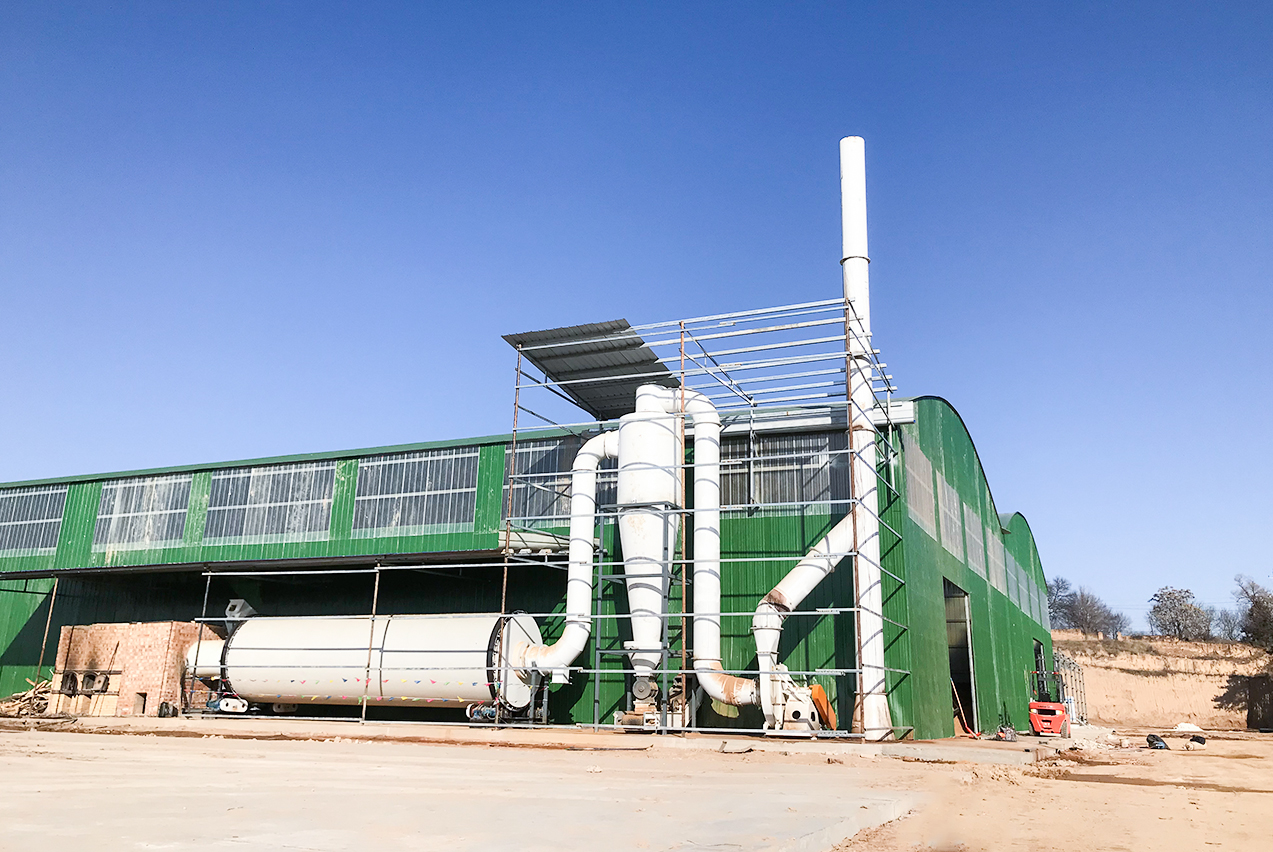
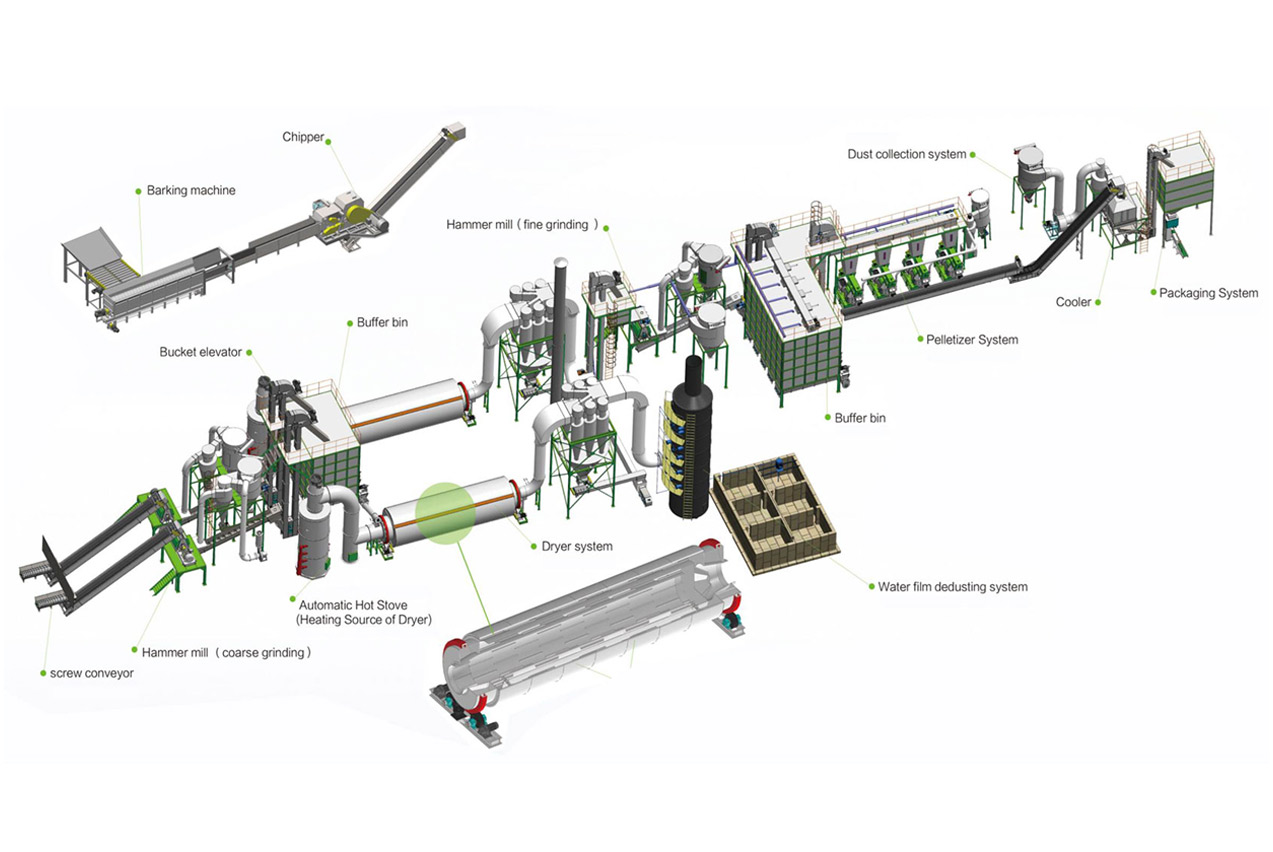
The production process begins with logs from the surrounding forest resource base. Rather than supply a redundant crusher — the customer's existing factory already housed crushing equipment — Kingwood engineered the new line to interface directly with that legacy system. Logs pass through the old factory's crushing circuit and emerge as particles measuring 3–10 mm, ready for the new line's drying and pelletizing stages.
From the crushing output, a screw conveyor transfers the chipped material into the drying section. This integration of existing infrastructure into the new line's material flow is a practical demonstration of Kingwood's complete biomass pellet production line methodology: system design begins with what the customer already has, not with a blank-sheet equipment list.
Two SG-60 rotary drum dryers operate in parallel to handle the incoming wet feedstock. Kingwood's SG-60 biomass drum dryer is rated at a water evaporation capacity of 4,200 kg/h per unit, giving this installation a combined drying capacity of 8,400 kg of water removal per hour — adequate to bring freshly chipped forestry residue from typical field-condition moisture levels down to below 20% moisture content, the target threshold before pelletizing.
The SG-series drum dryer uses a triple-layer, single-channel rotary design. Compared with a conventional single-cylinder dryer, this configuration reduces thermal energy consumption by approximately 60%, cuts land footprint by around 50%, and achieves thermal efficiency above 70%. The system includes a blocked-material alarm, explosion-proof device, and fire-source detector — critical safety features in a high-throughput biomass drying environment where fine particles and elevated temperatures coexist.
Achieving consistent sub-20% moisture at the dryer outlet is not a marginal target — it is the control point that determines pellet formation rate, die wear rate, and finished pellet durability. Material entering the pellet mills above this threshold increases friction unpredictably, accelerates ring die degradation, and degrades Pellet Durability Index (PDI) scores. Below this threshold, Kingwood's JWZL-860 ring die geometry is designed to produce pellets with a formation rate of ≥97% and a pulverisation rate of ≤3%.
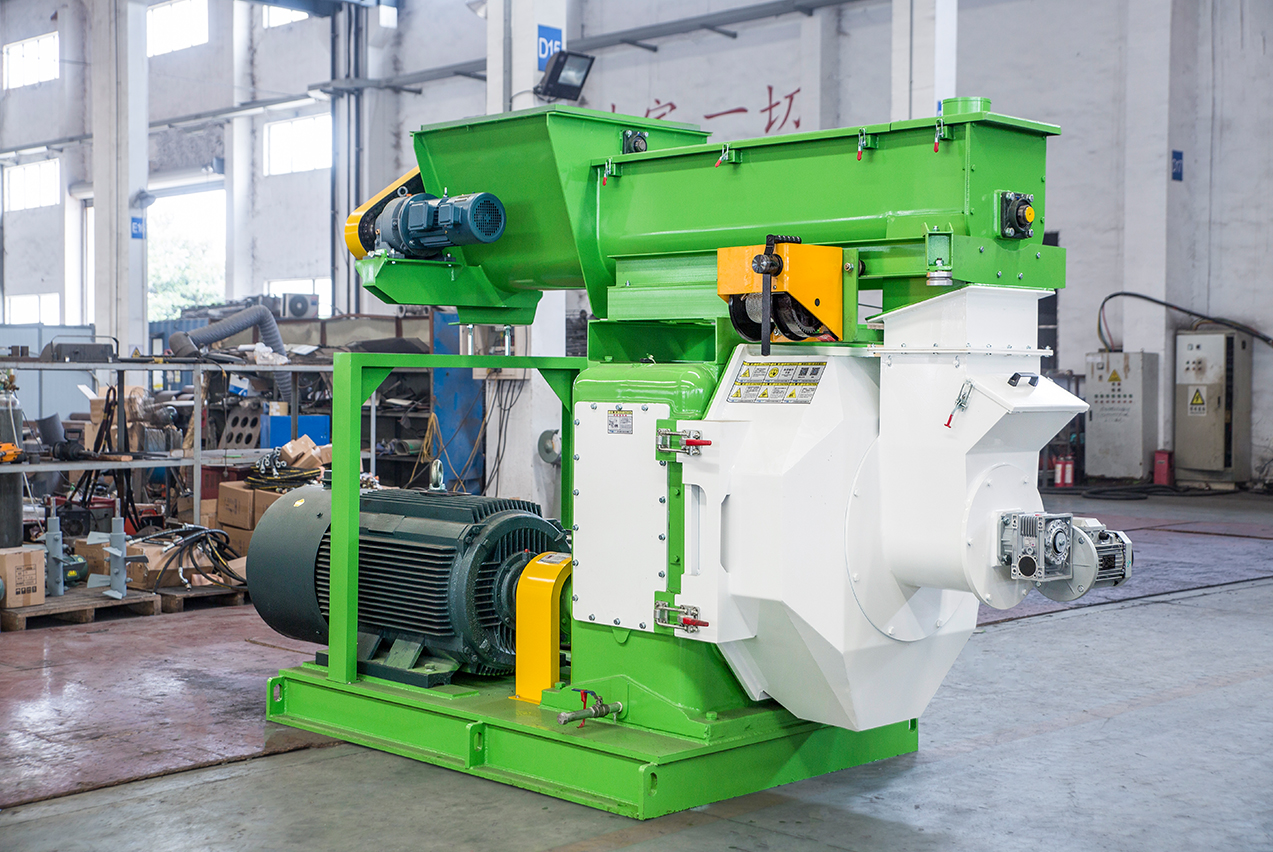
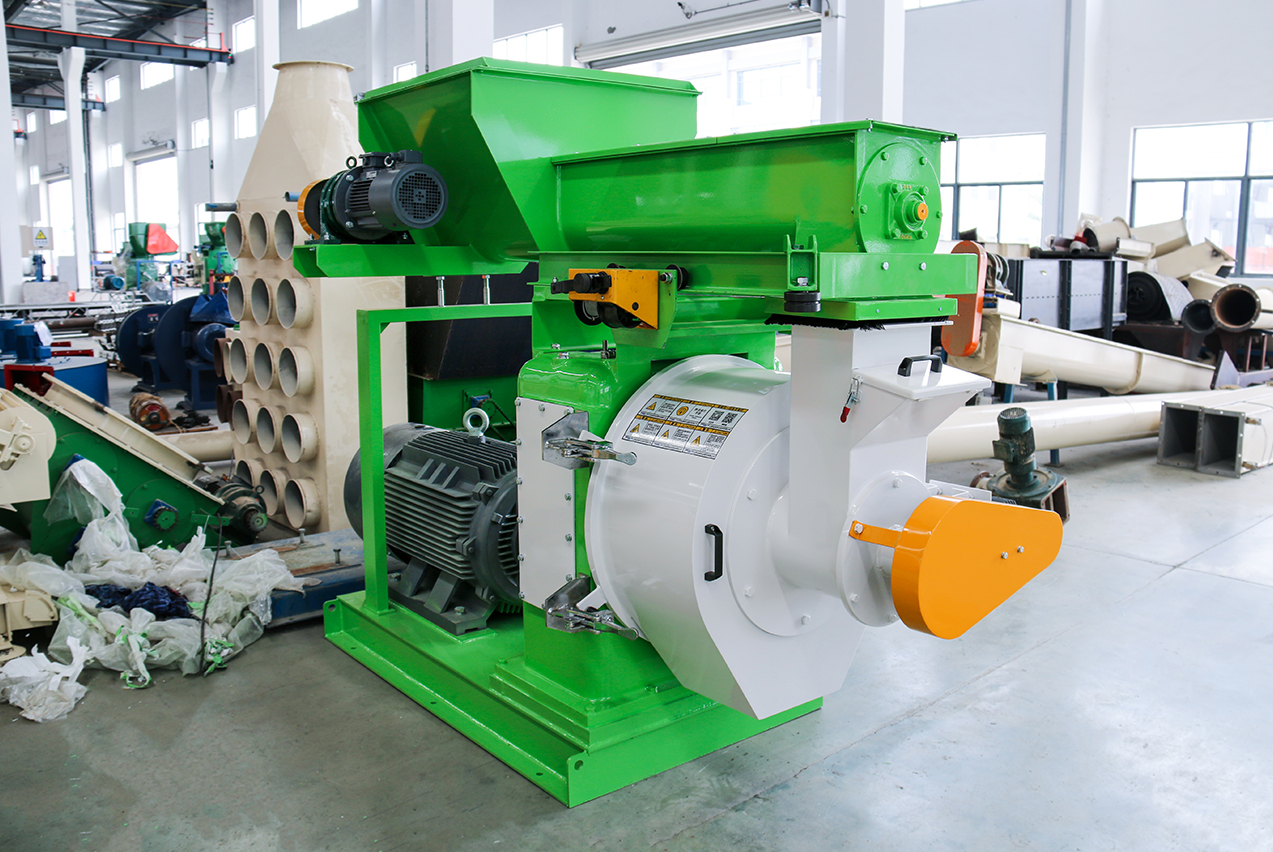
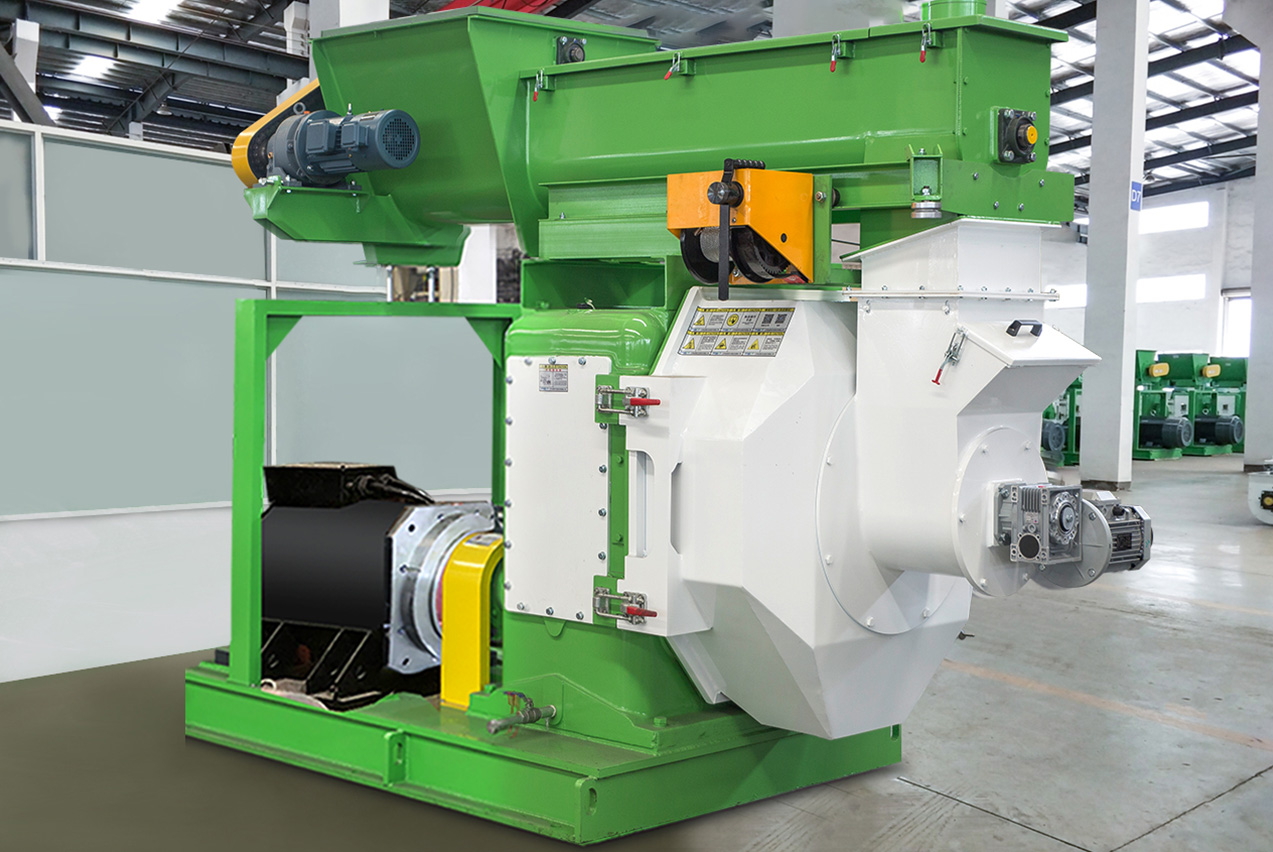
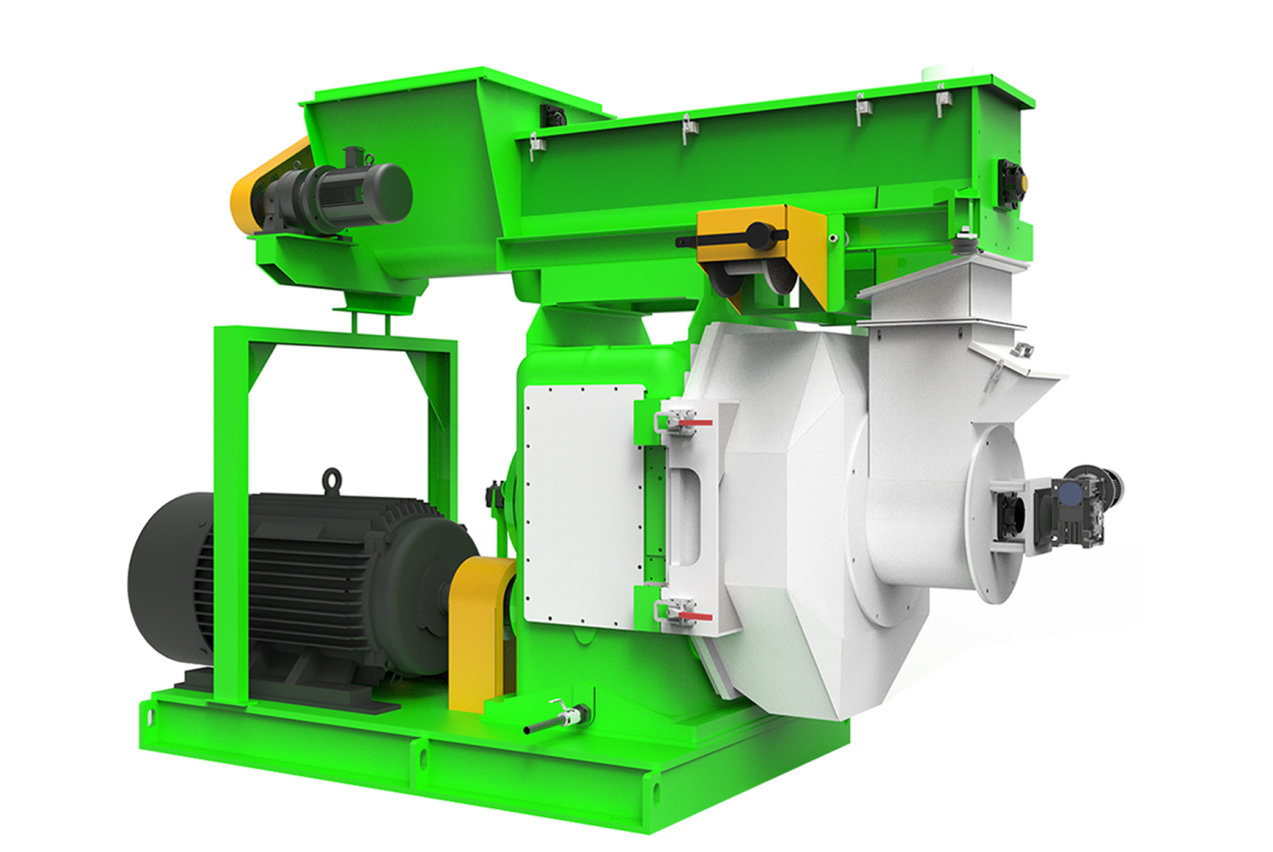
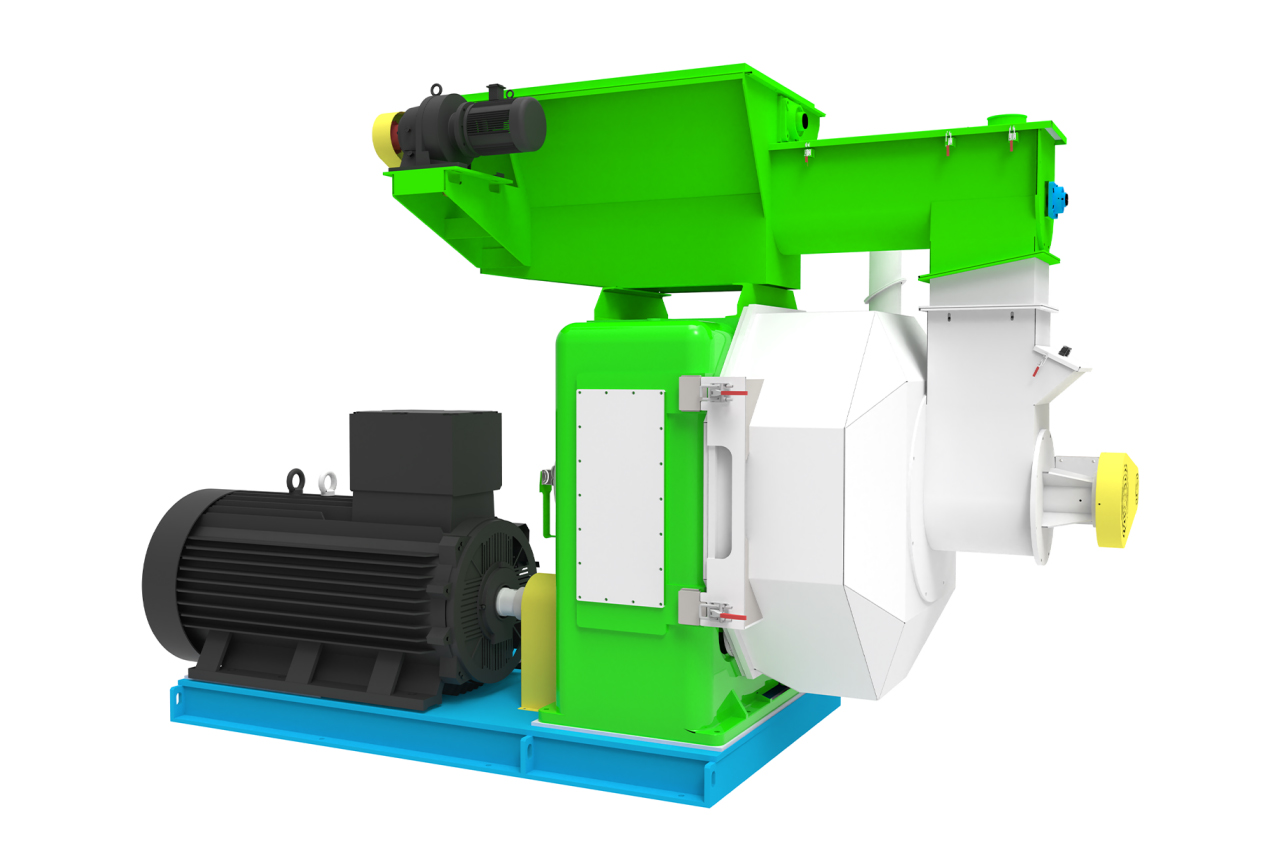
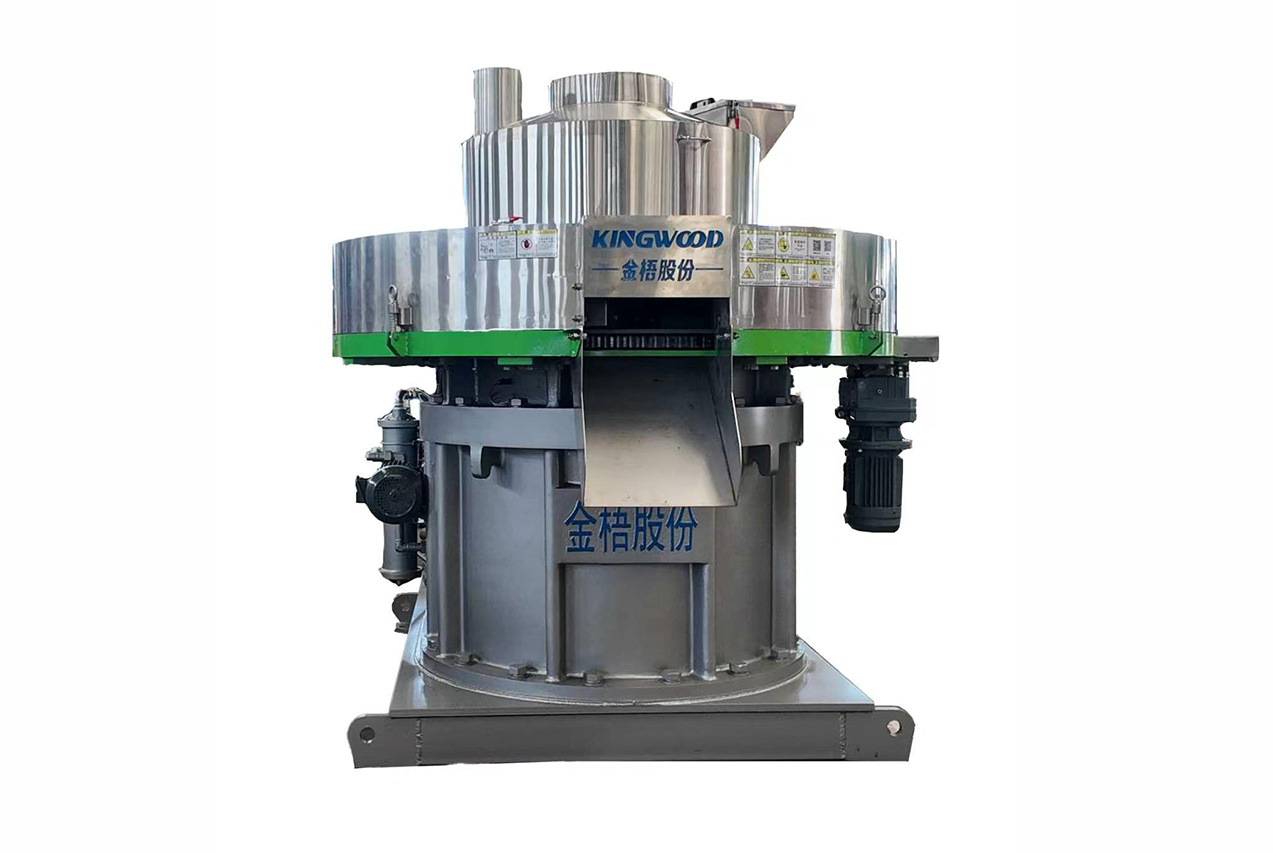
After drying, material is elevated by a bucket elevator and distributed evenly across four JWZL-860 ring die pellet mills. Each JWZL-860 is fitted with a 280 kW main motor and configured with an 860 mm × 120 mm ring die. In this Indonesia deployment, the four-mill array achieves a combined rated output of approximately 20 t/h — equating to approximately 5 t/h per mill under forestry residue feedstock conditions.
The ring die rotates while the press rollers are held in a fixed-axis position but spin passively through contact with the die surface. This mechanical arrangement distributes compression force evenly across the die face, reduces localised wear, and delivers consistent pellet geometry across the full die width. The JWZL-860's 860 mm die diameter places it firmly in the industrial-scale category — substantially above the ~500 kg/h threshold at which ring die technology becomes preferred over flat die configurations, and appropriate for the continuous 24-hour operation cycles typical of commercial biomass fuel plants.
The gearbox uses a self-developed high-precision, hard-tooth-surface gear transmission system. Circulation cooling stabilises gearbox temperature during long-run operation. Core structural components — the main shaft and hollow shaft — are forged from high-quality alloy steel for fatigue resistance. A non-stop refuelling lubrication system and water-cooling circuit allow continuous operation without scheduled mid-shift shutdowns.
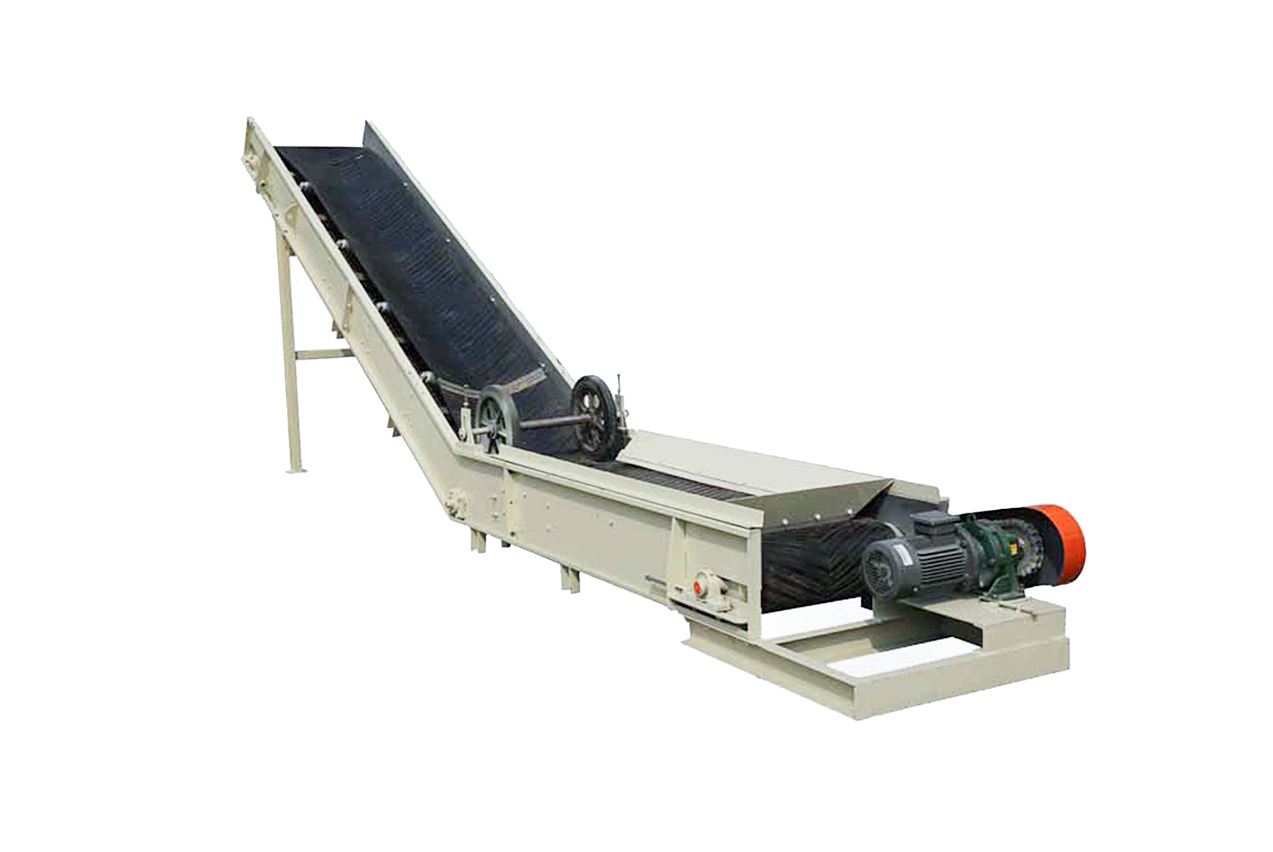
Hot pellets exit the mills at 70–80 °C and are carried on a skirted belt conveyor to a counter-flow cooler, which rapidly reduces pellet temperature to near ambient (20–30 °C) using ambient air drawn through the pellet bed. Cooling is not optional — hot pellets are mechanically soft and susceptible to cracking and surface deformation during handling. Proper cooling stabilises the lignin binder within each pellet and locks in the final geometry, directly affecting PDI scores and bag-weight consistency.
From the cooler, pellets pass through a screening machine that separates fines and dust from on-spec product. Undersized particles and dust are recycled back into the process rather than being discarded, improving raw material utilisation. Screened pellets are then conveyed to the finished product storage silo, staged for packaging and outbound shipment.
| Parameter | JWZL-860 Specification |
|---|---|
| Main motor power | 280 kW (4-pole) |
| Ring die diameter | 860 mm × 120 mm |
| Press roll dimensions | 380 mm × 126 mm × 2 rollers |
| Rated capacity (forestry residue) | ~5 t/h per unit |
| Pellet formation rate | ≥ 97% |
| Pellet pulverisation rate | ≤ 3% |
| System noise | ≤ 93 dB(A) |
| Equipment weight | ~12.5 t |
| Overall dimensions (L×W×H) | 3,961 × 2,084 × 2,847 mm |
In this Indonesia deployment, the four-mill configuration collectively delivered approximately 20 t/h of finished pellet — a first-hand, verified figure from commissioning in April 2026. For comparison, Kingwood's 24 t/h wood chip pellet line commissioned in Vietnam for AVP Group in June 2021 used a two-mill configuration at 12 t/h per mill using a different model, while a four-mill JWZL-688 installation in Hubei, China (March 2023) achieved 10 t/h total at 1,980 kW combined power across four 688 units. The Indonesia 860 deployment is notably more power-dense, reflecting the higher mechanical work required to pelletise log-derived forestry residue versus pre-processed sawdust or construction waste.
Kingwood's Three-Standardization Framework is not a marketing construct — it is the engineering design philosophy applied to every production line Kingwood specifies. In this Indonesia project, all three principles are operationally visible:
Integrated : The new line integrates with the customer's existing crushing infrastructure rather than duplicating it. Material flow from crushing through drying, pelletizing, cooling, screening, and storage is a single continuous chain managed by a unified control system. There are no manual transfer points between stages.
Dust-Free : All inter-stage conveying uses enclosed screw conveyors and enclosed belt conveyors with skirt edges. Each processing section is equipped with a dedicated dust removal system. The drying stage uses a water-film dust removal system to capture fine particles carried in exhaust air from the drum dryers. This design eliminates the chronic dust pollution that plagues conventional open-transfer pellet facilities and directly addresses Indonesian occupational health and environmental compliance requirements.
Automated : The full line operates with minimal manual intervention. Feed rate to the drying section is managed automatically. Distribution to the four pellet mills is balanced by the elevator and feed system. The customer's feedback specifically cited the "multiple high-efficiency collaborative operations" as a distinguishing outcome — this is the measurable effect of automation: parallel mill operation without the imbalance, downtime, or quality variability that accompanies manual multi-machine management.

The plant commenced operation in April 2026 and achieved smooth, stable performance from commissioning. The customer's own words are unambiguous: the project "operated smoothly and exceeded our expectations in performance." In a segment where new installations frequently require weeks of process tuning to reach rated output, exceeding performance expectations at startup is a meaningful operational outcome.
The verified output of approximately 20 t/h across four JWZL-860 mills means that at a standard operating schedule of 20 hours per day (allowing 4 hours for maintenance windows), the line produces approximately 400 tonnes of finished biomass pellet per day, or roughly 120,000–140,000 tonnes per year at typical availability rates. This positions the plant comfortably within the commercial-scale industrial boiler and biomass power generation supply tier.
Pellet quality indicators from the JWZL-860 ring die configuration — formation rate ≥97%, pulverisation rate ≤3% — align with the quality parameters required for international trade in biomass pellets, including the ISO 17225-2 wood pellet standard applicable to industrial-grade (I1–I3) pellets.
The customer explicitly linked the project's outcomes to "green and low-carbon development goals." The environmental case for this deployment is quantifiable at several levels.
Biomass pellets produced from forestry residues are classified as carbon-neutral fuel under internationally recognised accounting frameworks (the combustion CO₂ was already part of the atmospheric carbon cycle through photosynthesis). Displacing coal in industrial boilers with biomass pellets produced on this line generates approximately 1.5–1.8 tonnes of CO₂-equivalent avoided per tonne of pellet consumed, depending on the coal grade replaced — a ratio that makes the plant's annual output equivalent to avoiding 180,000–250,000 tonnes of CO₂ annually at scale.
Beyond the fuel-substitution benefit, the project converts forestry residue that would otherwise decompose anaerobically (releasing methane, a potent greenhouse gas) or be burned openly (releasing black carbon and particulates) into a controlled-combustion clean fuel. Kingwood's dust-free enclosed processing design also eliminates particulate emissions from the production process itself, ensuring the manufacturing footprint is consistent with the green credentials of the finished product.
The Indonesia indonesia pellet mill project is one data point in a portfolio that spans 4,000+ production line projects across 30+ countries and regions. Kingwood has been engineering biomass pellet equipment since its founding in 1999 — 27 years of dedicated R&D in this specific domain, supported by over 20 top R&D experts and a joint R&D Centre established with Nanjing University of Agriculture.
Regional credibility in Southeast Asia is demonstrated by verifiable project references: the 24 t/h wood chip pellet line installed in Vietnam for AVP Group (Asia's largest power company) commissioned in June 2021; confirmed customer presence in Malaysia, Thailand, and Indonesia across multiple capacity tiers; and an Indonesia 30 t/h fully automated biomass pellet line documented in Kingwood's project portfolio.
Kingwood holds ISO 9001 and ISO 14001 management system certification, CE certification, and has been recognised as a Jiangsu Provincial High-Tech Enterprise, a Jiangsu Provincial "Specialized & Innovative" Niche Leader, and a top-10 brand in biomass moulding equipment. Fixed assets exceed USD 15 million, and the 35,000 m² facility in Liyang City — known domestically as a centre of pellet machine manufacturing — supports full in-house fabrication from CNC ring die drilling through final assembly and factory testing.
Kingwood's service model does not end at equipment delivery. The full lifecycle offer covers EPC/turnkey project management, on-site commissioning, operator training, spare parts supply, and an operation and maintenance service network covering 30+ countries. For international customers in Indonesia and across Southeast Asia, this means local technical support is available rather than a return to China for every service event.
Indonesia's forestry sector generates an enormous and largely underutilised biomass resource. This case study demonstrates that with the right equipment configuration — four JWZL-860 ring die pellet mills, dual SG-60 drum dryers, and an integrated dust-free automated process — that resource can be converted into 20 t/h of commercial-grade biomass pellets at industrial scale, with verified performance exceeding customer expectations from the first month of operation.
The project is a concrete example of Kingwood's Three-Standardization Framework delivering measurable outcomes: integrated material flow leveraging existing infrastructure, dust-free enclosed processing meeting environmental compliance requirements, and automated multi-mill operation achieving consistent output without manual intervention.
For operators in Indonesia and across Southeast Asia evaluating similar investments, the April 2026 Indonesia deployment provides a directly comparable reference: feedstock, capacity, equipment model, and operational outcomes are all documented and available for detailed technical discussion with Kingwood's project engineering team.
In this Indonesia deployment, four JWZL-860 pellet mills each fitted with a 280 kW main motor achieved a combined total output of approximately 20 t/h. The JWZL-860 ring die configuration is engineered for high-throughput industrial biomass pelleting and is well-suited to forestry residue feedstocks common in Southeast Asia.
The project uses logs from surrounding forest resources as primary raw material. These logs are processed through an existing crushing system into particles of 3–10 mm, then dried in dual SG-60 dryers to below 20% moisture content before pelletizing. Feedstocks include logging debris, thinnings, wood chips, and wood offcuts.
The system pairs the JWZL-860 mills with two SG-60 rotary drum dryers that reduce incoming biomass moisture from field-level conditions down to below 20%, the optimal range for pelleting. Kingwood's SG-series dryers can evaporate up to 4,200 kg of water per hour per unit, ensuring consistent feed quality to the pellet mills.
Kingwood's Three-Standardization Framework covers Integrated supply-chain management, Dust-Free enclosed processing and conveying, and fully Automated operation with minimal manual intervention. In the Indonesia project, this framework ensures that forestry residue handling generates minimal dust, the production process runs continuously without operator bottlenecks, and output quality meets international biomass fuel standards.
Yes. Kingwood has delivered over 4,000 production line projects across 30+ countries including Indonesia, Vietnam, and Malaysia. A notable regional reference is the 24 t/h wood chip pellet production line installed in Vietnam for AVP Group, Asia's largest power company, completed in June 2021. An Indonesia 30 t/h fully automated biomass pellet line is also documented in Kingwood's project portfolio.



Wood Biomass Machinery Manufacturer


 English
 日本語
日本語
 한국어
한국어